The Jakarta Post
Please Update your browser
Your browser is out of date, and may not be compatible with our website. A list of the most popular web browsers can be found below.
Just click on the icons to get to the download page.


Popular Reads
Top Results
No results found. Please check your search term and try again
Can't find what you're looking for?
View all search results
Popular Reads
Top Results
No results found. Please check your search term and try again
Can't find what you're looking for?
View all search resultsflood

Archipelago 8 months ago
PREMIUM
Anger over slow disaster response triggers display of separatist flags
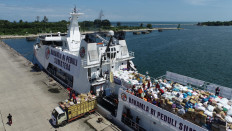
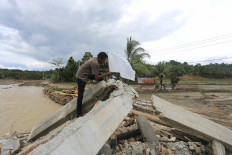
Nearly five weeks after the devastating floods in Aceh, anger over the government’s slow disaster response continues to grow, sparking street protests and the display of separatist flags in some parts of the province, with residents demanding President Prabowo Subianto declare a national emergency.
Society 8 months ago
PREMIUM
Extreme weather looms as millions head into year-end travel season
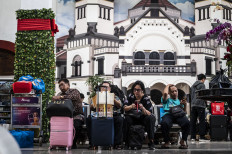
Authorities have warned of more potential extreme weather as the nation headed into another busy year-end holiday travel season over the weekend, with millions pouring in and out of Jakarta and other big cities nationwide amid muted celebrations in respect for those still reeling from the disaster in Sumatra.

Jakarta 8 months ago
PREMIUM
Jakarta braces for floods, landslides over holiday season
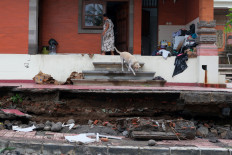
According to a forecast from the Meteorology, Climatology and Geophysics Agency (BMKG), Jakarta is expected to see intense rain and strong winds between Friday and Monday. In the past days, winds were recorded blowing at a speed of up to 55 kilometers per hour in Jakarta, above the normal average of below 30 km per hour.
Archipelago 8 months ago
PREMIUM
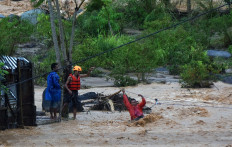
Cyclone warning prompts Bali to step up flood mitigation efforts
Five of Bali’s nine cities and regencies have been hit by flooding since Dec. 11, the provincial Disaster Mitigation Agency (BPBD) said, after days of persistent heavy rain triggered by cyclone seed 93S.
Archipelago 8 months ago
PREMIUM
Prabowo pushes for temporary housing in fourth visit to flood-hit Sumatra
President Prabowo Subianto has pledged to accelerate temporary housing construction and infrastructure repairs in West Sumatra during his fourth visit to disaster-hit regions in the northern part of Sumatra Island.


Politics 8 months ago
PREMIUM
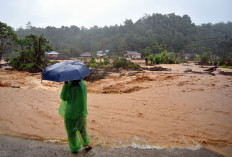
Regions ask for more state funds for disaster recovery
To fund recovery and reconstruction after the cyclone-induced floods and landslides, the administrations of Aceh and West Sumatra are requesting the central government to not cut the regional transfer fund (TKD) for 2026.
Editor's Picks
Popular
- Much ado about asset forfeiture
- Mass poisonings cast doubt on free meals reforms
- New data rules could unlock cross-border data flows
- Children are no longer the priority, were they ever?
- Three more volcanoes erupt following Sinabung, Anak Krakatau
- Indonesia, Hong Kong to host new 14-team FIFA ASEAN Cup
- Trump says he would be OK with China building cars in US
- Haze drives surge in respiratory illnesses in Indonesia
- Assessing the merit of the strategic commodities bill
- Modi, Putin seek stronger ties as Russia calls for BRICS to counter West


