The Jakarta Post
Please Update your browser
Your browser is out of date, and may not be compatible with our website. A list of the most popular web browsers can be found below.
Just click on the icons to get to the download page.


Popular Reads
Top Results
No results found. Please check your search term and try again
Can't find what you're looking for?
View all search results
Popular Reads
Top Results
No results found. Please check your search term and try again
Can't find what you're looking for?
View all search resultsliquidity

Economy 9 months ago
PREMIUM
Loan growth remains sluggish despite Purbaya’s liquidity injection
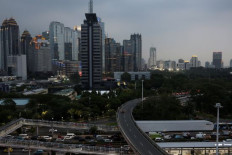
Disappointing data on bank lending raises questions about the effectiveness of the Finance Ministry’s Rp 200 trillion (US$12 billion) liquidity injection conducted in early September to jump-start economic activity, with economists pointing to a lack of credit demand.


Regulations 10 months ago
PREMIUM
Banks near full disbursement of $12b liquidity boost, cut borrowing costs
September's liquidity injection led to state-owned banks cutting their deposit rates by around 50 basis points (bps) and lending rates by around 11 bps, according to the Finance Ministry, which expects this to translate into stronger growth this quarter.
Regulations 10 months ago
PREMIUM
Bank Indonesia to add incentives amid slow lending
Bank Indonesia (BI) plans to roll out additional macroprudential liquidity incentives (KLM) on Dec. 1 through new disbursement schemes to boost sluggish credit growth and expedite the pass-through of central bank rate cuts to commercial banking rates.




Regulations 1 year ago
PREMIUM
Govt to deposit $12b in commercial banks to ‘jump-start’ lending
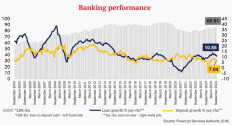
The government has announced plans to shift some state deposits from the central bank to commercial banks to allow for more loan disbursements and thereby invigorate private sector activity in a bid to achieve 6 to 7 percent gross domestic product growth.
Editor's Picks
Popular
- Mass poisonings cast doubt on free meals reforms
- Much ado about asset forfeiture
- New data rules could unlock cross-border data flows
- Children are no longer the priority, were they ever?
- Indonesia, Hong Kong to host new 14-team FIFA ASEAN Cup
- Assessing the merit of the strategic commodities bill
- Free meals face seven-day ultimatum, possible lawsuit
- Prabowo’s approval slide fuels warm-up to 2029 elections
- Volcanic eruptions take toll on economy
- Osama the gamer: A list of Bin Laden’s video games from his hard drive


