The Jakarta Post
Please Update your browser
Your browser is out of date, and may not be compatible with our website. A list of the most popular web browsers can be found below.
Just click on the icons to get to the download page.


Popular Reads
Top Results
No results found. Please check your search term and try again
Can't find what you're looking for?
View all search results
Popular Reads
Top Results
No results found. Please check your search term and try again
Can't find what you're looking for?
View all search resultspublic-space
Jakarta 1 month ago
PREMIUM
Jakartans welcome plan for more child-friendly spaces
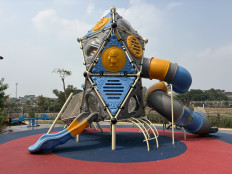
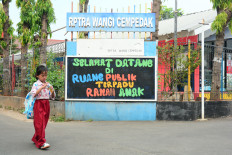
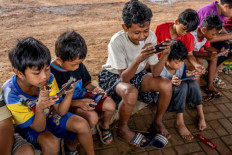
Announced during National’s Children Day, the Jakarta administration is planning to expand the number of integrated child-friendly public spaces (RPTRA) across the city, as only 173 of 267 subdistricts currently have such spaces.

Jakarta 2 months ago
PREMIUM
Jakarta library reopens to packed rooms, long queues
The line outside the Nyi Ageng Serang Public Library showed little sign of shrinking on Friday afternoon. Just two days after reopening on July 8, the South Jakarta library had already reached capacity, leaving dozens of visitors waiting patiently for their turn to enter.
Jakarta 2 months ago
PREMIUM
Jakartans look for space to breathe in concrete city
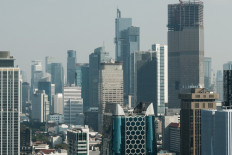
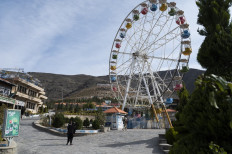
Public demand for more parks comes as Jakarta’s green open spaces remain insufficient, covering just 5.59 percent of the city’s total area as of April, well below the 20 percent target set under the 2007 Spatial Planning Law.
Jakarta 8 months ago
Yearender: Jakarta’s public space grow, but unevenly delivered
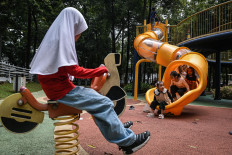
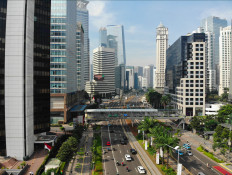
From 24-hour city parks to libraries extending their evening hours, Jakarta closed the year with a series of public space initiatives. Yet these expansions remain concentrated around economic hubs, reinforcing the spatial inequality that has long shaped the capital.
Community 4 years ago
PREMIUM
How We Can Do Better: Bettering Indonesia’s public spaces
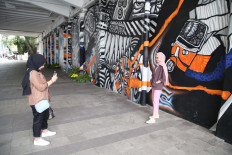
"How we can do better" is a new column that takes an insider's look at various industries and the ways they could improve. In this installment, we delve into the importance of urban planning for public spaces for communities.
Jakarta 4 years ago
PREMIUM
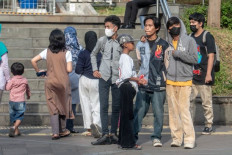
“Citayam phenomena” marks public demand for inclusive spaces
Recent emergence of youths from Jakarta’s satellite cities idling in crowds to bask in the capital’s downtown glory is a phenomenon experts described as a sign of “public thirst” for more inclusive public spaces.
Editor's Picks
Popular
- PISA gains belie Indonesia’s persistent education crisis
- Not the Ministry of Magic
- The benefit of the doubt has expired
- Suahasil seen to prioritize fiscal discipline, continuity
- Saudi-led coalition says Houthis fired ballistic missile at Riyadh
- Osama the gamer: A list of Bin Laden’s video games from his hard drive
- 3% deficit cap revision puts Indonesia’s fiscal credibility at risk
- Court decision tightens House oversight on free meals funding
- Police probe kidnapping, murder of Ukrainian tourist in Bali
- UN peacekeeping chief in Lebanon says smooth transition is critical before pull-out


