The Jakarta Post
Please Update your browser
Your browser is out of date, and may not be compatible with our website. A list of the most popular web browsers can be found below.
Just click on the icons to get to the download page.


Popular Reads
Top Results
No results found. Please check your search term and try again
Can't find what you're looking for?
View all search results
Popular Reads
Top Results
No results found. Please check your search term and try again
Can't find what you're looking for?
View all search resultspublic-transportation-in-jakarta

Companies 2 years ago
PREMIUM
Foreign investors interested in Jakarta LRT expansion: Jakpro
City-owned developer Jakpro says several foreign investors from across the globe have expressed interest in financing the Phase 1D, 2A and 2B expansion projects of the Jakarta LRT totaling an estimated Rp 24.06 trillion (US$1.48 billion).


Jakarta 2 years ago
PREMIUM
105 days of ‘mourning’: Commuters’ viral action leads to Bekasi Station escalator fix
One Bekasi resident's daily social media posts about a broken train station escalator finally led to its repair, but only after she and a group of like-minded commuters went offline to stage a minor protest resembling a 100th-day memorial service.
Jakarta 2 years ago
PREMIUM
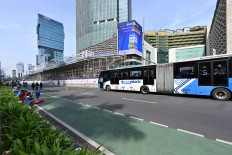
Transjakarta aims for more riders, sustainability after 20 years of service
After two decades of service transporting Jakartans around the city, Jakarta-owned bus operator Transjakarta is aiming to move more passengers and also improve the sustainability of its operations through a reduced subsidy from the city to help millions more people navigate the capital's notorious traffic.
Jakarta 2 years ago
PREMIUM
Yearender: Hailed yet flawed, Jakarta’s railway projects finally gather pace
Jakarta saw two of the most awaited and long-overdue railway projects taking off in 2023: the Greater Jakarta light rail transit (LRT) and the Jakarta-Bandung high-speed rail (HSR) service dubbed Whoosh.
Jakarta 3 years ago
PREMIUM
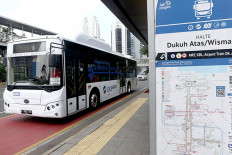
Jakarta’s targeted public transport subsidy turns heads
Jakarta’s plan to introduce targeted subsidies across the city’s three main modes of public transportation has drawn a bevy of mixed responses, with some experts lauding the move while others are vexed about potential data misuse.

Jakarta 3 years ago
PREMIUM
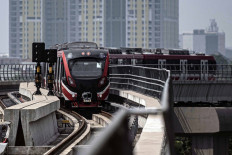
Some aboard! Greater Jakarta LRT starts limited trial ahead of August opening
The trial has been divided into two phases: the first for invited public officials and the press from Wednesday to July 26 and the second for registered members of public from July 27 to Aug. 17. The LRT will begin full operations on Aug. 18.
Jakarta 3 years ago
PREMIUM
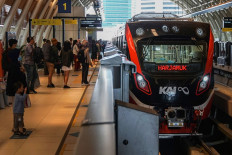
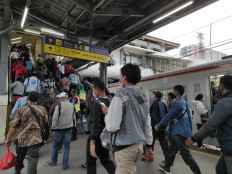
Commuter Line passengers face service deterioration with plan to retire 10 trains
Rail commuters face a reduction in service as Commuter Line service operator PT Kereta Commuter Indonesia (KCI) plans to retire 10 trains due to old age this year, while the importation of used Japanese trains has been met with resistance from the Industry Ministry.
Editor's Picks
Popular
- Ye, Bocelli asymmetry
- Making police reform work
- Pressure intensifies on Indonesia as regional haze worsens
- Indonesia accelerates data center build-out as digital economy nears $100 billion
- Southeast Asia’s AI boom tests data center sustainability
- Smoke from Kalimantan fires reaches Jakarta skies
- Consumer sentiment, retail sales weaken amid cautious spending
- Fires and cross-border haze: What can still be done
- Chinese online retailer Temu agrees to data privacy curbs in Texas lawsuit
- MSCI weighs downgrading Indonesia to standalone-market status


