The Jakarta Post
Please Update your browser
Your browser is out of date, and may not be compatible with our website. A list of the most popular web browsers can be found below.
Just click on the icons to get to the download page.


Popular Reads
Top Results
No results found. Please check your search term and try again
Can't find what you're looking for?
View all search results
Popular Reads
Top Results
No results found. Please check your search term and try again
Can't find what you're looking for?
View all search resultsUN agency says Chornobyl nuclear plant's protective shield damaged
The UN reported on Feb. 14 that Ukrainian authorities said a drone with a high explosive warhead struck the plant, caused a fire and damaged the protective cladding around reactor Number Four, which was destroyed in the 1986 disaster.
Change text size
Gift Premium Articles
to Anyone
Share the best of The Jakarta Post with friends, family, or colleagues. As a subscriber, you can gift 3 to 5 articles each month that anyone can read—no subscription needed!
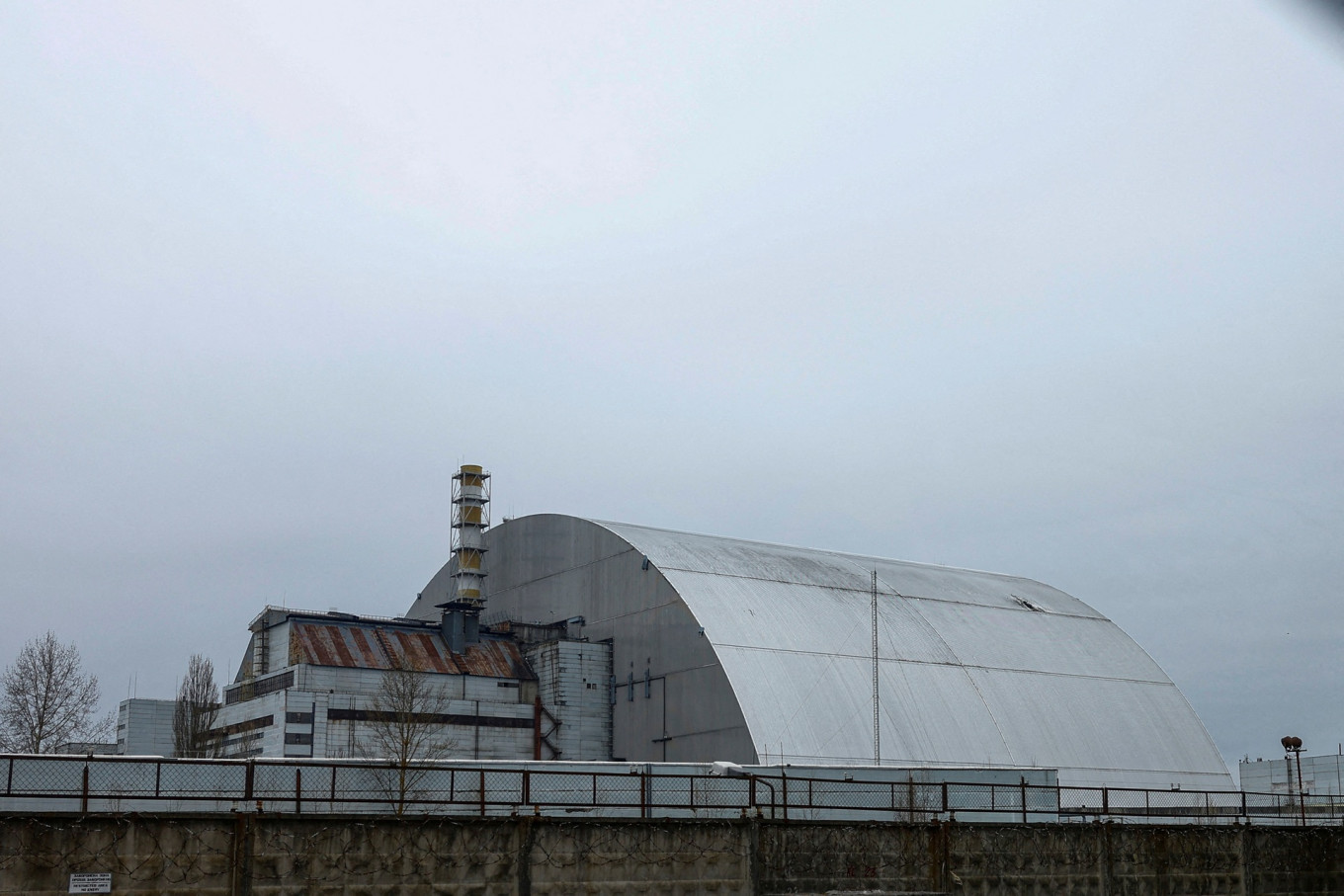 A general view shows the New Safe Confinement (NSC) structure, that covers the old sarcophagus which confines the remains of the damaged fourth reactor, and was damaged by a drone strike amid ongoing Russia's attack on Ukraine at the Chornobyl Nuclear Power Plant in Kyiv region, Ukraine, on April 12, 2025. (Reuters/Valentyn Ogirenko)
A
protective shield at the Chornobyl nuclear plant in war-torn Ukraine, built to contain radioactive material from the 1986 disaster, can no longer perform its main safety function due to drone damage, the United Nations nuclear watchdog said on Friday, a strike Ukraine has attributed to Russia.
The International Atomic Energy Agency (IAEA) said an inspection last week of the steel confinement structure completed in 2019 found the drone impact in February, three years into Russia's conflict in Ukraine, had degraded the structure.
IAEA Director General Rafael Grossi said in a statement the inspection "mission confirmed that the [protective structure] had lost its primary safety functions, including the confinement capability, but also found that there was no permanent damage to its load-bearing structures or monitoring systems."
Grossi said repairs had already been carried out "but comprehensive restoration remains essential to prevent further degradation and ensure long-term nuclear safety".
The UN reported on Feb. 14 that Ukrainian authorities said a drone with a high explosive warhead struck the plant, caused a fire and damaged the protective cladding around reactor Number Four, which was destroyed in the 1986 disaster.
Ukrainian authorities said the drone was Russian. Moscow denied it had attacked the plant.
Radiation levels remained normal and stable and there was no reports of radiation leaks, the UN said in February.
The nuclear plant is commonly known as Chernobyl, a spelling derived from Russian. Chornobyl is the romanized Ukrainian name for the site.
The 1986 Chornobyl explosion sent radiation across Europe and prompted Soviet authorities to mobilise vast numbers of men and equipment to deal with the accident. The plant's last working reactor was closed in 2000.
Russia occupied the plant and the surrounding area for more than a month in the first weeks of its February 2022 invasion of Ukraine as its forces initially tried to advance on the Ukrainian capital Kyiv.
The IAEA had conducted the inspection at the same time as a country-wide survey of damage to electricity substations by the nearly four-year war between Ukraine and Russia.