The Jakarta Post
Please Update your browser
Your browser is out of date, and may not be compatible with our website. A list of the most popular web browsers can be found below.
Just click on the icons to get to the download page.


Popular Reads
Top Results
No results found. Please check your search term and try again
Can't find what you're looking for?
View all search results
Popular Reads
Top Results
No results found. Please check your search term and try again
Can't find what you're looking for?
View all search resultsAustralia begins enforcing world-first teen social media ban
For social media businesses, the implementation marks a new era of structural stagnation as user numbers flatline and time spent on platforms shrinks, studies show.
Change text size
Gift Premium Articles
to Anyone
Share the best of The Jakarta Post with friends, family, or colleagues. As a subscriber, you can gift 3 to 5 articles each month that anyone can read—no subscription needed!
 Set as preferred source
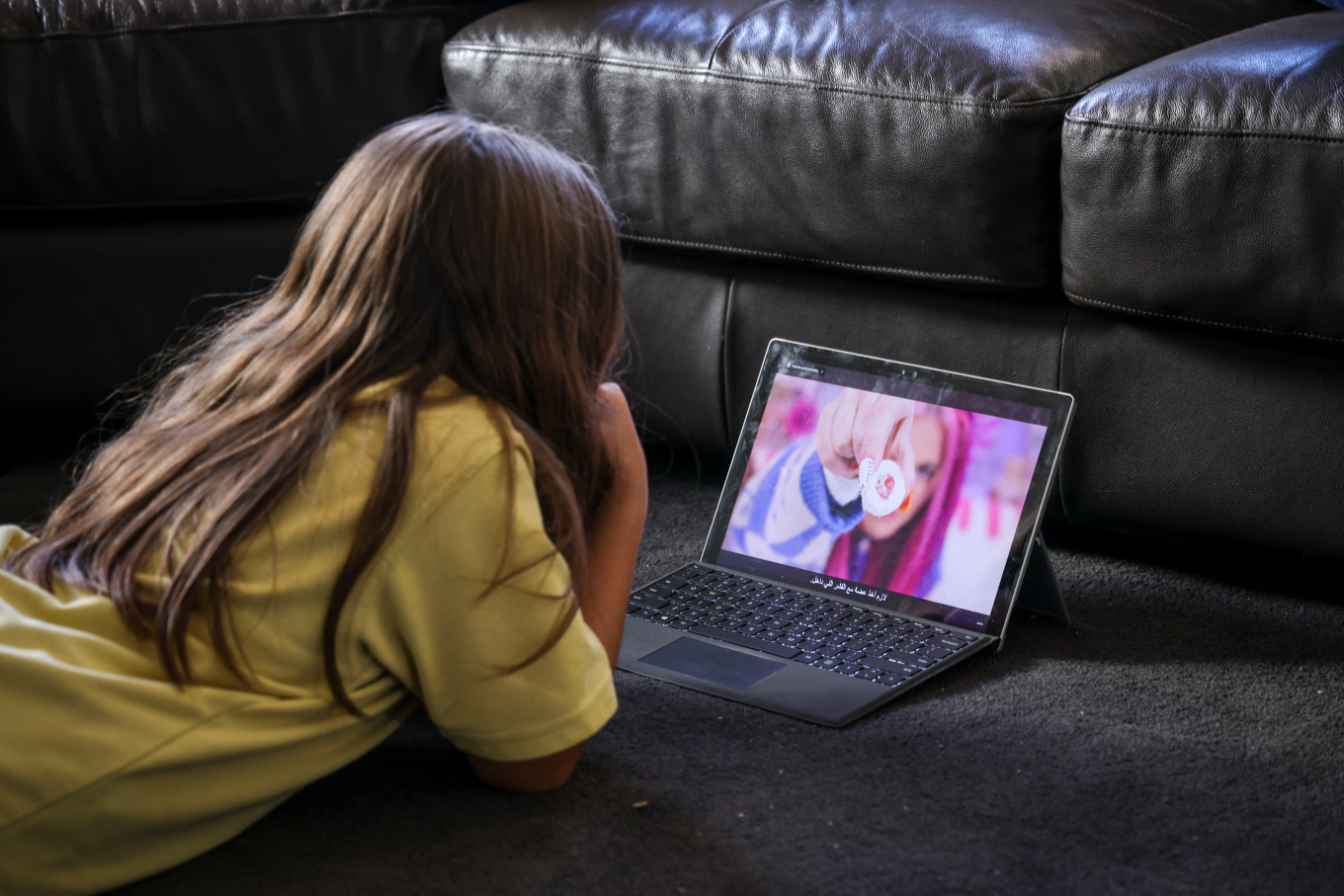 Protecting the youth: This photo taken on Oct. 30, 2025, shows 10-year- old Bianca Navarro lying on the floor as she watches a show on YouTube at her home in western Sydney, Australia. Australia’s un- der-16 social media ban will make the nation a real-life laboratory on how best to tackle the technology’s impact on young people, experts say. (AFP/David Gray)
A
ustralia on Wednesday became the first country to ban social media for children under 16, blocking access to platforms including TikTok, Alphabet's YouTube and Meta's Instagram and Facebook.
Ten of the biggest platforms were ordered to block children from midnight (13:00 GMT on Tuesday) or face fines of up to A$49.5 million ($33 million) under the new law, which drew criticism from major technology companies and free speech advocates, but was welcomed by many parents and child advocates.
Prime Minister Anthony Albanese called it "a proud day" for families and cast the law as proof that policymakers can curb online harms that have outpaced traditional safeguards.
"This will make an enormous difference. It is one of the biggest social and cultural changes that our nation has faced," Albanese told a news conference on Wednesday.
"It's a profound reform which will continue to reverberate around the world."
In a video message, Albanese urged children to "start a new sport, new instrument, or read that book that has been sitting there for some time on your shelf," ahead of Australia's summer school break starting later this month.
In the hours before the ban took effect, many of the estimated one million children impacted by the legislation began posting messages saying goodbye to their online followers.
"No more social media... no more contact with the rest of the world," wrote one teen on TikTok.
"#seeyouwhenim16," said another.
The rollout caps a year of debate over whether any country could practically stop children from using platforms embedded in daily life, and begins a live test for governments worldwide frustrated that social media firms have been slow to implement harm-reduction measures.
Albanese's center-left government proposed the landmark law citing research showing harms to mental health from the overuse of social media among young teens, including misinformation, bullying and harmful depictions of body image.
Several countries from Denmark to New Zealand to Malaysia have signaled they may study or emulate Australia's model, making the country a test case for how far governments can push age-gating without stifling speech or innovation.
Elon Musk's X became the last of the 10 major platforms to take measures to cut off access to underage teens after publicly acknowledging on Wednesday that it would comply.
"It's not our choice - it's what the Australian law requires," X said on its website.
"X automatically offboards anyone who does not meet our age requirements."
Australia has said the initial list of covered platforms would change as new products emerge and young users migrate.
Companies have told Canberra they will deploy a mix of age inference - estimating a user's age from their behavior - and age estimation based on a selfie, alongside checks that could include uploaded identification documents or linked bank account details.
For social media businesses, the implementation marks a new era of structural stagnation as user numbers flatline and time spent on platforms shrinks, studies show.
Platforms say they earn little from advertising to under-16s, but warn the ban disrupts a pipeline of future users. Just before the ban took effect, 86 percent of Australians aged eight to 15 used social media, the government said.
Some youngsters have warned the social media ban could isolate people.
"It's going to be worse for queer people and people with niche interests I guess because that's the only way they can find their community," said 14-year-old Annie Wang ahead of the ban.
"Some people also use it to vent their feelings and talk to people to get help ... So I feel like it'll be fine for some people, but for some people it'll worsen their mental health."