TheJakartaPost
Please Update your browser
Your browser is out of date, and may not be compatible with our website. A list of the most popular web browsers can be found below.
Just click on the icons to get to the download page.


Popular Reads
Top Results
No results found. Please check your search term and try again
Can't find what you're looking for?
View all search results
Popular Reads
Top Results
No results found. Please check your search term and try again
Can't find what you're looking for?
View all search resultsChina's population drops for fourth year as fewer babies born
The country's population dropped by 3.39 million to 1.405 billion, a faster decline than 2024, while the total number of births dropped to 7.92 million in 2025, down 17 percent from 9.54 million in 2024. The number of deaths rose to 11.31 million from 10.93 million in 2024, figures from China's National Bureau of Statistics (NBS) showed.
Change text size
Gift Premium Articles
to Anyone
Share the best of The Jakarta Post with friends, family, or colleagues. As a subscriber, you can gift 3 to 5 articles each month that anyone can read—no subscription needed!
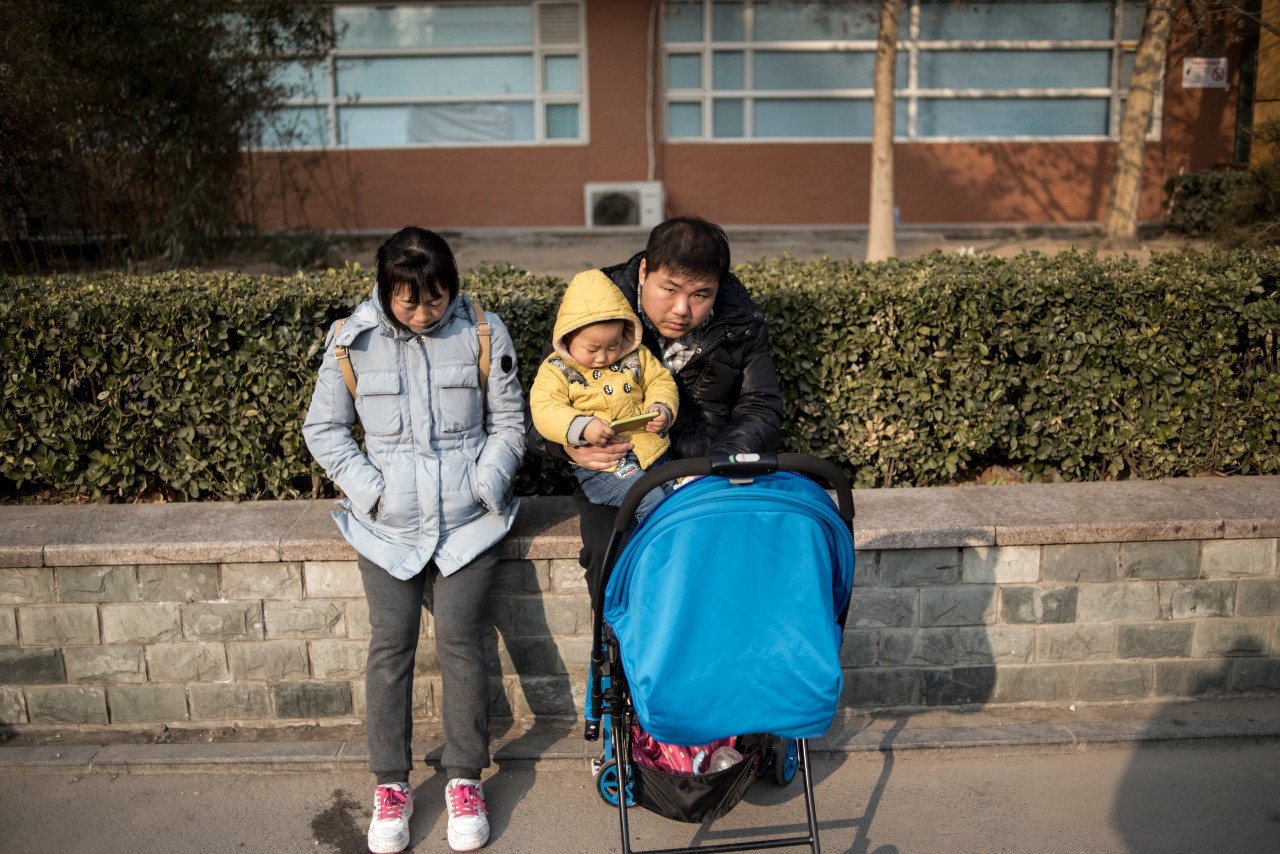 A couple and a child wait in the street of Beijing on Jan. 1, 2016. Married couples in China will from Jan. 1, be allowed to have two children, after concerns over an ageing population and shrinking workforce ushered in an end to the country's controversial one-child policy. (AFP/Fred Dufour)
C
hina's population fell for a fourth consecutive year in 2025 as the birthrate plunged to a record low, official data showed on Monday, with experts warning of further decline.
The country's population dropped by 3.39 million to 1.405 billion, a faster decline than 2024, while the total number of births dropped to 7.92 million in 2025, down 17 percent from 9.54 million in 2024. The number of deaths rose to 11.31 million from 10.93 million in 2024, figures from China's National Bureau of Statistics (NBS) showed.
China's birth rate dropped to 5.63 per 1,000 people.
Births in 2025 were "roughly the same level as in 1738, when China's population was only about 150 million," said Yi Fuxian, a demographer at the University of Wisconsin-Madison.
China's death rate of 8.04 per 1,000 people in 2025 was the highest since 1968.
China's population has been shrinking since 2022 and is ageing rapidly, complicating Beijing's plan to boost domestic consumption and rein in debt.
The number of people aged over 60 years old reached around 23 percent of total population, the NBS data showed. By 2035 the number of over-60s is set to hit 400 million - roughly equal to the populations of the United States and Italy combined - meaning hundreds of millions of people are set to leave the workforce at a time when pension budgets are already stretched. China has already increased retirement ages, with men now expected to work until they are 63 rather than 60, and women until they are 58 rather than 55.
Marriages in China plunged by a fifth in 2024, the biggest drop on record, with more than 6.1 million couples registering for marriage, down from 7.68 million in 2023.
Marriages are typically a leading indicator for birth rates in China.
Demographers say a decision in May 2025 to allow couples to marry anywhere in the country rather than only their place of residence is likely to lead to a temporary boost to births.
Marriages rose 22.5 percent from a year earlier to 1.61 million in the third quarter of 2025, putting China on course to halt an almost decade-long annual decline in marriages.Full data for 2025 will be released later this year.
Authorities are also trying to promote "positive views on marriage and childbearing" as they try to undo the influence of the one-child policythat was in force from 1980 to 2015 helping to tackle poverty, but reshaping Chinese families and society.
Population movement has exacerbated the demographic challenge with large numbers of people moving from rural farms to the city, where having children is more expensive.
China's urbanisation rate stood at 68 percent in 2025, the data showed, from about 43 percent in 2005.
Policymakers have made population planning a key part of the country's economic strategy and this year Beijing faces a total potential cost of around 180 billion yuan ($25.8 billion) to boost births, according to Reuters estimates.
Key costs are the national child subsidy, which was introduced for the first time last year, as well as a pledge that women throughout pregnancy have "no out-of-pocket expenses" in 2026, with all medical costs, including in vitro fertilisation (IVF), fully reimbursable under its national medical insurance fund.
China has one of the lowest fertility rates in the world at around 1 birth per woman, well below the 2.1 replacement rate. Other East Asian economies including Taiwan, South Korea and Singapore have similarly low levels of fertility at around 1.1 births per woman.
China's pool of women of reproductive age, defined by the UN as women aged from 15 to 49 years old, is set to drop by more than two-thirds to less than 100 million by the end of the century.