The Jakarta Post
Please Update your browser
Your browser is out of date, and may not be compatible with our website. A list of the most popular web browsers can be found below.
Just click on the icons to get to the download page.


Popular Reads
Top Results
No results found. Please check your search term and try again
Can't find what you're looking for?
View all search results
Popular Reads
Top Results
No results found. Please check your search term and try again
Can't find what you're looking for?
View all search results$1bn pledge to Board of Peace raises domestic concerns
Foreign Minister Sugiono clarified this week that Indonesia’s membership on the board does not require paying the widely circulated US$1 billion contribution, at least in the long run.
Change text size
Gift Premium Articles
to Anyone
Share the best of The Jakarta Post with friends, family, or colleagues. As a subscriber, you can gift 3 to 5 articles each month that anyone can read—no subscription needed!
 Set as preferred source
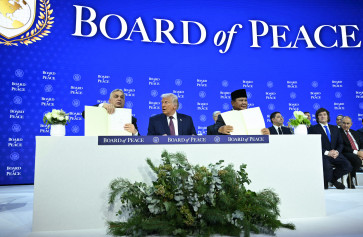
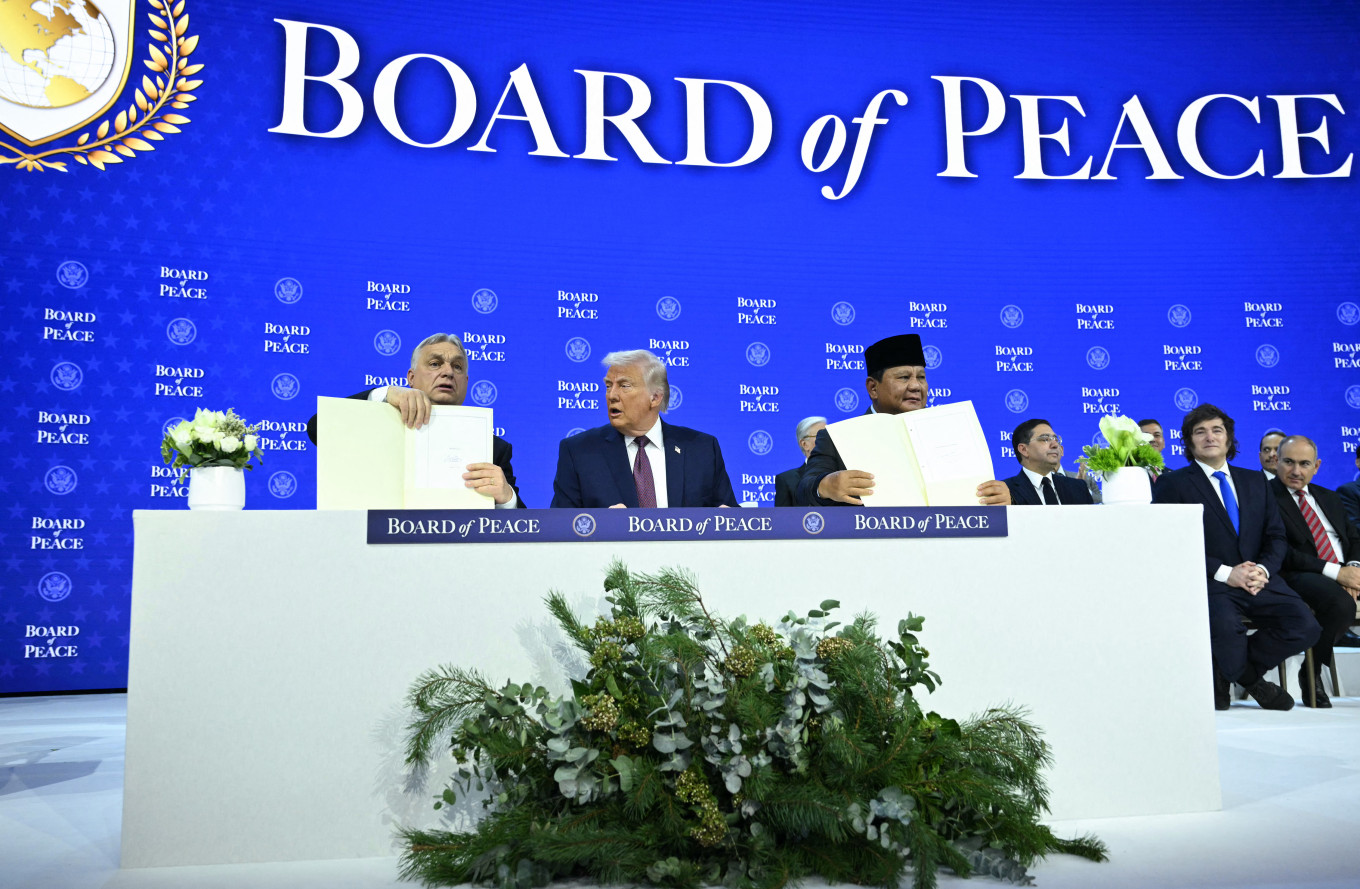 President Prabowo Subianto (right) and Hungary's Prime Minister Viktor Orban (left) hold a signed founding charter next to United States President Donald Trump (center) at the “Board of Peace“ meeting during the World Economic Forum (WEF) annual meeting in Davos on Jan. 22, 2026. Originally meant to oversee the rebuilding of Gaza after the war between Hamas and Israel, the board's charter does not limit its role to the Strip, and has sparked concerns that Trump wants it to rival the United Nations. (AFP/Mandel Ngan)
Indonesia’s decision to join the newly established Board of Peace, a United States-led initiative to rebuild Gaza, has drawn public scrutiny amid questions about the forum’s transparency, financial structure and consistency with Jakarta’s long-standing pro-Palestine stance.
Foreign Minister Sugiono clarified this week that Indonesia’s membership on the board does not require paying the widely circulated US$1 billion contribution, at least in the long run.
“There is no obligation for Indonesia to pay the $1 billion to join,” he told the press after a meeting with lawmakers in Jakarta, adding that all contributions are voluntary and intended to fund Gaza’s reconstruction, not to purchase influence.
The Board of Peace, announced during the World Economic Forum in Davos, Switzerland earlier this month, is expected to oversee a postwar reconstruction plan for the Gaza Strip. It groups several predominantly Muslim countries like Indonesia, including Saudi Arabia, Egypt, Morocco and the United Arab Emirates, alongside Western nations such as the US and the United Kingdom.
Jakarta’s participation follows months of diplomatic campaigning for a ceasefire and humanitarian access in Gaza. The government has repeatedly affirmed that Palestinian statehood and sovereignty remain central to Indonesia’s foreign policy, even as it explores new platforms for engagement.