TheJakartaPost
Please Update your browser
Your browser is out of date, and may not be compatible with our website. A list of the most popular web browsers can be found below.
Just click on the icons to get to the download page.


Popular Reads
Top Results
No results found. Please check your search term and try again
Can't find what you're looking for?
View all search results
Popular Reads
Top Results
No results found. Please check your search term and try again
Can't find what you're looking for?
View all search resultsPalestinians await full Rafah reopening as Israel eases two-year closure
The resumption of operations in a tightly restricted pilot phase on Sunday came after months of appeals from aid groups.
Change text size
Gift Premium Articles
to Anyone
Share the best of The Jakarta Post with friends, family, or colleagues. As a subscriber, you can gift 3 to 5 articles each month that anyone can read—no subscription needed!
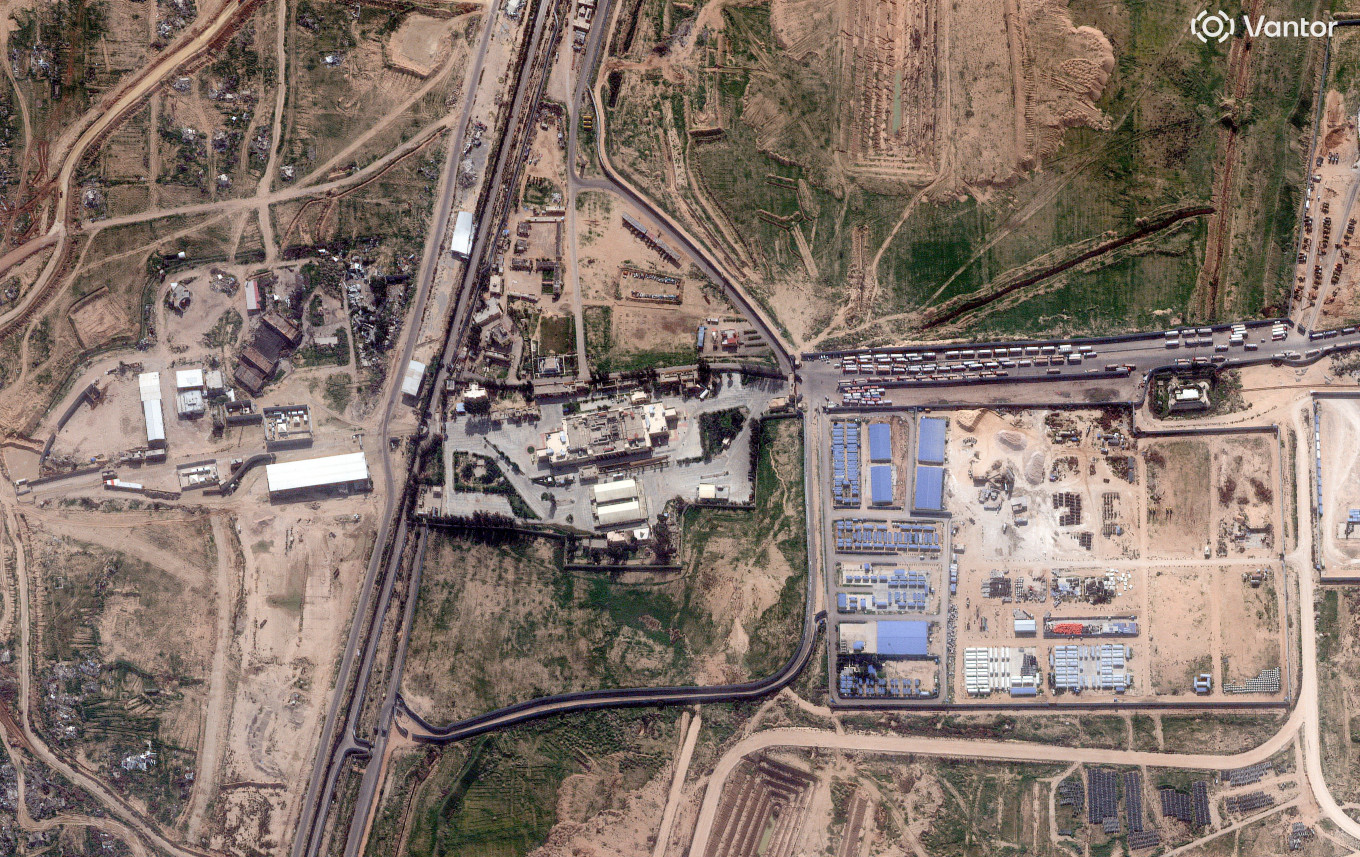 A satellite image shows trucks amassed at the Rafah border crossing, between Egypt and the Gaza Strip, January 29, 2026. (Reuters/Vantor)
P
alestinians were on Monday awaiting a full reopening of the Rafah crossing between Gaza and Egypt, after Israel partially reopened it a day earlier, nearly two years after seizing control of the key gateway during the war with Hamas.
The resumption of operations in a tightly restricted pilot phase on Sunday came after months of appeals from aid groups.
Israeli state broadcaster Kan reported that around 150 people were expected to leave Gaza for Egypt on Monday, including 50 patients. The report said around 50 people were also expected to enter the territory.
Kan said the crossing would be open for about six hours daily.
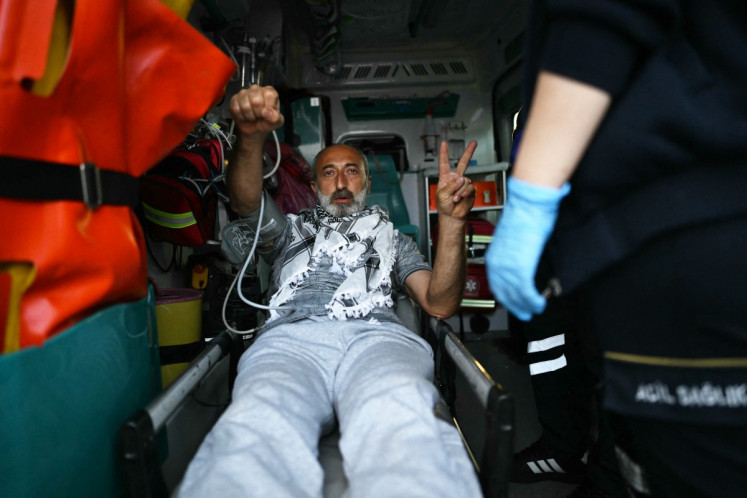
AFP images from Sunday showed ambulances queued up on the Egyptian side preparing to receive medical evacuees, who were expected to be the first groups allowed out.
An official at Gaza's health ministry, which operates under Hamas authority, said about 200 patients were waiting for permission to leave the territory.
"The Rafah crossing is a lifeline," said Mohammed Nassir, a Palestinian who had his leg amputated after being injured early in the war.
"I need to undergo surgery that is unavailable in Gaza but can be performed abroad."
Rafah is considered a key entry point for aid into Gaza, where humanitarian conditions remain dire after two years of war in spite of a ceasefire in place since October 10.
The crossing has been closed since Israeli forces seized control of it in May 2024 during the war with Hamas, aside from a brief and limited reopening in early 2025.
COGAT, the Israeli defense ministry body coordinating Palestinian civilian affairs, made no mention of allowing in a long-hoped-for surge of aid, only saying the passage of individuals "in both directions" was expected to begin Monday.
Egypt's state‑linked Cairo News reported that the Egyptian side of the crossing would remain open "round the clock" and that Egyptian hospitals were prepared to receive patients coming from Gaza.
The leaders of Egypt and Jordan meanwhile renewed their rejection of any attempts to displace Palestinians from Gaza.
Israel had previously tied Rafah's reopening to the return of the remains of Ran Gvili, the last Israeli hostage held in Gaza. His body was recovered and buried last week, prompting Israel to announce the phased reopening.
Violence continued ahead of the reopening, with Gaza's civil defence reporting at least 32 people killed in Israeli attacks on Saturday.
The Israeli military said it had retaliated after militants emerged from a tunnel in Rafah.
Israel on Sunday also announced it was terminating the humanitarian operations of Doctors Without Borders (MSF) in Gaza after the charity refused to provide a list of its Palestinian staff -- a requirement MSF said would put workers at risk.
Located on Gaza's southern border with Egypt, Rafah is the only crossing into and out of the territory that does not pass through Israel.
It lies in an area held by Israeli forces following their withdrawal behind the so-called "Yellow Line" under the terms of the US-brokered ceasefire.
Israeli troops still control more than half of Gaza, while the rest remains under Hamas authority.