The Jakarta Post
Please Update your browser
Your browser is out of date, and may not be compatible with our website. A list of the most popular web browsers can be found below.
Just click on the icons to get to the download page.


Popular Reads
Top Results
No results found. Please check your search term and try again
Can't find what you're looking for?
View all search results
Popular Reads
Top Results
No results found. Please check your search term and try again
Can't find what you're looking for?
View all search resultsUS tariff deal tests Indonesia’s free and active doctrine
The Agreement on Reciprocal Tariffs (ART) with the United States may make it harder for Indonesia to sustain policy flexibility in dealing with other countries and various situations in the international geopolitical stage, experts have warned.
Change text size
Gift Premium Articles
to Anyone
Share the best of The Jakarta Post with friends, family, or colleagues. As a subscriber, you can gift 3 to 5 articles each month that anyone can read—no subscription needed!
 Set as preferred source
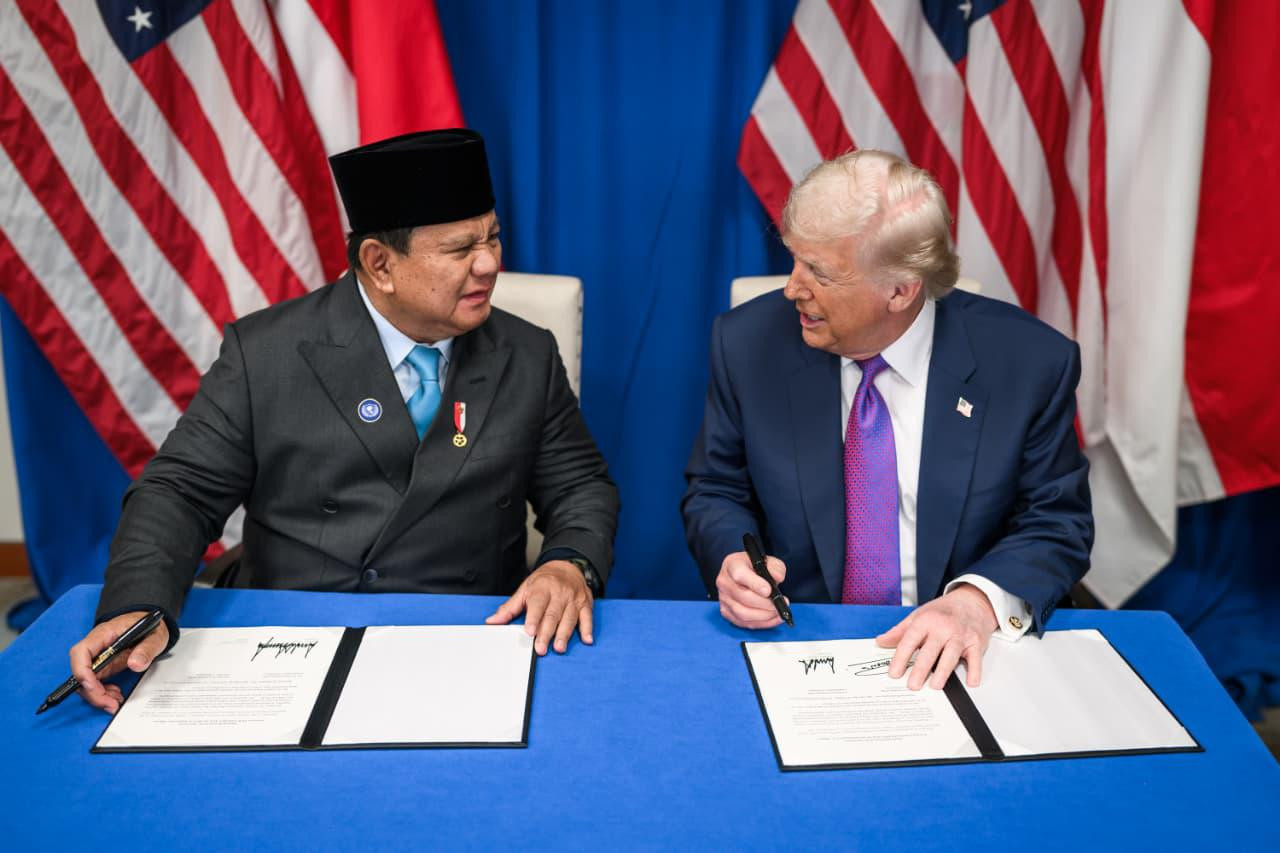 President Prabowo Subianto (left) speaks to United States President Donald Trump (right) during the signing of the US-Indonesia Agreement on Reciprocal Tariffs (ART) in Washington, DC, on Feb. 19, 2026. The trade deal locks in tariff rates and non-tariff barriers to commerce between Indonesia and the US. (Courtesy of Presidential Secretariat/White House)
C
oncerns have emerged that Indonesia’s strategic autonomy could be limited following the signing of the recent trade deal with the United States, with analysts warning that the country’s pandering to its partner’s interests could potentially constrain the nation’s “free and active” foreign policy doctrine.
Indonesia has long based its diplomacy on the free and active principle that allowed Jakarta to engage competing powers while keeping its national interests front and center, from the Cold War to today’s superpower rivalry.
But the future of this approach has now been called into question after President Prabowo Subianto signed the Agreement on Reciprocal Tariffs (ART) with his US counterpart Donald Trump, which was primarily aimed at reducing tariffs on Indonesian exports while eliminating most duties on American goods entering the country.
The agreement contains provisions analysts fear may carry implications beyond trade by embedding elements of economic security alignment and linking Indonesia’s regulatory choices to US strategic interests.
Among these is Article 5.3, which effectively gives the US leverage over Indonesia’s future trade agreements, and Article 5.1, which mandates alignment with US national and economic security measures, including sanctions imposed on any third countries with which Indonesia may partner.
Experts say the new rules reach into policy areas that Indonesia has historically guarded as sovereign domains, particularly its discretion over sanctions and third-country engagement.
In 2022, for example, Jakarta resisted Western pressure to impose sanctions on Russia following the latter’s invasion of Ukraine, maintaining that such measures did not align with its national interests. At the time, the move helped protect Indonesia’s energy interests and shielded the domestic economy from price shocks amid global supply disruptions that were already straining local markets.