The Jakarta Post
Please Update your browser
Your browser is out of date, and may not be compatible with our website. A list of the most popular web browsers can be found below.
Just click on the icons to get to the download page.


Popular Reads
Top Results
No results found. Please check your search term and try again
Can't find what you're looking for?
View all search results
Popular Reads
Top Results
No results found. Please check your search term and try again
Can't find what you're looking for?
View all search resultsTrump and Iran signal no quick end to war as tankers burn in Iraqi waters
Change text size
Gift Premium Articles
to Anyone
Share the best of The Jakarta Post with friends, family, or colleagues. As a subscriber, you can gift 3 to 5 articles each month that anyone can read—no subscription needed!
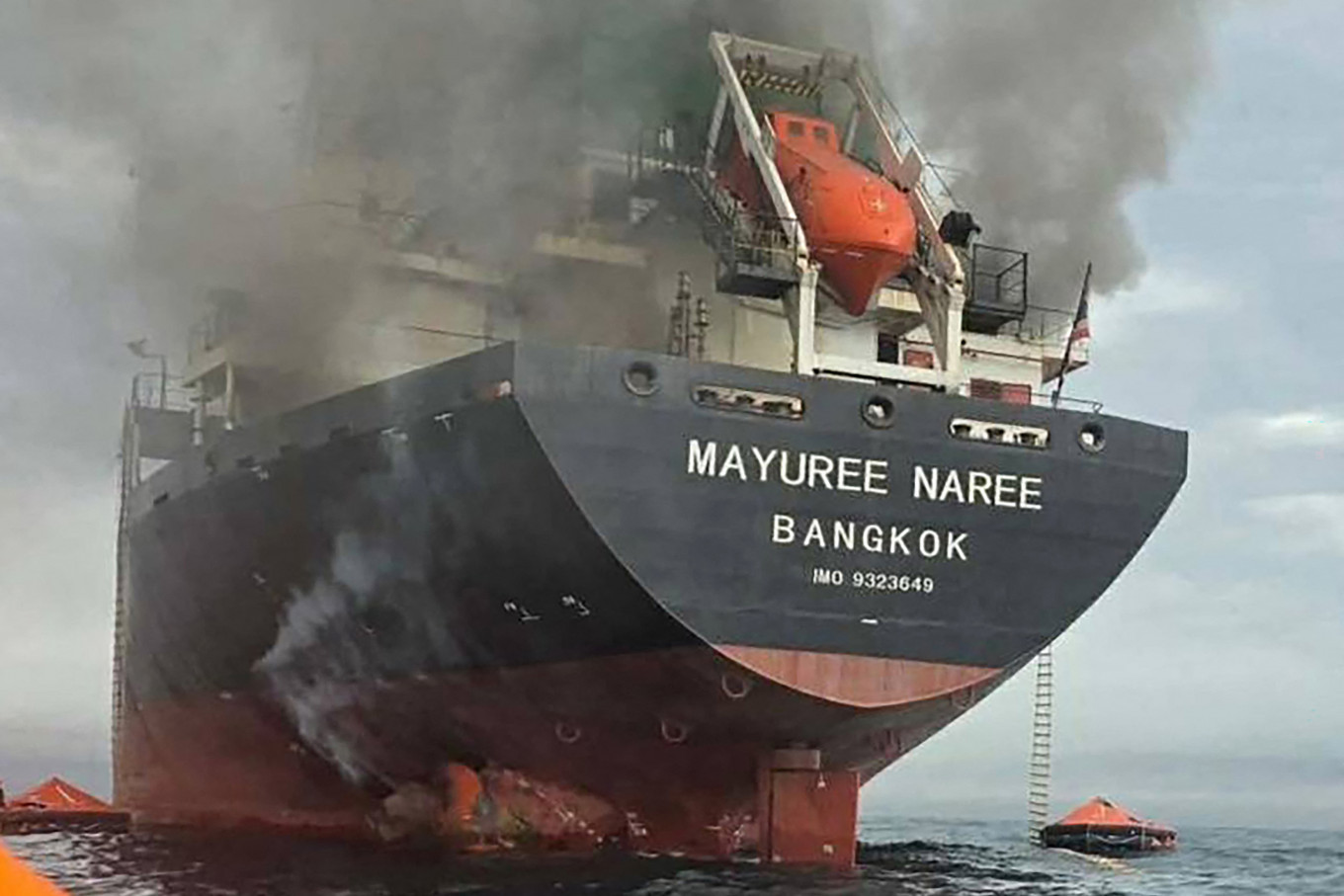 This handout photo taken on March 11, 2026 and released by the Royal Thai Navy shows smoke rising from the Thai bulk carrier 'Mayuree Naree' near the Strait of Hormuz after an attack. A Thai bulk carrier traveling in the crucial Strait of Hormuz was attacked March 11, with 20 crew members rescued so far, the Thai navy said. (AFP/Handout/Royal Thai Navy)
T
he United States and Iran have signaled no quick end to their war, with US President Donald Trump saying it was necessary to finish the job and Iran warning that the world should be ready for oil at US$200 a barrel after striking tankers in Iraqi waters and other ships near the vital Strait of Hormuz.
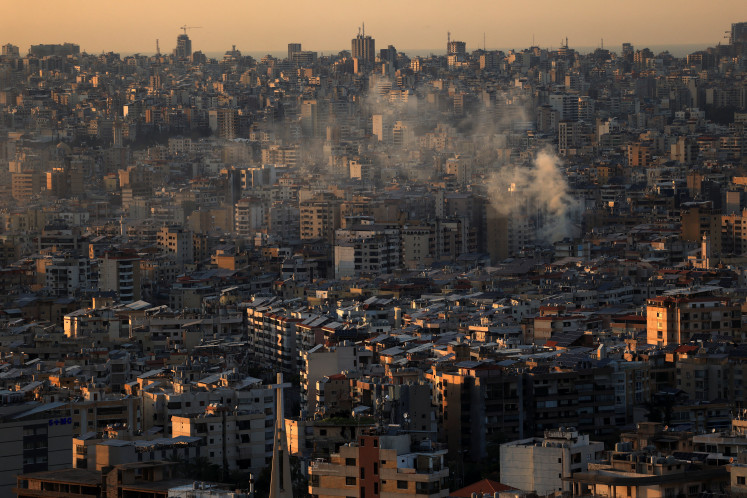
The war unleashed with joint US and Israeli air strikes nearly two weeks ago has so far killed around 2,000 people, mostly Iranians and Lebanese, as it has spread into Lebanon and thrown global energy markets and transport into chaos.
The United Nations Children's Fund (UNICEF) said more than 1,100 children had been killed or injured.
At a campaign-style rally in Kentucky ahead of November midterm elections in which his Republican party is trailing badly, Trump said the United States had "won" the war but didn't want to have to go back every two years.
"We don't want to leave early, do we?" he said on Wednesday. "We got to finish the job."
Oil prices, which shot up earlier in the week to nearly $120 a barrel before settling back to around $90, rose nearly 5 percent on Wednesday and extended gains in Asian trade on Thursday amid renewed fears about supply disruption. Wall Street's main share indexes fell.
Despite what the Pentagon has described as the most intense airstrikes since the start of the war, Iran on Wednesday hit targets in Israel and across the Middle East, demonstrating it can still fight back.
Iranian explosive-laden boats appear to have attacked two fuel tankers in Iraqi waters setting them ablaze and killing one crew member after projectiles struck three vessels in Gulf waters, said port, maritime security and risk firms.
"This appears to mark a direct and forceful Iranian response to the IEA’s overnight announcement of a massive strategic reserve release aimed at cooling runaway prices," said Tony Sycamore, analyst at IG.
The International Energy Agency, made up of major oil consuming nations, recommended releasing 400 million barrels from global strategic reserves to dampen one of the worst oil shocks since the 1970s, the biggest such intervention in history.
Trump said the IEA decision "will substantially reduce oil prices as we end this threat to America and the world."
US Energy Secretary Chris Wright said Trump had authorized the release of 172 million barrels from the US Strategic Petroleum Reserve from next week.
The war has seen ports and cities in the Gulf states as well as targets in Israel hit by drone and missile barrages from Iran.
Crucial oil route blocked
So far there has been no sign that ships can safely sail through the Strait of Hormuz, the now-blockaded channel along the Iranian coast that serves as a conduit for around a fifth of the world's oil.
On Wednesday, an Iranian military spokesperson said the Strait was "undoubtedly" under Iran's control and the G7 group of nations – the United States, Canada, Japan, Italy, Britain, Germany and France – agreed to examine the option of providing escort for ships so they can navigate freely in the Gulf.
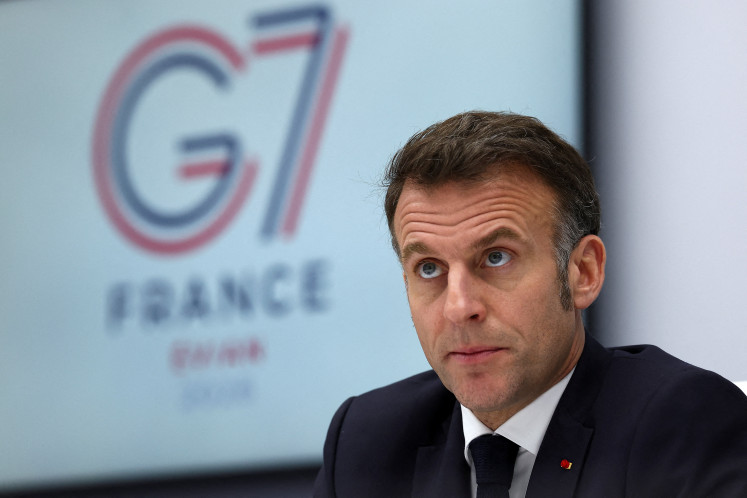
Trump said US forces had knocked out 58 Iranian naval ships and that Iran was "pretty much at the end of the line."
He said the US would now "look very strongly" at the Strait of Hormuz, adding: "The straits are in great shape. We've knocked out all of their boats. They have some missiles, but not very many."
Trump said earlier ships "should" transit through the strait but sources said Iran had deployed about a dozen mines in the channel, further complicating the blockade.
ABC News said the Federal Bureau of Investigation had warned of Iranian drones potentially striking the US West Coast, although Trump said he was not worried that Iran might launch strikes on US soil.
The US State Department also warned that Iran and aligned militias may be planning to target US-owned oil and energy infrastructure in Iraq and warned that militias had in the past targeted hotels frequented by Americans.
US and Israeli officials have said their aim is to end Iran's ability to project force beyond its borders and destroy its nuclear program. An Israeli military official said the military still had an extensive list of targets to hit in Iran, including ballistic missile and nuclear-related sites.
The US military told Iranians to stay clear of ports with Iranian navy facilities, drawing a warning from Iran's military that if the ports were threatened, economic and trade centers in the region would be "legitimate targets".
With pump prices surging, oil prices have become an increasingly urgent element in the calculations behind the war.
Iran has made clear it intends to impose a prolonged economic shock, with the spokesperson for Iran's military command saying in remarks directed at the US on Wednesday: "Get ready for oil to be $200 a barrel, because the oil price depends on regional security, which you have destabilized."
The rate at which IEA countries can release strategic reserves will vary and the amount released would account for just a fraction of the supply through the Hormuz Strait.
After offices of a bank in Tehran were hit overnight, Iran said it would respond with attacks on banks that do business with the US or Israel and people across the Middle East should stay 1,000 meters from banks.