The Jakarta Post
Please Update your browser
Your browser is out of date, and may not be compatible with our website. A list of the most popular web browsers can be found below.
Just click on the icons to get to the download page.


Popular Reads
Top Results
No results found. Please check your search term and try again
Can't find what you're looking for?
View all search results
Popular Reads
Top Results
No results found. Please check your search term and try again
Can't find what you're looking for?
View all search resultsNepal ex-rapper's party wins election in landslide after Gen Z protests
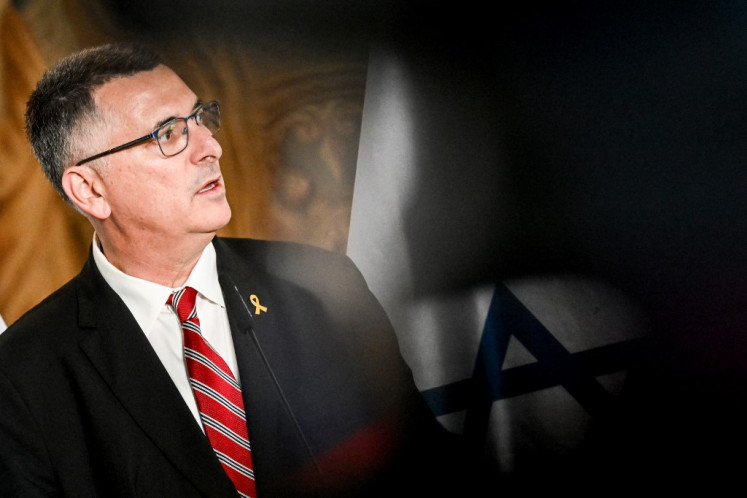
The election has been dominated by Balendra Shah, the former mayor of Kathmandu, the capital, whose rap music critical of the establishment gained him near-rockstar-like fame on social media.
Change text size
Gift Premium Articles
to Anyone
Share the best of The Jakarta Post with friends, family, or colleagues. As a subscriber, you can gift 3 to 5 articles each month that anyone can read—no subscription needed!
 Set as preferred source
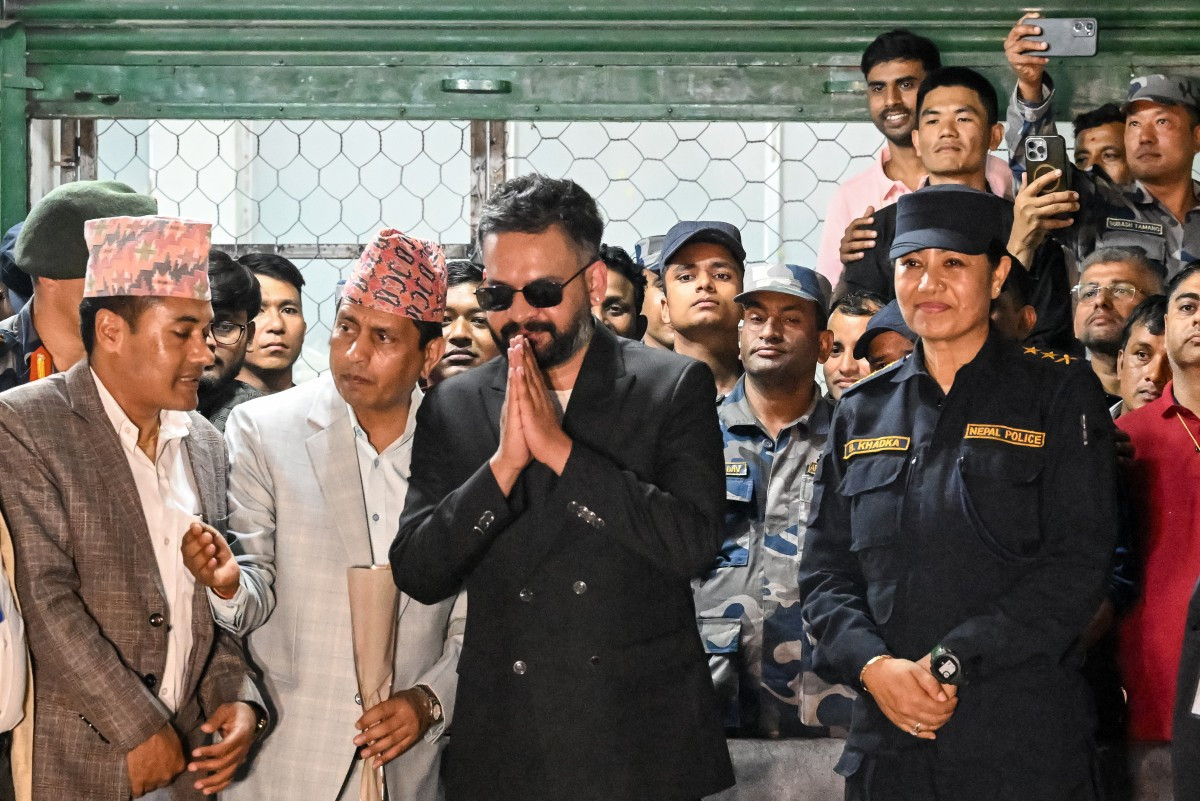 Rastriya Swatantra Party (RSP) election candidate Balendra Shah (center) greets supporters after collecting a certificate for his victory in parliamentary elections at the counting center in Damak in Nepal's Jhapa district on March 7, 2026. (AFP/Prakash Mathema)
A
three-year-old party won Nepal's general elections by a landslide, authorities said, positioning its candidate Balendra Shah to become the next prime minister, with a mandate for the rapper-turned-politician to restore political stability.
The March 5 election was the Himalayan nation's first vote since demonstrations against corruption last September led by Gen Z protesters that killed 77 people and toppled the government.
"If everything goes well, we can expect that it can give a stable government for five years," said constitutional expert Purna Man Shakya, referring to splits over dividing up the spoils of office that doomed prior majority governments.
Shah’s Rastriya Swatantra Party (RSP) won 182 seats in the 275-member parliament, the Election Commission said on Thursday, the largest majority of any party in more than six decades.
That holds out hope for stability in a nation that has seen 32 changes of government in the last 35 years, battering investors' confidence while crippling economic and jobs growth.
"We are encouraged by the victory," said newly-elected lawmaker Sisir Khanal, a senior leader of the winning RSP. "The mandate has made us very responsible."
The election relegated the oldest party, the Nepali Congress, to distant second place with just 38 seats, while the Communist Party of Nepal (Unified Marxist-Leninist) of former prime minister K.P. Sharma Oli won only 25.
Former chief justice Sushila Karki succeeded Oli as the interim prime minister tasked with holding the election.
The election has been dominated by Shah, the former mayor of Kathmandu, the capital, whose rap music critical of the establishment gained him near-rockstar-like fame on social media.
He is the first politician expected to become prime minister who hails from the southern plains, known as Madhesh, where smaller regional groups failed to win a single seat.
His RSP canvassed on a program to fight graft, create jobs and more than double the $42 billion-economy in five years.
But its firebrand leader Ravi Lamichhane, a former television host, faces charges of misusing the funds of small saving companies. He denies the accusations and has been freed on bail.
Last year's youth-led uprising in the nation of 30 million nestled between China and India followed a social media ban that drew thousands into the streets, triggering clashes and deaths that forced Oli's resignation.
After the historic protest, the 35-year-old Shah, who is also known as Balen, posted a typically terse message to millions of followers on social media.
"Dear Gen Z, the resignation of your killer has come," he wrote. "Now your generation will have to lead the country. Be prepared."
Five months on, Shah and his party are on course to lead the country and expected to reshape the politics in the Himalayan nation.
His ascension to power caps a dramatic rise for a man who entered the public spotlight with rap music critical of the establishment and parleyed his popularity to ascend to high political office.
Some of Shah's nationwide appeal is driven by the work he has done as the mayor of Kathmandu, where he focused on improving the urban infrastructure, such as waste management, and ensuring the delivery of services like healthcare.
He has also faced criticism, including from Human Rights Watch, for allegedly using police to seize the properties of street vendors and landless people.
Unlike much of Nepal's political elite comprising veterans from older generations, Shah—who resigned as mayor in January to contest the general election—has made it a habit to largely shun the mainstream press.
Instead, it is his prolific social media presence, with over 3.5 million followers on platforms like Facebook, that enables him to connect directly with young Nepalis.
"What makes Balen special is that he stays connected with the youth through his short messages on social media, but it would not be a cakewalk for him after becoming prime minister," said independent political analyst Puranjan Acharya.