The Jakarta Post
Please Update your browser
Your browser is out of date, and may not be compatible with our website. A list of the most popular web browsers can be found below.
Just click on the icons to get to the download page.


Popular Reads
Top Results
No results found. Please check your search term and try again
Can't find what you're looking for?
View all search results
Popular Reads
Top Results
No results found. Please check your search term and try again
Can't find what you're looking for?
View all search resultsLebanon president says aiming to end hostilities with Israel talks
New talks between Lebanon's and Israel's US ambassadors will take place Thursday in Washington after the first direct talks between the two countries in decades was held on April 14.
Change text size
Gift Premium Articles
to Anyone
Share the best of The Jakarta Post with friends, family, or colleagues. As a subscriber, you can gift 3 to 5 articles each month that anyone can read—no subscription needed!
 Set as preferred source
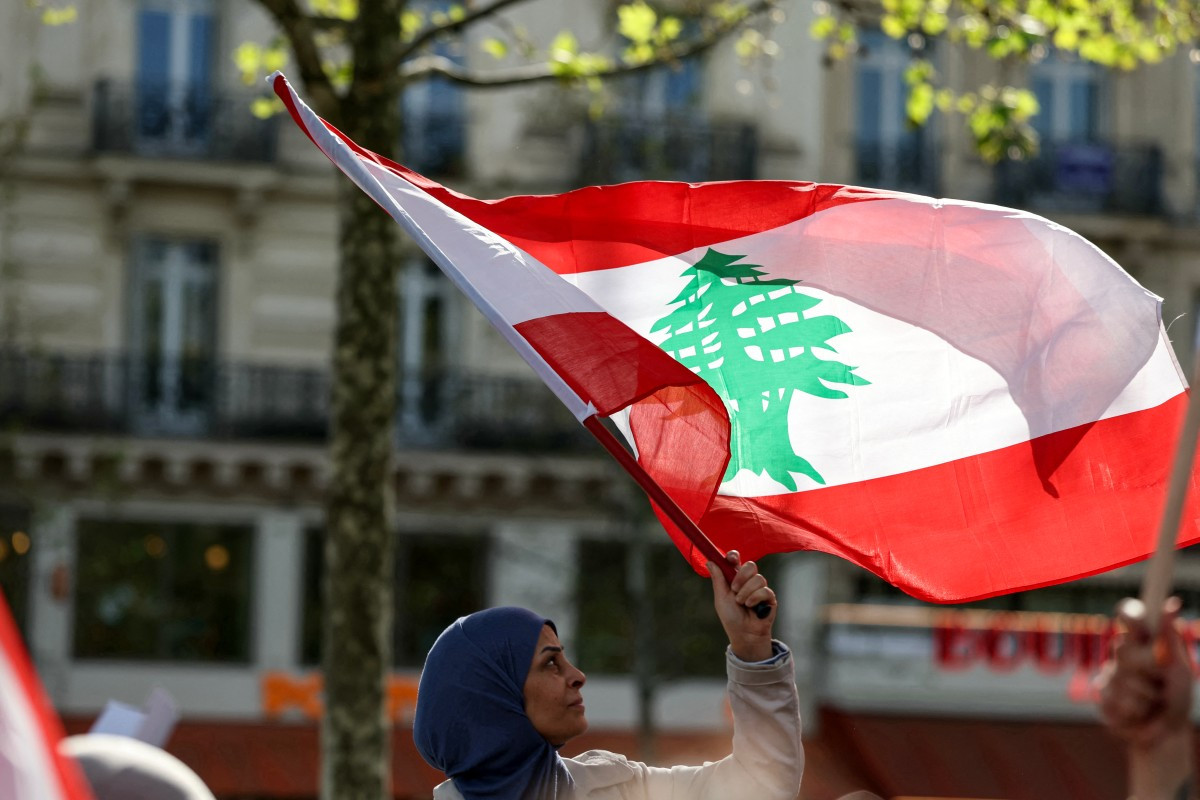 A protester waves a Lebanese national flag during a rally in support of Lebanon at Place de la Republique in central Paris on April 19, 2026. Israel and Lebanon agreed to a 10-day ceasefire on April 16 to allow for negotiations to end six weeks of war between Israel and the Iran-backed group Hezbollah that killed nearly 2,300 people since it began on March 2. (AFP/Alain Jocard)
L
ebanese President Joseph Aoun said Monday that planned talks with Israel aim to end hostilities and the occupation in southern Lebanon, even as Hezbollah and its supporters rejected the negotiations.
Iran-backed militant group Hezbollah has sharply criticized the Lebanese government's negotiations with Israel, which are set to enter a second round on Thursday.
After the first round of talks last week, United States President Donald Trump announced a 10-day truce pausing more than six weeks of war between Hezbollah and Israel, an explosive front in the broader Middle East war.
Hezbollah lawmaker Hassan Fadlallah told AFP it was in Aoun's and Lebanon's "interest" to withdraw from the talks, however adding that his group also wanted the ceasefire to last.
New talks between Lebanon's and Israel's US ambassadors will take place Thursday in Washington, a US State Department official told AFP, after the first direct talks between the two countries in decades was held on April 14.
But Lebanon's official National News Agency (NNA) reported an Israeli drone strike in Qaqaiyat al-Jisr in the country's south on Monday, and Israeli artillery shelling on the border town of Hula.
The Lebanese health ministry said six people were wounded in Qaqaiyat al-Jisr.
Israel's army said in a statement that soldiers "identified terrorists" in the Bint Jbeil and Litani areas of southern Lebanon "who violated the ceasefire understandings", adding that that the air force "eliminated" them.
The UN Security Council condemned on Monday the killing of a French peacekeeper in Lebanon, whose death France blamed on Hezbollah.
The Frenchman was killed and three others wounded when their unit was ambushed on Saturday as it headed to a UN Interim Force in Lebanon (UNIFIL) outpost cut off from the fighting between Hezbollah and Israel.
"The members of the Security Council condemned in the strongest terms the attack [and] reaffirmed their full support for UNIFIL" a statement from the UN body said.
The NNA also reported Israeli army "detonations [...] in parallel with extensive demolition" operations in Mais al-Jabal, decrying "the systematic destruction impacting homes and livelihoods, buildings and infrastructure" in the town and several other border villages.
Fadlallah told AFP that "it is in the interest of Lebanon, the president of the republic and the government to move away from the path of direct negotiation and return to a national understanding about the best option for Lebanon".
'Threat'
"Perhaps through indirect negotiations, even via the United States of America, we can achieve" Lebanon's goals, Fadlallah said.
Aoun said the aim of negotiations was to "stop hostilities, end the Israeli occupation of southern regions and deploy the [Lebanese] army all the way to the internationally recognised southern borders".
Fadlallah said regional powers including Iran, Pakistan and Saudi Arabia have worked to build a US-Iran diplomatic track, creating "a regional umbrella that can provide a kind of guarantee for Lebanon.
"Going into direct bilateral negotiations, alone, amid deep Lebanese divisions and internal disagreements, constitutes a threat to internal consensus."
Aoun on Friday had said that "we negotiate for ourselves... we are no longer a pawn in anyone's game, nor an arena for anyone's wars, and we never will be again."
Tehran had insisted that a Lebanon truce was among its conditions for a ceasefire with Washington in the Middle East war.
On the road to Beirut airport, in the southern suburbs where Hezbollah holds sway, AFP images showed fresh graffiti attacking Aoun and Prime Minister Nawaf Salam following their endorsement of negotiations.
"Joseph is a traitor, Nawaf is a turncoat," said one spray-painted sign.
"Dealing with Israel is forbidden [...] no to normalisation," another read.
'Sacrifices'
Hezbollah supporters also heaped scorn on Aoun on social media.
"After all our sacrifices this guy wants to speak for us?" another user posted on X, with their profile picture showing a photo of Aoun and Salam with the words "they do not represent me".
Israeli attacks killed more than 2,300 people in Lebanon and displaced more than one million, according to Lebanese authorities.
"Any outcome of direct negotiations cannot be imposed on the people who made these sacrifices," Fadlallah told AFP.
Aoun on Monday named former Lebanese ambassador to Washington Simon Karam to head the negotiations with Israel.
Lebanon has no diplomatic relations with its southern neighbour.
In December, Karam became the first Lebanese civilian representative to directly speak with Israeli representatives in decades, as part of a committee to monitor a 2024 ceasefire between Israel and Hezbollah.
Aoun said Monday that Lebanon faced two options: ongoing conflict "or negotiations to put an end to this war and achieve lasting stability".
"I have chosen negotiations, and I am full of hope that we will be able to save Lebanon," he said.