The Jakarta Post
Please Update your browser
Your browser is out of date, and may not be compatible with our website. A list of the most popular web browsers can be found below.
Just click on the icons to get to the download page.


Popular Reads
Top Results
No results found. Please check your search term and try again
Can't find what you're looking for?
View all search results
Popular Reads
Top Results
No results found. Please check your search term and try again
Can't find what you're looking for?
View all search resultsBolivians demand president's resignation in new mass protest
Bolivian President Rodrigo Paz came to power six months ago, in the midst of the country's worst economic crisis since the 1980s, marked by acute shortages of fuel and foreign currency and runaway inflation.
Change text size
Gift Premium Articles
to Anyone
Share the best of The Jakarta Post with friends, family, or colleagues. As a subscriber, you can gift 3 to 5 articles each month that anyone can read—no subscription needed!
 Set as preferred source
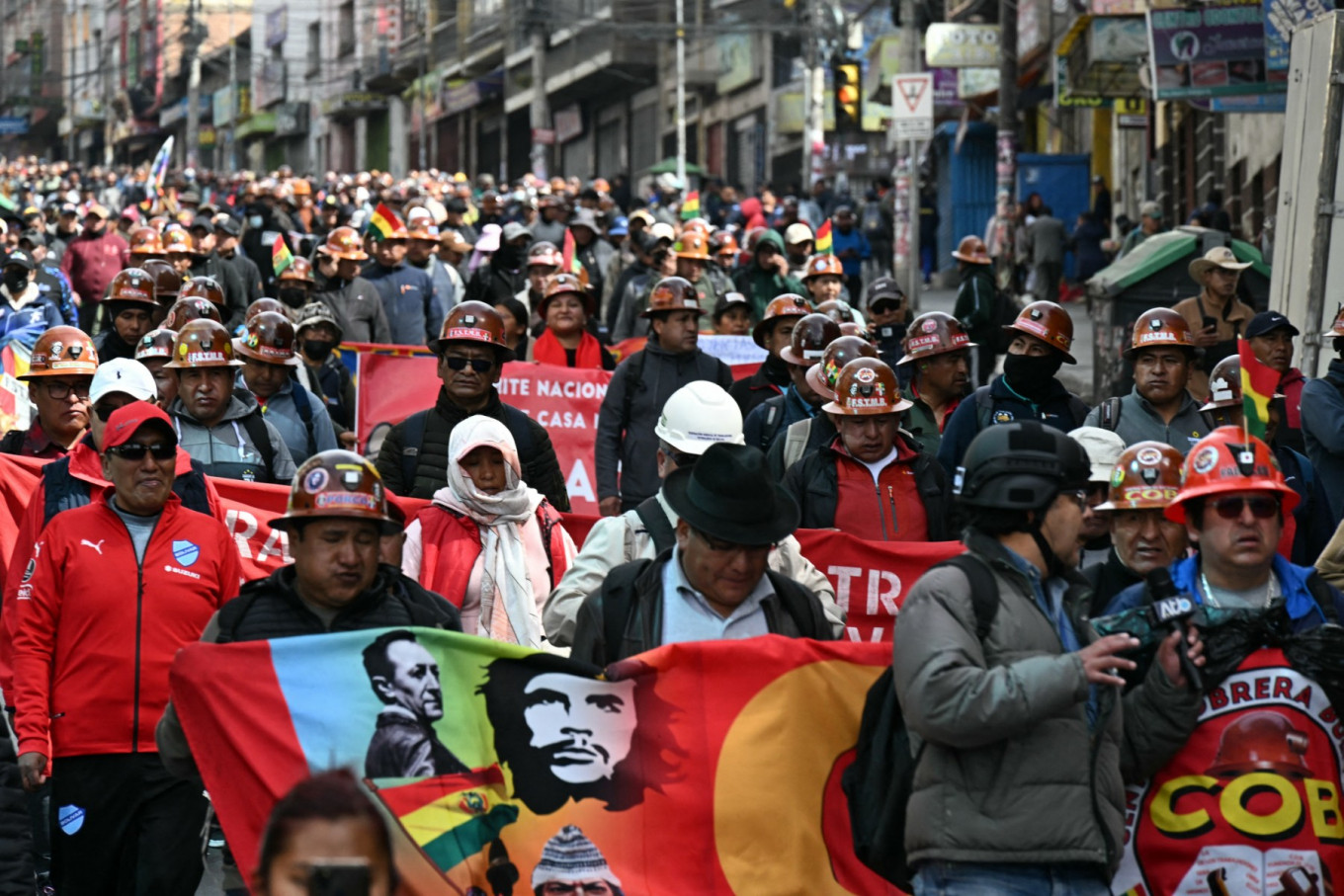 Miners, factory workers and Indigenous people from the 'Ponchos Rojos' union take part in a march calling for the resignation of Bolivian President Rodrigo Paz in La Paz on May 22, 2026. Thousands of demonstrators demanded the resignation of centre-right President Paz in Bolivia's political capital during a new day of protests that led to clashes with riot police. (AFP/Aizar Raldes)
Thousands of Bolivians held another demonstration in La Paz on Friday to demand the resignation of center-right President Rodrigo Paz, despite his promise to respond to the grievances of labor unions and indigenous communities.
"He should resign, damn it!" shouted the crowd of farmers, laborers, miners, transport workers and teachers who brought traffic to a halt on the streets of the Andean city.
Paz came to power six months ago, in the midst of the country's worst economic crisis since the 1980s, marked by acute shortages of fuel and foreign currency and runaway inflation.
"Six months in office and he hasn't been able to solve the basics [...] We have to choose between buying meat or buying milk," Melina Apaza, a 50-year-old demonstrator from the southern mining heartland of Oruro, told AFP.
Wearing helmets and ponchos, the protesters, many of whom waved rainbow-colored Indigenous flags, marched toward the city center to the din of firecrackers.
Hundreds of riot police sealed off the entrance to the square in front of government buildings, and many businesses closed their doors for fear of a repeat of the clashes that marked a similar demonstration on Monday.
Paz has attempted to take the heat out of the protests by firing his unpopular labor minister and promising to give the miners, laborers and other groups in the street more of a say in shaping policy. But his overtures appear to have fallen short of the mark.
Roads leading to La Paz continue to be blockaded by the protesters, causing shortages of food, medicine and fuel.
Trade unions began demonstrating in early May for wage increases, improved fuel supplies and economic stability.
But as the weeks passed, the demonstrations snowballed into a full-blown revolt, marked by calls for the resignation of the United States-backed Paz.
Paz's election, part of a right-wing tide sweeping Latin America, ended two decades of socialist rule launched by indigenous coca farmer Evo Morales in the mid-2000s.
Paz's government accuses Morales, who attempted a comeback last year despite being wanted on charges of trafficking a minor, of fomenting the current unrest.