The Jakarta Post
Please Update your browser
Your browser is out of date, and may not be compatible with our website. A list of the most popular web browsers can be found below.
Just click on the icons to get to the download page.


Popular Reads
Top Results
No results found. Please check your search term and try again
Can't find what you're looking for?
View all search results
Popular Reads
Top Results
No results found. Please check your search term and try again
Can't find what you're looking for?
View all search resultsHow the nation should respond to the Sigi terror act
Despite the savagery of the terrorist attack, the condemnation expressed by state officials in public has been relatively mild.
Change text size
Gift Premium Articles
to Anyone
Share the best of The Jakarta Post with friends, family, or colleagues. As a subscriber, you can gift 3 to 5 articles each month that anyone can read—no subscription needed!
 Set as preferred source
V
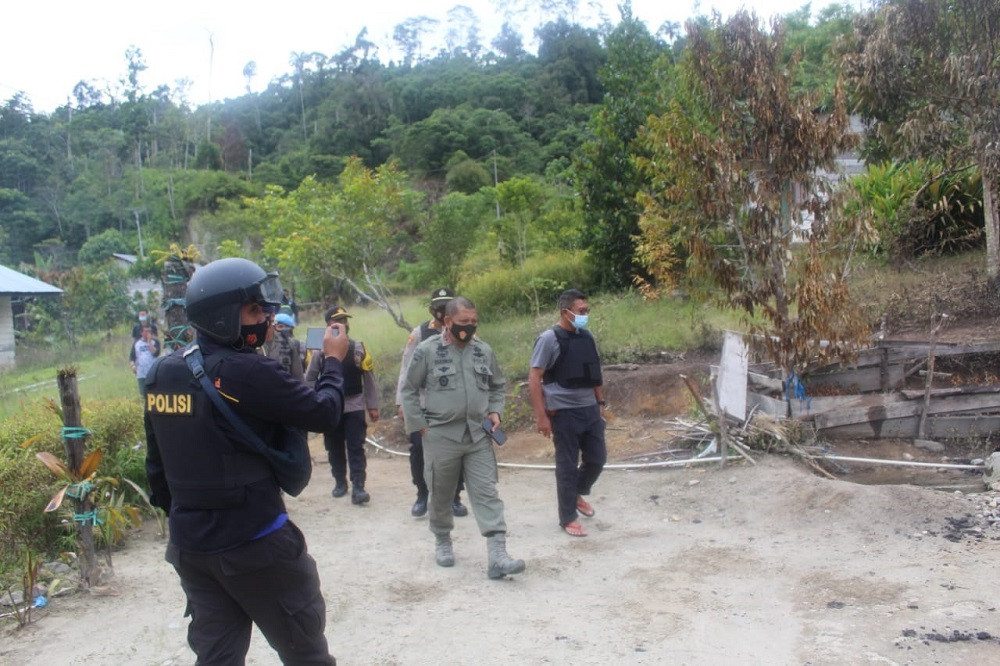
iolence appears to have never ceased in Poso and its neighboring areas in Central Sulawesi, the hotbed of the 1999-2000 sectarian conflict. Last Friday, residents of the remote village of Lembantongoa in Sigi regency were shocked by the brutal killing of four members of one family.
Based on the pattern of the attack, the police suspect that the perpetrators are members of the Poso-based East Indonesia Mujahidin (MIT) terror group. Witnesses said that about six people carried out the attack.
Members of the police and military have been deployed in the Tinombala joint operation to hunt down the perpetrators of the killings, after previously focusing their efforts on capturing the MIT members remaining around Poso.
Despite the savagery of the terrorist attack, the condemnation expressed by state officials in public has been relatively mild. Three days after the incident, President Joko Widodo denounced the attack on TV and tweeted on his account, responded to public demands in the aftermath of the Sigi killings.
The silence is ironic when compared to the hyped reactions from both the government and civil society groups, including Muslim organizations, to French President Emmanuel Macron's remarks on his government’s strategy to manage Islamist separatism in the country, following the beheading of a teacher by a man who accused him of offending Islam.
This cold reality could be understood in two ways. First, the central government is distancing itself from condemning directly the killing of four Christian citizens. Any strong statement in defense of the Christian victims is feared to provoke sectarian tension, an assumption that is actually inherited from the New Order literature.
In reality, a deep rift has formed among locals who bore the historical ethnic and religious conflicts of Indonesia’s post-1998 democratic transition. The acts of terror perpetrated by the MIT could widen this divide, particularly between Muslims and Christians in Central Sulawesi.