TheJakartaPost
Please Update your browser
Your browser is out of date, and may not be compatible with our website. A list of the most popular web browsers can be found below.
Just click on the icons to get to the download page.


Popular Reads
Top Results
No results found. Please check your search term and try again
Can't find what you're looking for?
View all search results
Popular Reads
Top Results
No results found. Please check your search term and try again
Can't find what you're looking for?
View all search resultsRisk of fintech misuse for money politics in elections
In 2018, the Elections Supervisory Body (Bawaslu) discovered indications that e-money was being used in money politics.
Change text size
Gift Premium Articles
to Anyone
Share the best of The Jakarta Post with friends, family, or colleagues. As a subscriber, you can gift 3 to 5 articles each month that anyone can read—no subscription needed!
I
n the fast-growing financial services sector, a combination of technological improvements and changing customer behavior has driven the evolution of fintech, with many fintech companies offering alternative financial services such as payment gateways, loans and investments. Indonesia has responded positively to the growth of fintech, as is evident in the increasing numbers of industry players and consumers over the last few years.
According to the Financial Services Authority (OJK) and Bank Indonesia (BI), Indonesia has 190 licensed fintech providers to date, primarily payment and lending fintech. In 2019, electronic money (e-money) transactions hit Rp 100 trillion (US$6.89 billion) while in the lending sector, electronic transactions continue to increase every year. This September, total loans disbursed through fintech lenders reached Rp 128 trillion and involved 29 million borrower accounts.
Next week, we will see the simultaneous regional elections. The people of nine provinces, 37 cities and 224 regencies will vote for their preferred candidate to lead their region for the next five years. The elections are more crucial and challenging than ever due to the COVID-19 pandemic.
The General Elections Commission (KPU) has imposed various restrictions on the election campaigns to prevent further spread of the virus. Candidates are prohibited from holding campaign events that could attract large crowds. Hence, it is now rare that candidates host large public gatherings, such as art exhibitions, sports events and concerts.
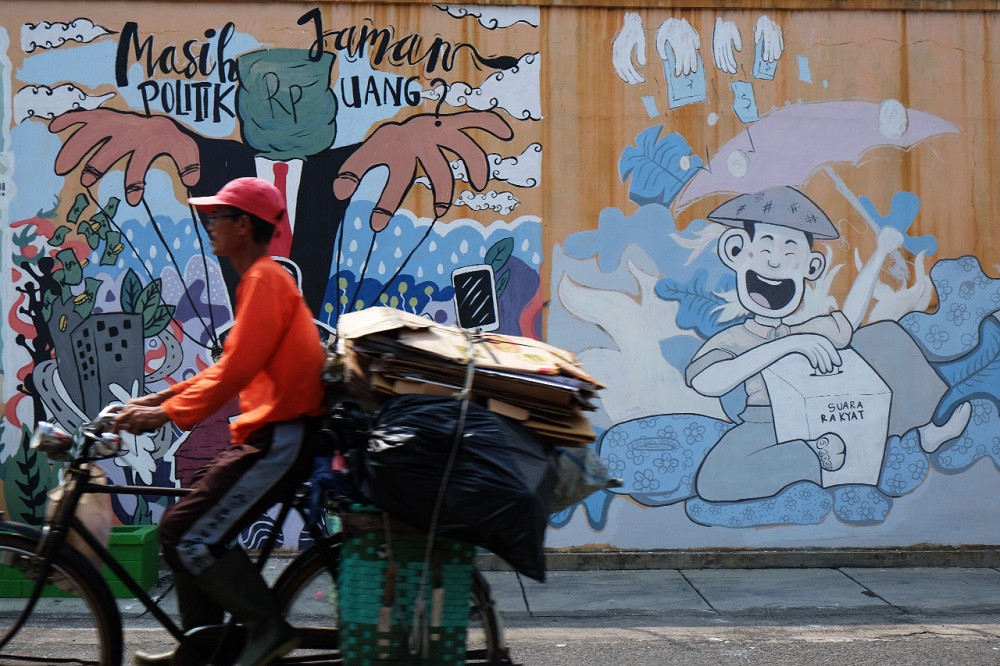
These restrictions could drive “delinquent candidates” to seek a shortcut to gain votes and win the election. Aspinall et al. (2017) found that, despite the uncertainty that the election result will fully reflect any potential gains from vote buying, there are still candidates who resort to using this tactic. The common practice is to buy votes by delivering cash in an envelope, typically with the candidate’s campaign flyer attached.
However, the method has been developing. In 2018, the Elections Supervisory Body (Bawaslu) discovered indications that e-money was being used in money politics. The candidate was suspected of allocating e-money to voters. Given the current fintech developments, it is possible that this will emerge again. It may even expand to involve other fintech products.
Digital wallet providers are competing to expand outside Jakarta, although iPrice revealed that the coverage outside Jakarta varied among digital wallet providers in the second quarter of 2020. For example, 83 percent of users of a state-owned digital wallet were located outside Jakarta, with 40 percent outside Java. This coverage therefore increases the potential abuse of fintech in the upcoming elections.