The Jakarta Post
Please Update your browser
Your browser is out of date, and may not be compatible with our website. A list of the most popular web browsers can be found below.
Just click on the icons to get to the download page.


Popular Reads
Top Results
No results found. Please check your search term and try again
Can't find what you're looking for?
View all search results
Popular Reads
Top Results
No results found. Please check your search term and try again
Can't find what you're looking for?
View all search resultsKadin warns of slowing regional growth amid budget cuts
At its 2026 economic outlook event on Jan. 15, Kadin cautioned against maintaining last year's budget policy to reduce regional transfers amid current global conditions, as doing so would only hamper local growth and exacerbate weakening demand.
Change text size
Gift Premium Articles
to Anyone
Share the best of The Jakarta Post with friends, family, or colleagues. As a subscriber, you can gift 3 to 5 articles each month that anyone can read—no subscription needed!
 Set as preferred source
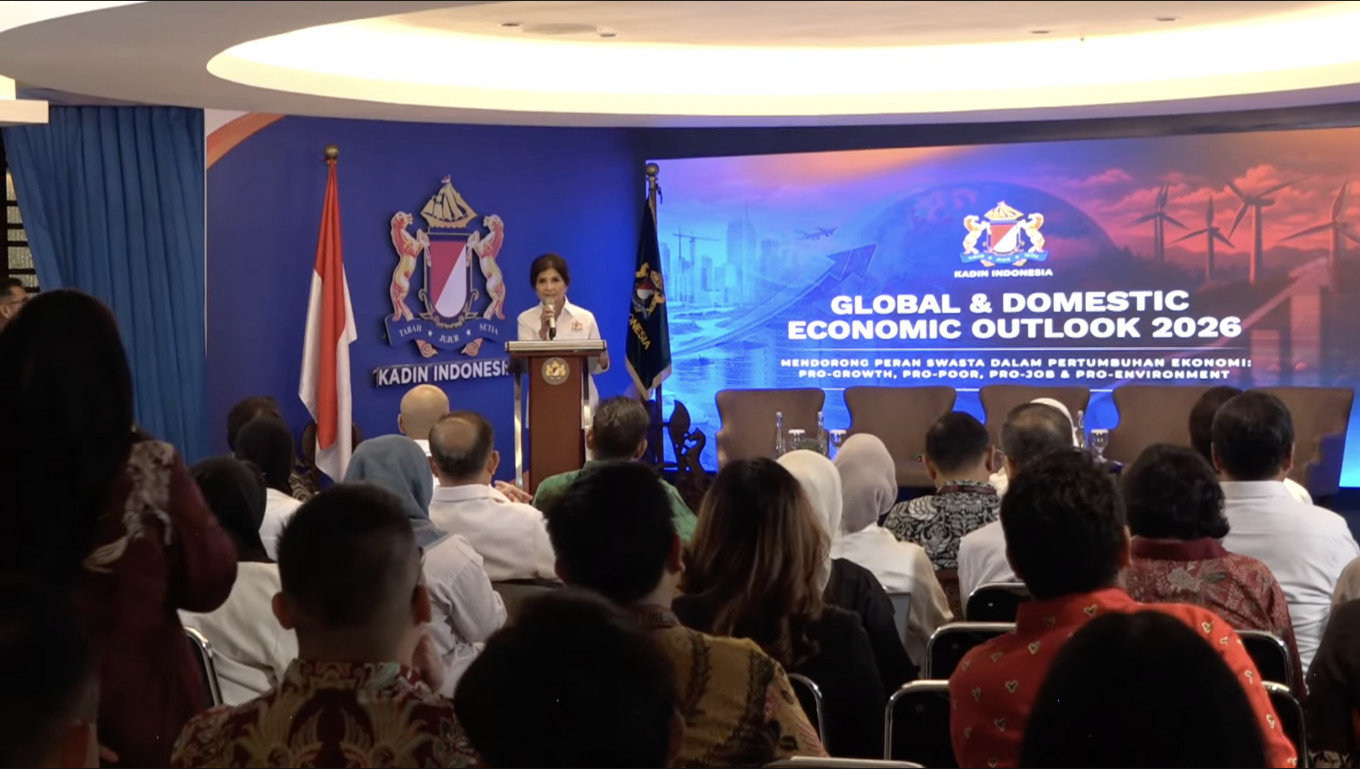 Aviliani (left rear, at podium), deputy chair of macro- and microeconomic policy analysis at the Indonesian Chamber of Commerce and Industry (Kadin), speaks on Jan. 15 at the Kadin Global and Domestic Economic Outlook 2026, themed “Strengthening the Role of the Private Sector in Economic Growth: Pro-Growth, pro-poor, pro-job and pro-environment”, at Menara Kadin in Kuningan, South Jakarta. (Kadin/-)
T
he Indonesian Chamber of Commerce and Industry (Kadin) has warned that lower regional funding allocations as set in the 2026 state budget risk slowing local growth and further pressuring weakening household demand.
“With reduced regional transfers, local economic growth will be affected. That is why this is part of our feedback, so that going forward, there will be an evaluation of the reduction in regional transfers that needs to be restored,” Aviliani, Kadin’s deputy chair of macro- and microeconomic policy analysis, told a press conference following the Kadin Global and Domestic Economic Outlook 2026 on Thursday.
Aviliani said regional economies had received insufficient attention in policymaking, despite their growing role in national economic performance.
“Even if the funding comes from the central government, [its disbursement] should still involve the regions so local administrations feel they are still included,” she said.
The central government cut a significant portion of regional transfers last year and has maintained the policy in the 2026 state budget plan.
Read also: Domestic investors dominated 2025 as FDI stagnated

Aviliani also highlighted growing global risks and warned that if the rupiah weakened beyond Rp 17,000 per United States dollar, this would put pressure on foreign debt servicing, import costs and inflation. Such a scenario would leave manufacturing and food prices highly exposed, as 70 percent of industries relied on imported inputs.