The Jakarta Post
Please Update your browser
Your browser is out of date, and may not be compatible with our website. A list of the most popular web browsers can be found below.
Just click on the icons to get to the download page.


Popular Reads
Top Results
No results found. Please check your search term and try again
Can't find what you're looking for?
View all search results
Popular Reads
Top Results
No results found. Please check your search term and try again
Can't find what you're looking for?
View all search resultsSouth Korea activates $68 billion market stability fund over Mideast crisis
"The escalating crisis in the Middle East is significantly worsening the global economic and security environment," President Lee Jae Myung said.
Change text size
Gift Premium Articles
to Anyone
Share the best of The Jakarta Post with friends, family, or colleagues. As a subscriber, you can gift 3 to 5 articles each month that anyone can read—no subscription needed!
 Set as preferred source
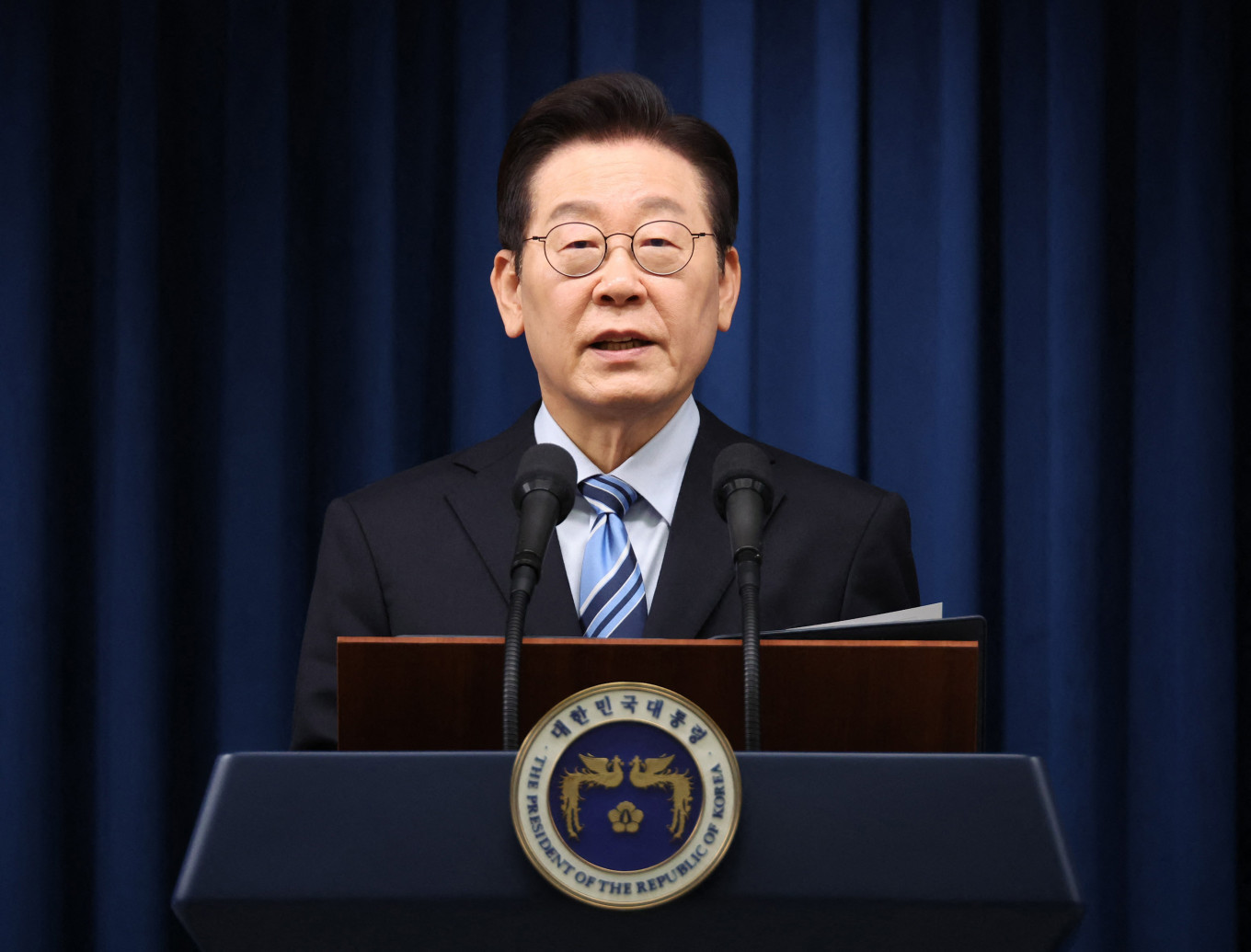 Executive voice: South Korean President Lee Jae-myung speaks on Friday, Nov. 14, during a press conference at the Presidential Office in Seoul as he announces the conclusion of a joint fact sheet on trade and security agreements with the United States. (AFP/Yonhap/AFP/Yonhap)
S
outh Korea's president ordered the activation of a $68 billion market stabilisation fund Thursday, citing the need to smooth out volatility caused by war in the Middle East.
"The escalating crisis in the Middle East is significantly worsening the global economic and security environment," President Lee Jae Myung said.
"First, we must respond proactively to heightened volatility in financial markets, including equities and foreign exchange."
Lee said the programme would "pre-empt instability" in capital markets.
But he stressed it would not be used to "directly prop-up stock prices".
"If structurally there is no problem, it is meant to correct temporary abnormalities when they occur, not to artificially support prices."

The programme includes funds earmarked for government and corporate bonds.
South Korea's benchmark Kospi index fell around 19 percent on Tuesday and Wednesday.
But it bounced back as much as 12 percent Thursday, leading a global rebound from the week's turmoil.
Until the end of last week, the index had soared around 50 percent this year -- having hit multiple records -- as the rush to snap up all things linked to artificial intelligence boosted tech firms, particularly chip makers Samsung and SK hynix.
South Korea is the fourth-largest importer of crude oil in the world, according to US government figures, and relies heavily on fuel shipped from the Middle East.
Asian shares rallied on Thursday and US Treasuries declined, pointing to a tentative recovery in risk appetite that has been hammered by the escalating war in the Middle East.
Chinese shares climbed as party elites in Beijing unveiled their wide-ranging economic and development targets. The US Senate backed President Donald Trump's military campaign against Iran, suggesting no quick resolution to a war that has roiled financial markets, transportation networks, and energy production.
"Geopolitical risk can flare up again very quickly, so any early gains we see this morning across Asia-Pacific region share markets may not last," Paco Chow, dealing manager at Moomoo Australia and New Zealand, said in a note. "The outlook will remain cautious until we see oil flows return to normal."