The Jakarta Post
Please Update your browser
Your browser is out of date, and may not be compatible with our website. A list of the most popular web browsers can be found below.
Just click on the icons to get to the download page.


Popular Reads
Top Results
No results found. Please check your search term and try again
Can't find what you're looking for?
View all search results
Popular Reads
Top Results
No results found. Please check your search term and try again
Can't find what you're looking for?
View all search resultsUBS expects ASEAN 6 GDP to grow by 4.9% in 2026
ASEAN 6 continues to benefit from deep integration into global manufacturing value chains, supported by a sizeable domestic market, UBS said.
Change text size
Gift Premium Articles
to Anyone
Share the best of The Jakarta Post with friends, family, or colleagues. As a subscriber, you can gift 3 to 5 articles each month that anyone can read—no subscription needed!
 Set as preferred source
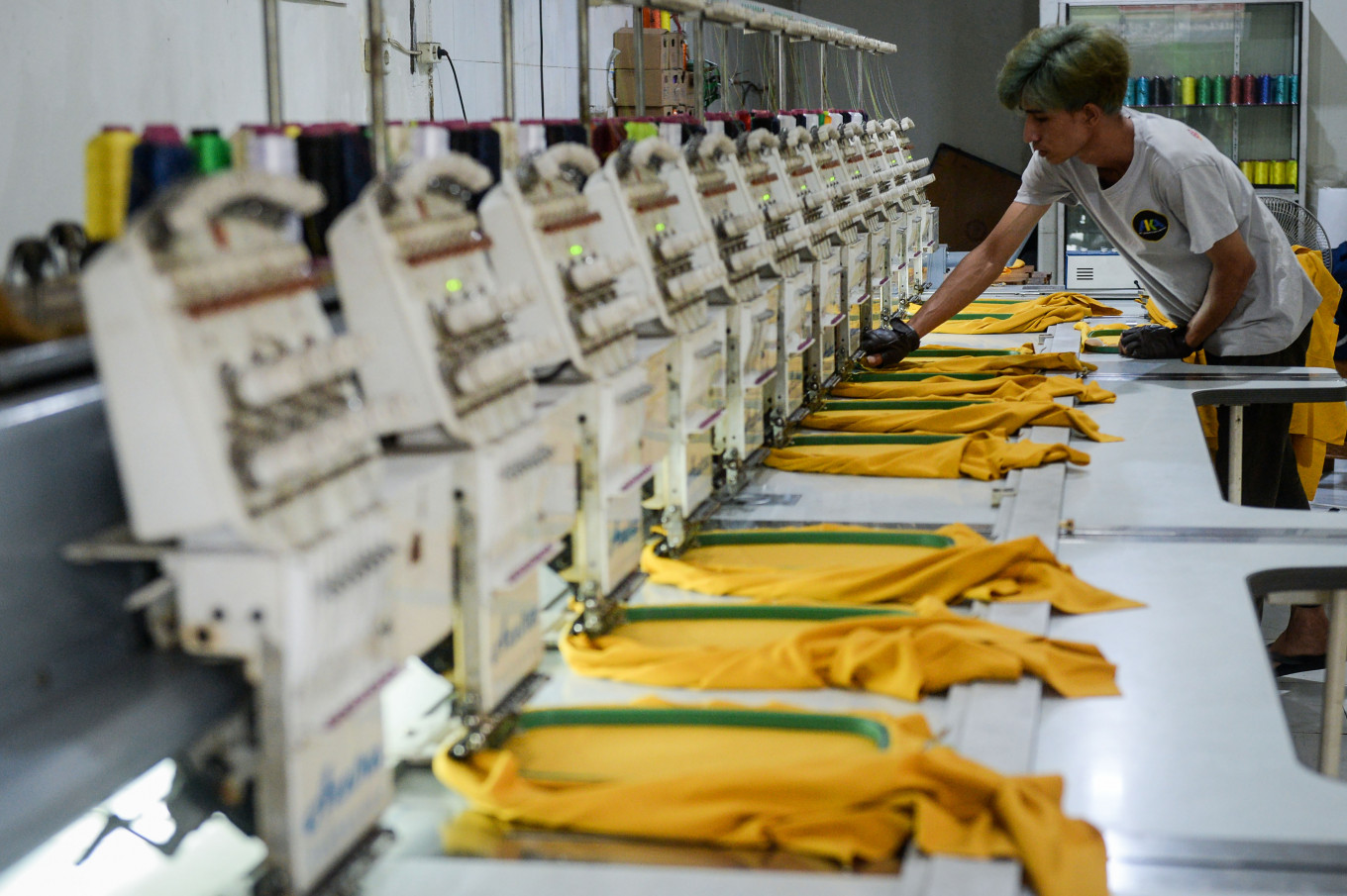 A worker operates an automatic embroidery machine on Oct. 7, 2025, at Anuhi Kahti Konveksi, Tangerang City, Banten. The Ministry of Industry recorded a surge in performance in the Chemical, Pharmaceutical and Textile Industry (IKFT) sector through mid-2025, contributing 3.82 percent to the national gross domestic product (GDP), demonstrating the sector's strategic role as a supporter of inclusive and sustainable economic growth. (Antara/Putra M. Akbar)
T
he gross domestic product growth of the ASEAN 6 is expected to register around 4.9 percent in 2026, reflecting a period of steady expansion, Swiss investment bank and financial services company UBS said on Wednesday.
“The region continues to benefit from deep integration into global manufacturing value chains, supported by a sizeable domestic market,” UBS Investment Bank Global Research senior ASEAN and Asia economist, Grace Lim said in a press release.
“Conditions for growth remain in place, with household consumption driving momentum in Indonesia, an increase in private investment underway in Thailand and the Philippines and resilient tech related export strengths in Singapore and Malaysia.”
Lim was speaking on the sidelines of the 14th UBS OneASEAN Summit in Singapore. The event convened over 850 institutional investors, influential policy makers and industry leaders to exchange the latest insights and investment ideas for 2026.
ASEAN 6 refers to the original founding members of Indonesia, Malaysia, the Philippines, Singapore and Thailand plus Brunei.
Other ASEAN members are Cambodia, Laos, Myanmar and Vietnam, which are usually dubbed as CLMV, plus the newest member Timor-Leste.

UBS Global Banking Southeast Asia & South Asia head Nicolo Magni said that has grown from strength to strength over the years, bringing over 850 institutional investors, top corporates and global thought-leaders to discuss the key trends shaping the business environment today.
“Southeast Asia continues to be a strategic alternative for investors,” he said in the release.
“We expect strong deal making momentum to continue throughout 2026 and capital markets are likely to be more active in healthcare, real estate and consumer sectors.”
The two-day summit delivered a comprehensive overview of the global investment landscape, examining the implications for Southeast Asian economies.
Participants engaged in a series of insightful panel discussions covering topics such as global trade imbalances, investment opportunities across China, Japan and Europe, the outlook for gold and precious metals, the evolution of digital assets and AI in ASEAN and the development of new energy systems for the Artificial Intelligence-driven economy.
Meanwhile, Indonesia recorded a GDP growth of 5.11 percent, marking the first time since 2022 that it exceeded 5 percent, UBS said.
“The upside surprise was driven by broad-based domestic demand, including stronger household spending and resilient investment,” the investment bank said in the release.
“Household consumption picked up to 5.1 percent year-on-year (yoy), its fastest in two years, while investment remained solid at 6.1 percent yoy.”
UBS said it continued to expect growth to strengthen gradually in 2026 and maintain its GDP growth forecast at 5.2 percent.
The Indonesian government aims for a growth rate of 5.4 percent to 5.6 percent in 2026.