TheJakartaPost
Please Update your browser
Your browser is out of date, and may not be compatible with our website. A list of the most popular web browsers can be found below.
Just click on the icons to get to the download page.


Popular Reads
Top Results
No results found. Please check your search term and try again
Can't find what you're looking for?
View all search results
Popular Reads
Top Results
No results found. Please check your search term and try again
Can't find what you're looking for?
View all search resultsRetail sales pick up in Ramadan despite consumer confidence drop
Respondents to the BI survey believe that sales will remain “relatively stable” in April and increase in July, driven by the school vacation “peak season” during that period.
Change text size
Gift Premium Articles
to Anyone
Share the best of The Jakarta Post with friends, family, or colleagues. As a subscriber, you can gift 3 to 5 articles each month that anyone can read—no subscription needed!
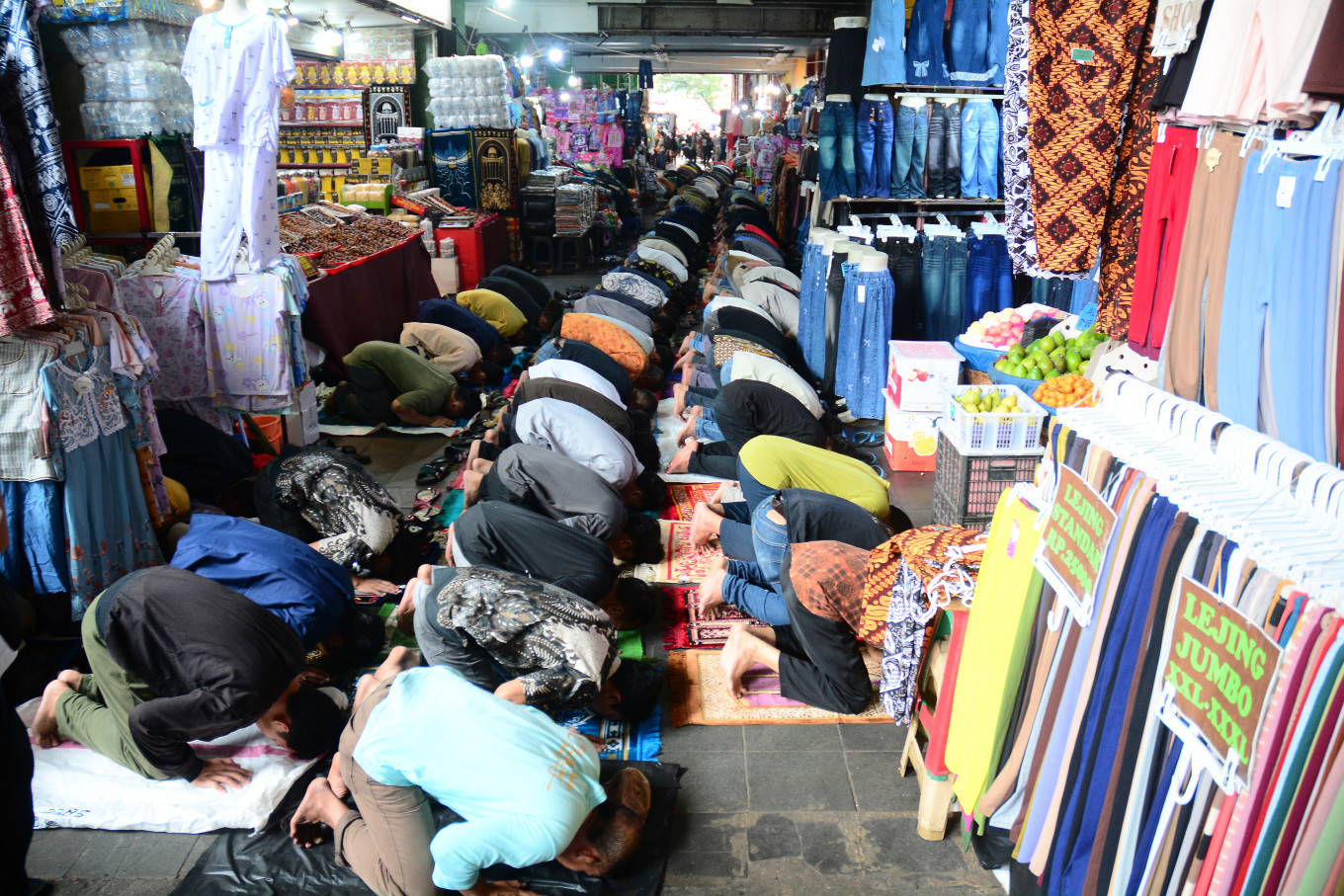 Muslims perform Friday prayers during Ramadan 1447 AH at Pasar Tanah Abang in Jakarta on Feb. 27, 2026. The high turnout, combined with limited space at the mosque inside the market complex, forced worshipers including vendors and shoppers to pray in the corridors between kiosks and stalls. (JP/Iqro Rinaldi)
A
central bank survey points to an improvement in retail sales in February thanks to the Ramadan and Idul Fitri festivities, when consumption typically spikes. However, this comes alongside deteriorating confidence among Indonesian consumers.
Preliminary data from Bank Indonesia (BI) published on Tuesday shows that the retail sales index (RSI) is projected to have climbed to 233.5 points in February, marking a solid 6.9 percent year-on-year (yoy) increase from 218.5 points recorded in the same month last year.
BI spokesman Ramdan Denny Prakoso said in a statement released together with the data that the growth was owed to “increased demand during” Ramadan that this year fell in late February and “in preparation” for Idul Fitri in March.
The annual rise was primarily driven by sales of spare parts and accessories, which were up 13.6 percent yoy alongside cultural and recreational goods that grew at exactly the same rate.
The sales rise in the former could be attributed to the Islamic festivities since it is customary for many Indonesians to travel back to their hometowns around Idul Fitri. Many make the exodus, known in Indonesian as mudik, using personal vehicles.
Many mudik trips take hundreds if not thousands of kilometers and therefore travelers make sure their vehicles are ready for the road by undertaking engine services and maintenance, such as by changing tires or oil, hence the spare parts and accessories sales increase.

Food, beverages and tobacco, as well as clothing, also saw strong growth of 8.3 percent and 8.4 percent, respectively. Sales of food and beverages often go up during Ramadan as fasting Muslims buy more food, particularly for breaking of the fast, and it is also common to buy new apparel to wear during Idul Fitri.