The Jakarta Post
Please Update your browser
Your browser is out of date, and may not be compatible with our website. A list of the most popular web browsers can be found below.
Just click on the icons to get to the download page.


Popular Reads
Top Results
No results found. Please check your search term and try again
Can't find what you're looking for?
View all search results
Popular Reads
Top Results
No results found. Please check your search term and try again
Can't find what you're looking for?
View all search resultsGovt looks to spending cuts, deficit increase ‘only for crisis’
The government has emphasized that lifting the fiscal deficit cap, which sits at 3 percent of GDP, could only happen in a crisis, and that it is focusing instead on slashing government spending.
Change text size
Gift Premium Articles
to Anyone
Share the best of The Jakarta Post with friends, family, or colleagues. As a subscriber, you can gift 3 to 5 articles each month that anyone can read—no subscription needed!
 Set as preferred source
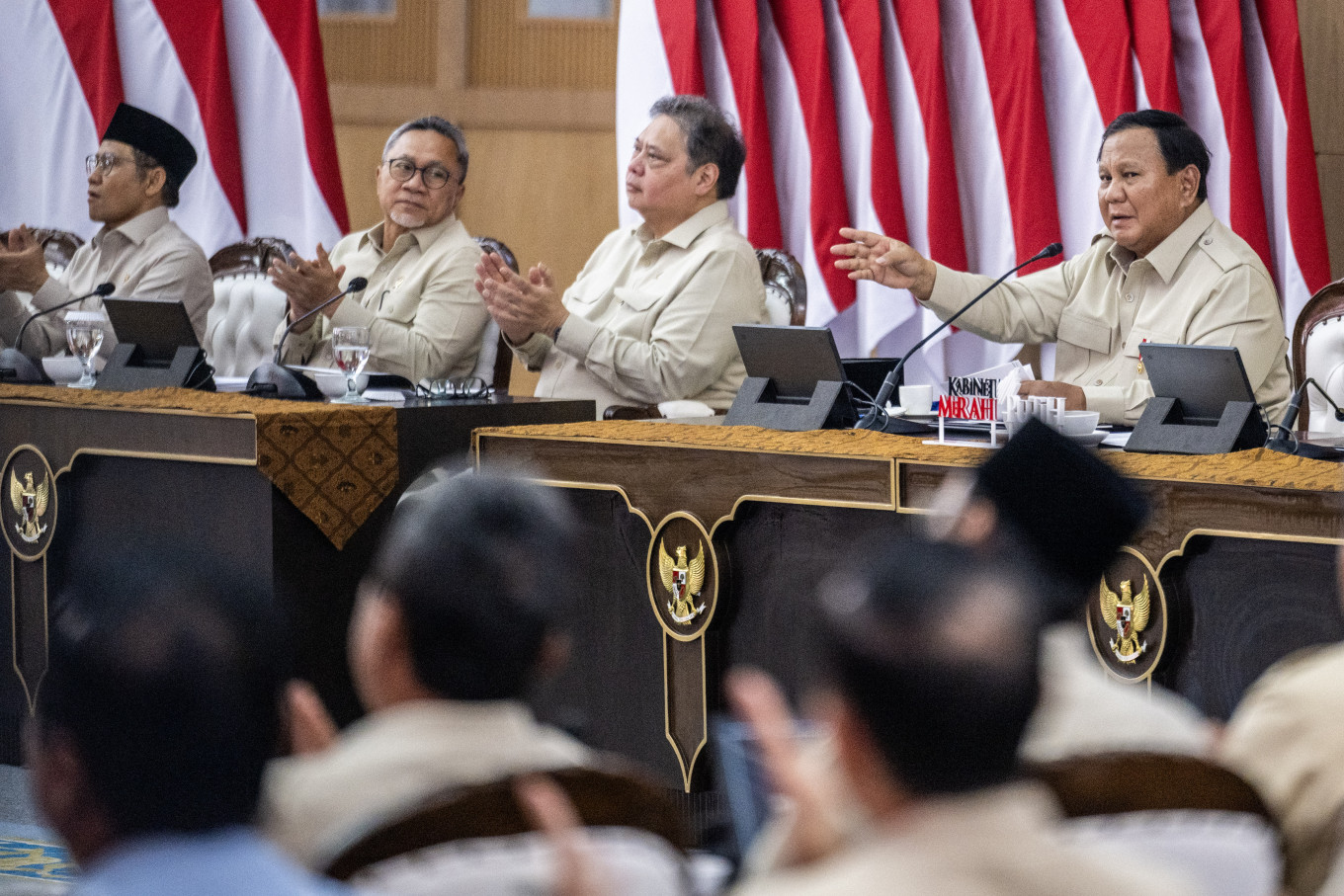 President Prabowo Subianto (right), accompanied by Coordinating Economy Minister Airlangga Hartarto (second right), Coordinating Food Minister Zulkifli Hasan (second left) and other cabinet members, delivers remarks on Jan. 6, 2026, during a New Year briefing in Hambalang, Bogor, West Java. (Antara/Bayu Pratama S)
T
he government has emphasized that pushing the fiscal deficit beyond the legal limit is an option reserved only as a crisis response and that it is focusing instead on slashing public spending.
Coordinating Economy Minister Airlangga Hartarto said on Monday that the government would not issue a regulation allowing for a deficit beyond the cap of 3 percent of gross domestic product until it “becomes clear how deep of a crisis it is”.
Asked to define “crisis”, Airlangga replied: “when the [oil] price increases by a lot and our subsidy buffer has thinned out”.
He suggested it may take months to determine whether a crisis was ongoing by pointing out that the government only issued a regulation in lieu of law (Perppu) for a deficit hike in the second half of 2020, months after the COVID-19 pandemic started.
The government subsidizes certain types of fuels to keep consumer prices at fixed levels, typically well below global market prices, and uses state budget funds to cover the difference.
The amount allocated for fuel subsidies is based on an assumed average oil price, US$70 in the 2026 budget plan, which means the state must spend more than planned on subsidies if the market price averages higher than the assumed level.

The ongoing United States-Israeli war against Iran has pushed the price of Brent crude oil to more than $100 per barrel from around $72 per barrel before the first missiles were fired on Feb. 28.