The Jakarta Post
Please Update your browser
Your browser is out of date, and may not be compatible with our website. A list of the most popular web browsers can be found below.
Just click on the icons to get to the download page.


Popular Reads
Top Results
No results found. Please check your search term and try again
Can't find what you're looking for?
View all search results
Popular Reads
Top Results
No results found. Please check your search term and try again
Can't find what you're looking for?
View all search resultsWorkers back transport reform over WFH to save on fuel
Drawing from past experience, employees said the WFH policy is cumbersome and stressful, and merely shifts energy consumption from daily commutes to other activities.
Change text size
Gift Premium Articles
to Anyone
Share the best of The Jakarta Post with friends, family, or colleagues. As a subscriber, you can gift 3 to 5 articles each month that anyone can read—no subscription needed!
 Set as preferred source
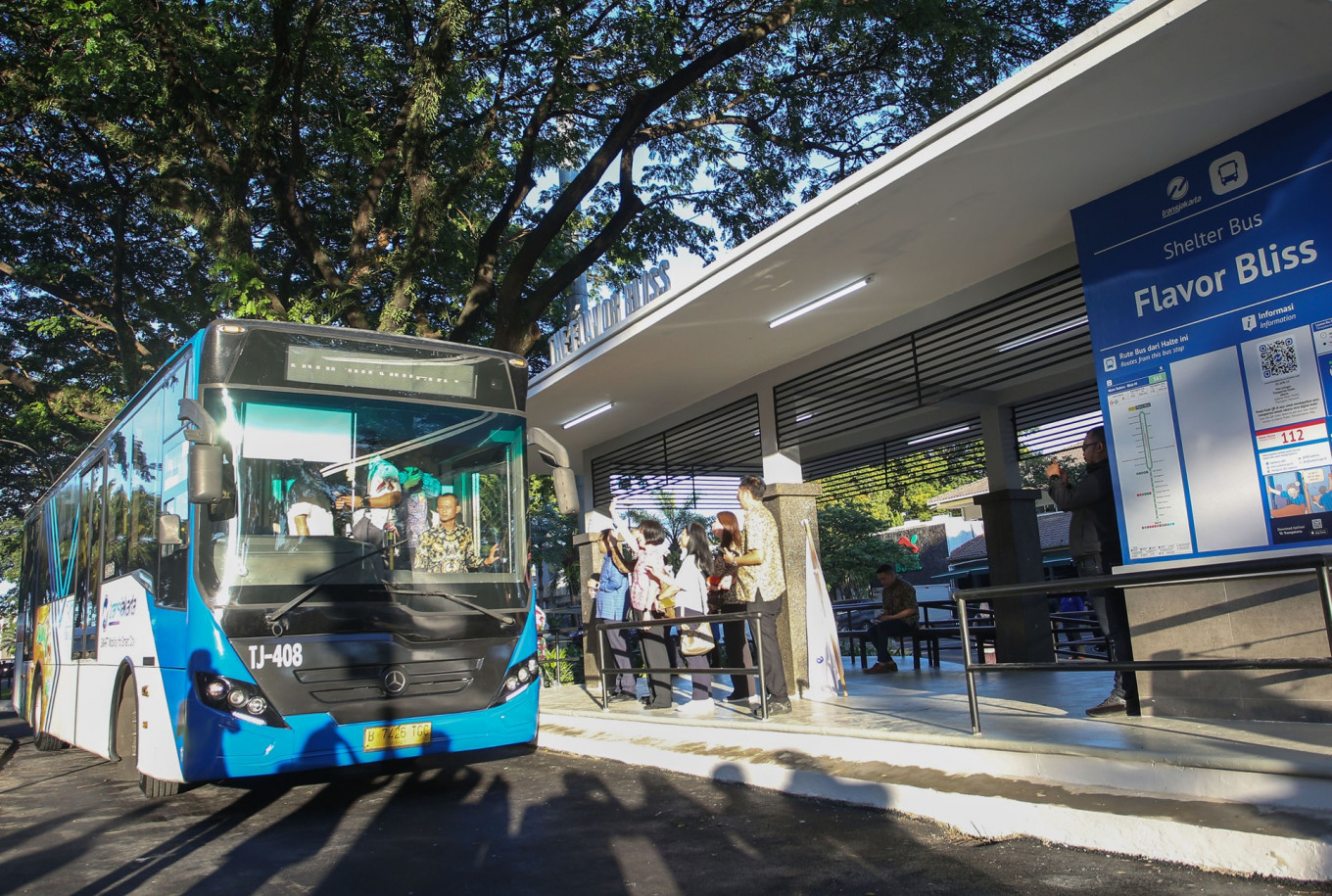 A Transjakarta bus leaves the Flavor Bliss shelter on April 24, 2025, in Serpong, South Tangerang, Banten after the launching of the Transjabodetabek bus service's new route between Alam Sutera township and Blok M in South Jakarta. The Jakarta administration worked with the Banten administration to open the Alam Sutera-Blok M route for Transjabodetabek in a bid to tackle the city's perennial traffic problem. (Antara/Muhammad Iqbal)
“I’ve experienced working from home (WFH) a few times, but it actually tends to slow things down,” said Aci, a millennial civil servant (ASN). “The bureaucracy is already lengthy as it is, and it just becomes even longer.”
Aci is one of the workers who described the WFH policy as cumbersome and stressful amid the government’s plan to require civil servants and encourage private-sector employees to work from home one day a week to reduce fuel consumption amid the Iran war. Instead, they suggested alternatives such as public transportation reform and improving fuel efficiency in carbon-intensive production processes, rather than restricting people’s mobility.
According to Aci, while she supports the general idea of reducing fuel consumption, she personally finds the WFH scheme less effective for her work.
“There’s a lot of work that requires direct coordination, and meetings also aren’t very conducive when conducted online. I think it’s also because of an age factor, since most people at my workplace are boomers,” she told The Jakarta Post on Thursday.
“We’ve tried holding online meetings, such as discussions on local regulations, several times, but the discussions become slower and don’t achieve the targeted outcomes.”
She acknowledged that a one-day-a-week policy might still be manageable, although implementation details in her unit have not yet been announced.

While Finance Minister Purbaya Yudhi Sadewa has said a rough calculation suggested the policy could cut fuel use by up to 20 percent, analysts have raised concerns about its effectiveness.