The Jakarta Post
Please Update your browser
Your browser is out of date, and may not be compatible with our website. A list of the most popular web browsers can be found below.
Just click on the icons to get to the download page.


Popular Reads
Top Results
No results found. Please check your search term and try again
Can't find what you're looking for?
View all search results
Popular Reads
Top Results
No results found. Please check your search term and try again
Can't find what you're looking for?
View all search resultsMiddle East war to cut growth, deliver cascading impact: World Bank chief
The global growth could be lowered by 0.3 to 0.4 percentage point in a baseline scenario, with an early end to the war, and by as much as 1 percentage point if it endures, according to World Bank's projection.
Change text size
Gift Premium Articles
to Anyone
Share the best of The Jakarta Post with friends, family, or colleagues. As a subscriber, you can gift 3 to 5 articles each month that anyone can read—no subscription needed!
 Set as preferred source
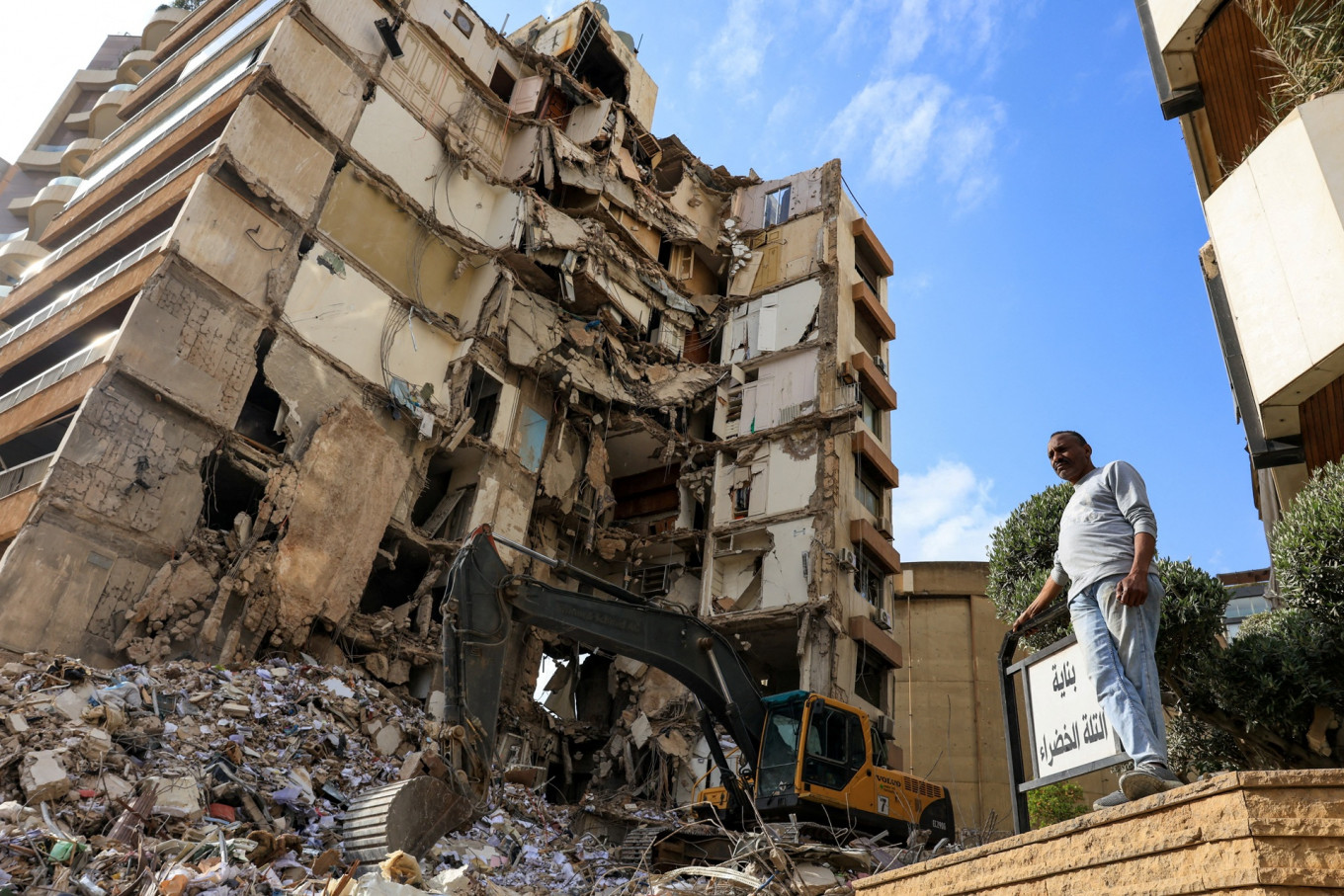 A man stands near a damaged building at the site of an Israeli strike carried out on April 9, 2026 in Tallet El Khayat in Beirut, Lebanon. (Reuters/Radhed Waked)
T
he war in the Middle East will have a cascading impact on the global economy, even if a ceasefire announced by United States President Donald Trump takes hold, World Bank President Ajay Banga told Reuters in an interview on Friday.
And the damage will be far deeper if the ceasefire fails and the conflict escalates, he said.
Banga on Tuesday said global growth could be lowered by 0.3 to 0.4 percentage point in a baseline scenario, with an early end to the war, and by as much as 1 percentage point if it endures. Inflation could increase by 200 to 300 basis points, with a much higher impact, of up to 0.9 percentage point, if the war continues, he said.
The World Bank's baseline estimate now projects growth in emerging markets and developing economies of 3.65 percent in 2026, compared to 4 percent in October, dropping as low as 2.6 percent in an adverse scenario with a longer-lasting war. Inflation in those countries was now forecast to hit 4.9 percent in 2026, up from the previous estimate of 3 percent. The extreme scenario could see inflation rising as high as 6.7 percent, according to estimates viewed by Reuters.
The war, which has killed thousands of people across the Middle East, has sent the price of oil up by 50 percent while disrupting supplies of oil, gas, fertilizer, helium and other goods, as well as tourism and air travel.
The two-week ceasefire announced by Trump appears tenuous, with Israel and Iran continuing strikes. Iran said on Friday that blocked Iranian assets must be released and a ceasefire must take hold in Lebanon before US-Iran talks, scheduled for Saturday in Pakistan, can proceed. Trump said that US warships were being reloaded with ammunition in case the talks failed.

"The question really is, does this current peace and the negotiations that are going to be happening this weekend - will this lead to a lasting peace and then a reopening of the Strait [of Hormuz]?" said Banga. "If it doesn't lead to that, and if conflict were to break out again, would that have an even larger impact, or longer-term impact on energy infrastructure?"
Banga said the world's largest development bank was already in discussions with some developing countries, including small island states with no natural energy resources, about tapping funds from existing programs under "crisis response windows."
The World Bank's crisis toolkit allows countries to tap previously approved but not yet disbursed funds without additional board approvals, increasing flexibility.
But Banga said the bank was cautioning countries to avoid setting up energy subsidies that they could not afford, which would trigger even bigger problems in the future.
"I worry about making sure that they can come through this crisis, targeting what they need to do, but not doing anything that further deteriorates that fiscal space," he said.
Many developing countries also have high debt levels and interest rates remain high, which constrains their ability to borrow money to fund measures to respond to the jump in energy costs and other goods caused by the war.
The crisis has put a fresh spotlight on the need for countries to diversify energy supplies and boost self-sufficiency, Banga said. The World Bank last June ended a longstanding ban on funding nuclear energy projects as part of a push to meet rising electricity needs.
Nigeria, which had long faced problems, stood to benefit from a $20 billion investment made by the Dangote Group in refineries, which had actually increased output during the war, and was now supplying aviation fuel to neighboring countries.
"Nigeria should be breathing a sigh of relief. They've built up the ability to have energy security for themselves through that huge investment," he said. "It's actually a really good example of the right thing being done in terms of energy self-sufficiency for them, but also for their neighbors."
The World Bank is also working closely with Mozambique, another African country, to expand its energy production capabilities in both natural gas and hydropower.
The World Bank had many energy products in the pipeline, Banga said, noting that talks were under way with some countries looking to extend the life of their fleets of nuclear reactors, and others keen to move into nuclear power.
"If you don't get nuclear and hydro and geothermal going at scale, along with wind and solar, they will end up doing more with traditional fuels, and nobody really wants that," he said.