TheJakartaPost
Please Update your browser
Your browser is out of date, and may not be compatible with our website. A list of the most popular web browsers can be found below.
Just click on the icons to get to the download page.


Popular Reads
Top Results
No results found. Please check your search term and try again
Can't find what you're looking for?
View all search results
Popular Reads
Top Results
No results found. Please check your search term and try again
Can't find what you're looking for?
View all search resultsDanantara vows ‘cleaner’ waste-to-energy amid environmental pushback
The state asset fund said construction of the inaugural WtE project is unlikely to begin before June, with operations expected to start no earlier than mid-next year.
Change text size
Gift Premium Articles
to Anyone
Share the best of The Jakarta Post with friends, family, or colleagues. As a subscriber, you can gift 3 to 5 articles each month that anyone can read—no subscription needed!
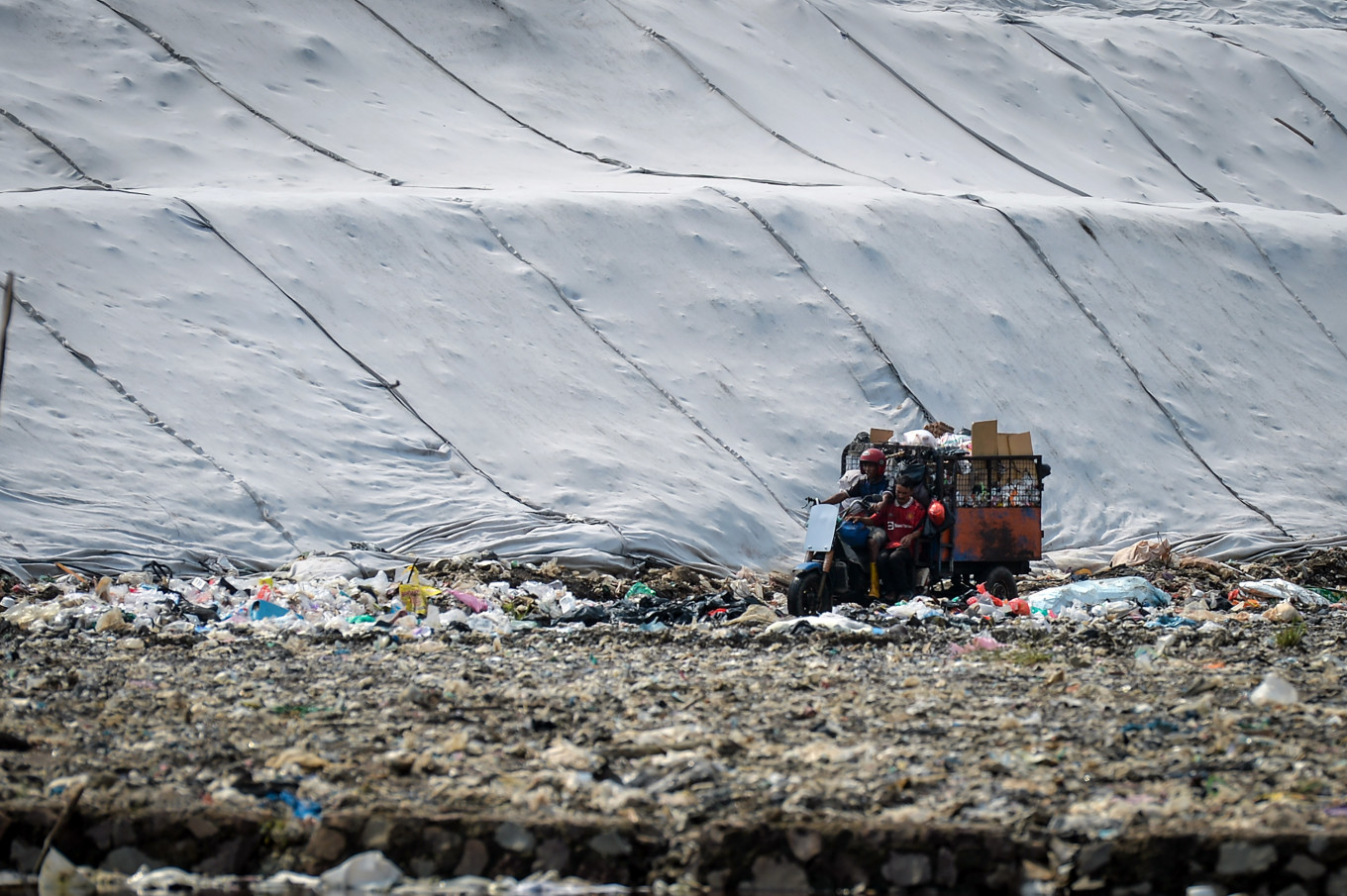 Endless waste crisis: A worker rides a garbage transport motorbike on April 14 at the Jatiwaringin landfill in Tangerang regency, Banten. The Environment Ministry has urged regional governments to immediately address open dumping practices at landfills and transition to a controlled landfill system, in which waste is covered with layers of soil periodically, with a deadline set for July 2026 to minimize environmental pollution and disaster risks. (Antara/Putra M. Akbar)
T
he government’s push to build waste-to-energy (WtE) facilities nationwide has drawn public backlash over potential health and environmental risks. However, state asset fund Danantara, which is overseeing the project, insists the proposed technology can efficiently process Indonesia’s largely unsegregated household waste while producing lower emissions than conventional methods.
An example of pushback against a WtE project occurred in Makassar, South Sulawesi, where residents expressed opposition over the facility’s proximity to homes, schools and public facilities out of fear potential contamination from toxic emissions such as dioxins.
The government has also been criticized for a lack of transparency and for excluding local communities from the planning process. The protests prompted authorities to relocate the project after public outcry intensified.
“The Makassar [project] is an example of a project pushed forward without transparency, ignoring community consent. It reflects how waste governance is being handled in a way that is not aligned with the constitution,” Wahyu Eka Setyawan of the Indonesian Forum for the Environment (Walhi) told The Jakarta Post on Monday.
The problem is structural, Wahyu noted, adding that limited public disclosure, including plant locations and proximity to residential areas, has further fueled uncertainty ahead of planned groundbreakings.
“When information is closed, participation is effectively shut out. This indicates the project is potentially problematic,” the group said, citing troubled projects in Surabaya and Solo.

In Surabaya, East Java, Walhi considers the Benowo plant a failure, as operators failed to disclose data and even withheld environmental impact assessments, leading to a successful legal challenge. In Solo, a similar project has ceased operations due to a mix of fiscal, technical and mixed-waste management issues.