The Jakarta Post
Please Update your browser
Your browser is out of date, and may not be compatible with our website. A list of the most popular web browsers can be found below.
Just click on the icons to get to the download page.


Popular Reads
Top Results
No results found. Please check your search term and try again
Can't find what you're looking for?
View all search results
Popular Reads
Top Results
No results found. Please check your search term and try again
Can't find what you're looking for?
View all search resultsIndia unveils hologram monument to anti-British hero
Change text size
Gift Premium Articles
to Anyone
Share the best of The Jakarta Post with friends, family, or colleagues. As a subscriber, you can gift 3 to 5 articles each month that anyone can read—no subscription needed!
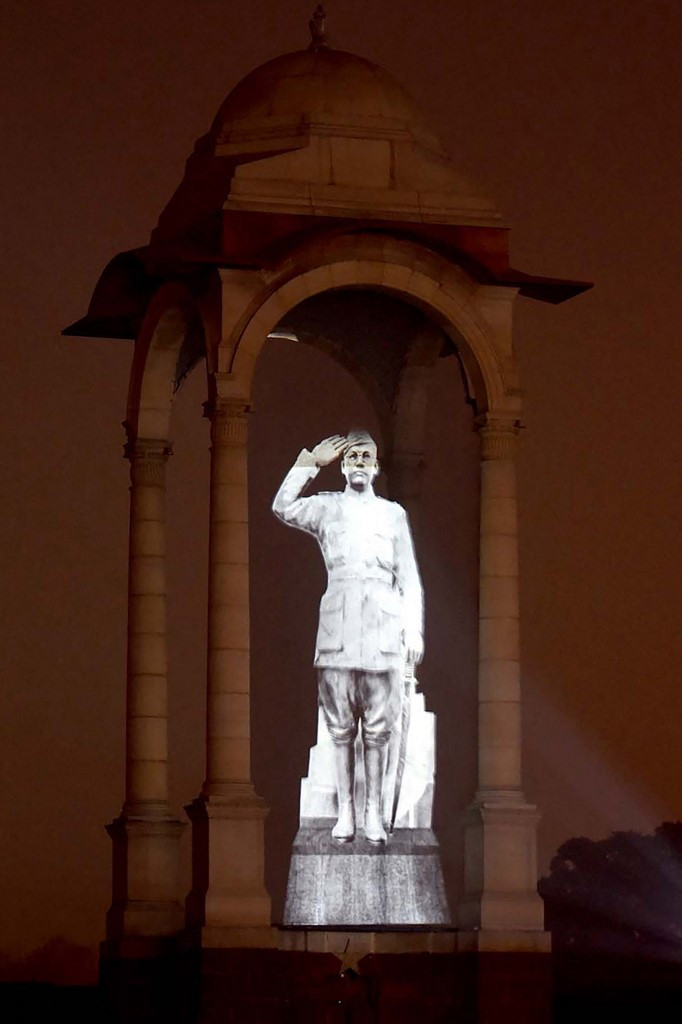 This handout photograph taken on January 23, 2022 and released by the Indian Press Information Bureau (PIB) shows a hologram of the statue of Indian nationalist leader Subhas Chandra Bose that was unveiled by Prime Minister Narendra Modi, in New Delhi. (AFP/PIB)
A
hologram monument to one of India's most celebrated independence figures was illuminated on Sunday in a tribute to a nationalist leader who advocated violent resistance to colonial rule.
Subhas Chandra Bose was a contemporary of Mahatma Gandhi but broke with the pacifist icon and sought alliances with Nazi Germany and Japan to overthrow the British Raj during World War II.
His courtship of fascist powers made Bose a controversial figure elsewhere but he remains widely revered at home for his role in India's independence struggle -- and the subject of conspiracy theories over his untimely death.
The hologram of Bose is near the India Gate -- a war memorial in the capital New Delhi designed by the colonial authorities -- and replaces a statue of Britain's King George V torn down nearly half a century ago.
It was turned on to mark the 125th anniversary of Bose's birth on Sunday and will remain lit up until a permanent statue is erected in its place.
Prime Minister Narendra Modi, who presided over the unveiling, said India was indebted to "the grand hero of India's independence".
Bose -- popularly known as "Netaji", or "leader" -- was renowned in his lifetime for his popularity and charisma.
With World War II raging, Bose escaped British surveillance to travel from India to Germany in 1941, later sailing in a submarine back to Asia to group surrendered Indian army troops into the rebel Indian National Army.
He was killed when a Japanese bomber in which he was travelling crashed in Taiwan at the close of the war in 1945.
But many Indians at the time thought the crash had been faked to help Bose go underground, as he was wanted as a war criminal by British authorities.
In the decades that followed, many insisted Bose was still alive and several alternative theories flourished to account for his whereabouts, including a capture and detention in a Soviet gulag or an anonymous return to India for a quiet life.


More from The Weekender

The weight of time
Richard Mille’s newest ultralight timepiece pares down haute horlogerie to its mechanical necessities, proving that sophistication often comes from knowing what to leave out.

At this wellness retreat, your poo is everybody’s business
Ayurvedagram promises balance through ancient Ayurvedic practices. For four days, I surrendered my schedule, my modesty and, almost, my digestive tract.

All aboard: The case for staying grounded
An eight-hour train ride from Jakarta to Surabaya shows that getting there can be half the fun.