The Jakarta Post
Please Update your browser
Your browser is out of date, and may not be compatible with our website. A list of the most popular web browsers can be found below.
Just click on the icons to get to the download page.


Popular Reads
Top Results
No results found. Please check your search term and try again
Can't find what you're looking for?
View all search results
Popular Reads
Top Results
No results found. Please check your search term and try again
Can't find what you're looking for?
View all search resultsJapan's 'polka dot queen' artist Yayoi Kusama dies aged 97
The "polka dot queen" channeled hallucinations and battles with mental health into vibrant art featuring her trademark dots, nets and infinity motifs over a career spanning decades and continents.
Change text size
Gift Premium Articles
to Anyone
Share the best of The Jakarta Post with friends, family, or colleagues. As a subscriber, you can gift 3 to 5 articles each month that anyone can read—no subscription needed!
 Set as preferred source
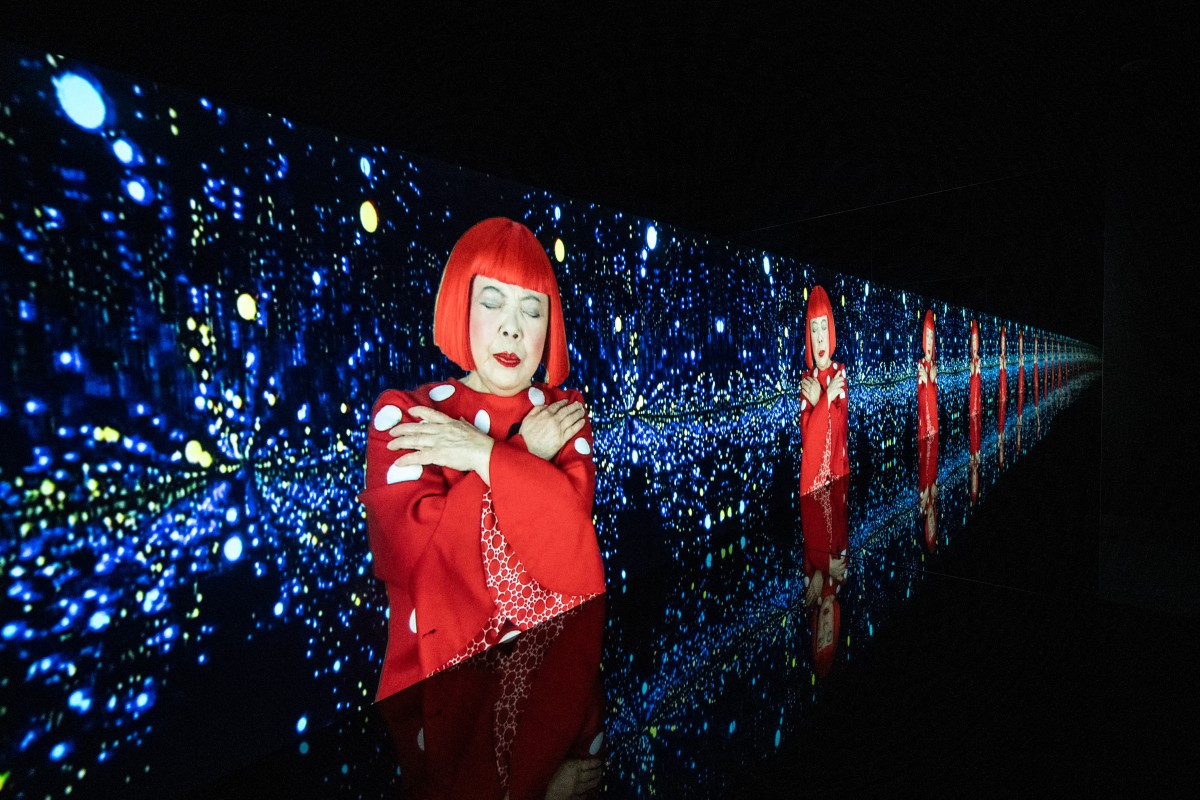 A video projection of “Song of a Manhattan Suicide Addict“ by Japanese artist Yayoi Kusama is seen during the media preview of the exhibition “I would overcome death and go on living“ at Yayoi Kusama Museum in Tokyo on October 16, 2024. Japanese avant-garde artist Yayoi Kusama, known as the “polka dot queen“, has died aged 97, a statement from her company said on August 27, 2026. (AFP/Philip Fong)
J
apan's Yayoi Kusama, one of the world's most celebrated contemporary artists, has died aged 97, her company said Thursday, triggering tributes from around the world.
The "polka dot queen" channeled hallucinations and battles with mental health into vibrant art featuring her trademark dots, nets and infinity motifs over a career spanning decades and continents.
"Throughout an extraordinary lifetime devoted entirely to artistic creation, Kusama pursued an internationally acclaimed career as a pioneering avant-garde artist whose creative practice encompassed visual art, performance, fiction, and poetry," a statement said, announcing her death on August 14.

"She continued to paint until her final days, never setting aside her brush, and continued exploration of forever love and eternal soul," it added.
Born in 1929 to a wealthy and conservative family -- by her account with a domineering mother and philandering father -- Kusama began producing her unique signature art aged 10.
"One day, after seeing a tablecloth with a red flower pattern on a desk, I saw the same red flower pattern all over the ceiling, windows and pillars. It filled the room, and covered my body," she wrote in her autobiography.
After studying art in Japan, Kusama moved to the United States in the late 1950s, and -- encouraged and helped by Georgia O'Keeffe -- quickly made a splash in New York's avant-garde scene.
Despite facing discrimination as not just Japanese but also a woman in a male-dominated scene, she won fame for bold, big paintings and provocative 1960s "happenings" featuring body painting and polka dots.
She also launched a fashion line, established a "Church of Self-Obliteration" and styled herself the "High Priestess of Polka Dots" to officiate at a gay wedding.
Returning to Japan in the 1970s, Kusama checked herself into a Tokyo psychiatric hospital, where she lived -- and worked -- for the rest of her life.
Instantly recognizable in her bright red wig and bold spotted outfits, her fame enjoyed a renaissance from the 1980s.
Her infinity rooms, pumpkin sculptures -- including one on Japan's "art island" Naoshima -- and immersive installations still attract crowds and have sold for millions of dollars.
Ai Kono, 50, was on her way from Yokohama to the Yayoi Kusama Museum in Tokyo with her 10-year-old daughter Ran on Thursday when they heard the artist had passed away.
"She lived a long and fulfilling life. But I was shocked to see the news. I came because I wanted to show my daughter her unique polka dots and use of color," Kono told AFP outside the museum.
"As a woman, she was a person of persistence."
Tim Cook, CEO of Apple, called Kusama a "true visionary who showed us the power of boundless imagination".
"Yayoi Kusama's creativity pushed the art world forward and left behind a brighter, more vibrant world for us all," Cook said on X.
Kusama's company said she died in hospital in Tokyo.

More from The Weekender

At this wellness retreat, your poo is everybody’s business
Ayurvedagram promises balance through ancient Ayurvedic practices. For four days, I surrendered my schedule, my modesty and, almost, my digestive tract.

All aboard: The case for staying grounded
An eight-hour train ride from Jakarta to Surabaya shows that getting there can be half the fun.

Questioning and nurturing the self with Abell Octovan
The visual artist explores new grounds and mediums in his first solo exhibition, Am I an Artist.