TheJakartaPost
Please Update your browser
Your browser is out of date, and may not be compatible with our website. A list of the most popular web browsers can be found below.
Just click on the icons to get to the download page.


Popular Reads
Top Results
No results found. Please check your search term and try again
Can't find what you're looking for?
View all search results
Popular Reads
Top Results
No results found. Please check your search term and try again
Can't find what you're looking for?
View all search resultsMothers face challenges amid strong determination to breastfeed
Change text size
Gift Premium Articles
to Anyone
Share the best of The Jakarta Post with friends, family, or colleagues. As a subscriber, you can gift 3 to 5 articles each month that anyone can read—no subscription needed!
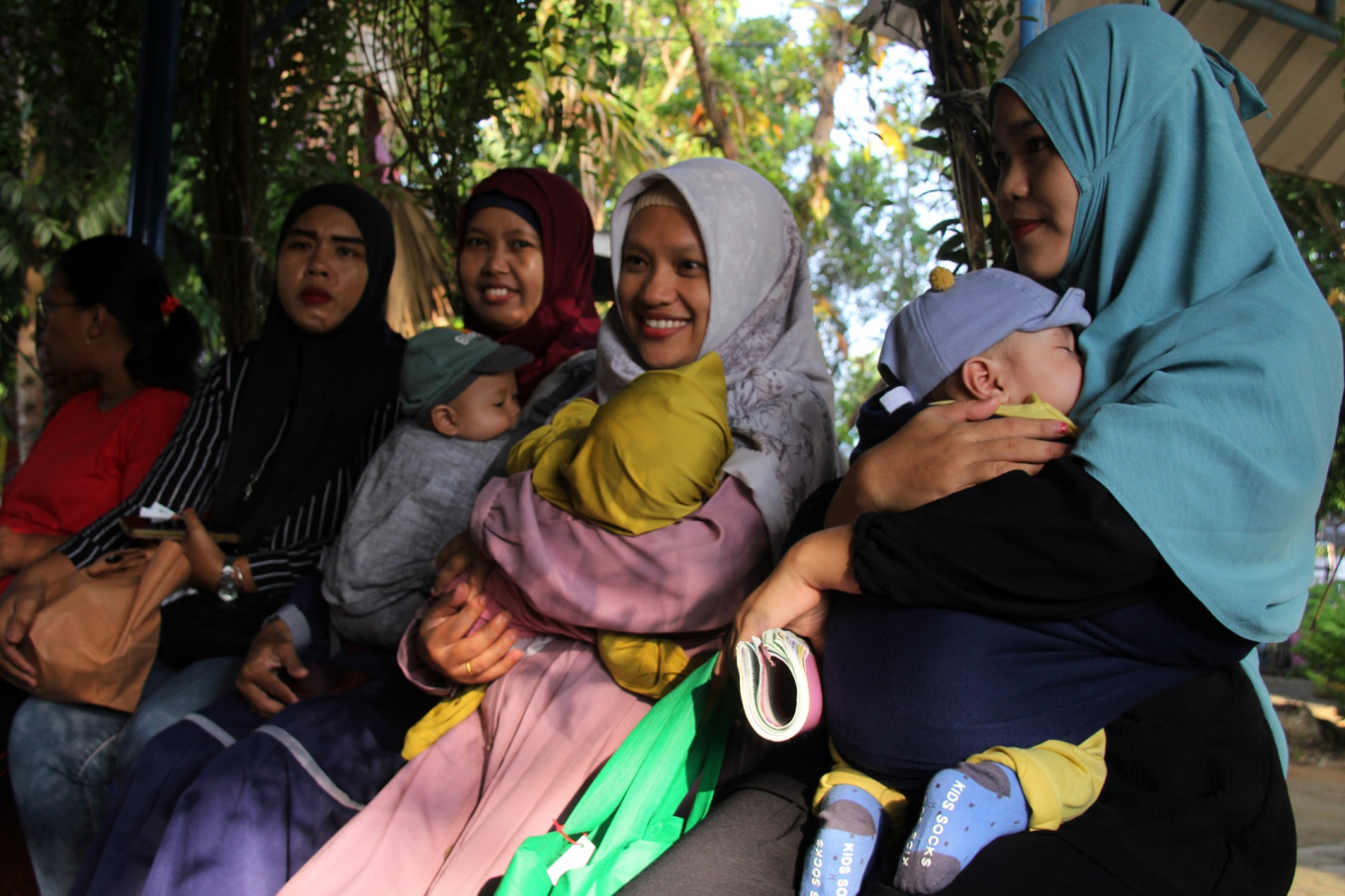 Mothers and their children attends a World Breastfeeding Day event in Dumai, Riau on Aug. 1, 2024, where doctors with the Dumai Regional General Hospital and officials of the Dumai Women and Children Protection Agency give information about stunting prevention and provide free medical checkups for mothers. (Antara/Aswaddy Hamid)
W
hile breastfeeding is considered the healthiest option for both mothers and babies as it can reduce the risk of various illnesses, many mothers in Indonesia still face tough challenges and a lack of support to exclusively breastfeed their children.
Monalisa, an office worker from South Tangerang in Banten, recalled her battle to nurse her son after giving birth in 2020 because of the baby’s difficulty latching, leading to a breast milk oversupply.
"I produced too much breast milk, yet my baby struggled to drink it. As a result, my breasts became engorged, firm and painful and I suffered multiple fevers," Monalisa said on Wednesday, adding that she later developed nipple fissures and blisters which made her breastfeeding experience extremely horrifying.
"I was so afraid and traumatized every time I had to nurse my son. I got so little rest because he was hungry all the time. I also cried every time I breastfed my baby because of the pain and exhaustion”.
Instead of getting the support she needed during the critical moment, some of Monalisa’s relatives advised her to give the newborn baby formula. But she had an unwavering intention to exclusively breastfeed for the first six months of the baby’s life. The World Health Organization (WHO) says the move is recommended to achieve optimal growth, development and health.
After seeing multiple healthcare professionals–including a lactation counselor who was hard to find even in the Greater Jakarta area–and undergoing a medical procedure, the 37-year-old managed to overcome her breastfeeding issues and avoid the use of formula which uses added ingredients that are not without risks.

Previous reports revealed that companies added sugar to infant formula in developing and poorer countries including Indonesia, which is contrary to international guidelines aimed at preventing obesity and chronic diseases in children.