The Jakarta Post
Please Update your browser
Your browser is out of date, and may not be compatible with our website. A list of the most popular web browsers can be found below.
Just click on the icons to get to the download page.


Popular Reads
Top Results
No results found. Please check your search term and try again
Can't find what you're looking for?
View all search results
Popular Reads
Top Results
No results found. Please check your search term and try again
Can't find what you're looking for?
View all search resultsSocial, economic condition hinders Gen Z from having children: UN
Three out of four young people in Indonesia want to have two children or more, but they also believe they will eventually have fewer children in their lifetime, according to the United Nations family planning body.
Change text size
Gift Premium Articles
to Anyone
Share the best of The Jakarta Post with friends, family, or colleagues. As a subscriber, you can gift 3 to 5 articles each month that anyone can read—no subscription needed!
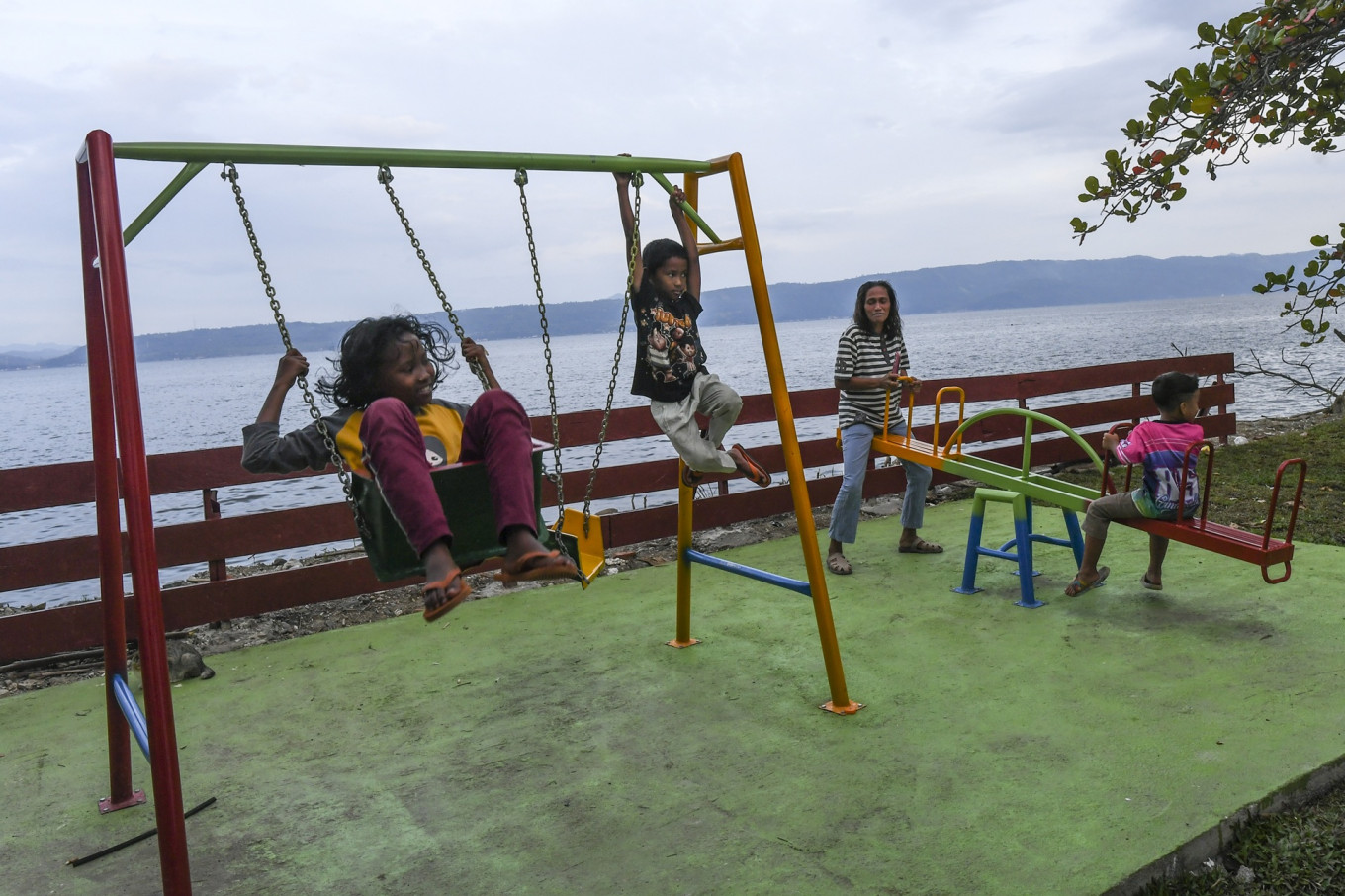 Children play at a playground on Feb. 20 in the Danantara temporary housing site for survivors of cyclone-induced floods and landslides in Tanah Datar regency, West Sumatra. At least 20 families from Guguak village have been staying at the site located next to the Singkarak Lake in the province since Feb. 7. (Antara/Wahdi Septiawan)
W
hile Indonesia’s Generation Z often opts to delay marriage, those who eventually tie the knot tend to have fewer children, according to a United Nations body, citing mounting structural challenges such as housing unaffordability, high unemployment and financial insecurity.
The State of World Population (SWP) Report 2025 published by the UN Population Fund (UNFPA) found that 74 percent of women and 77 percent of men in Indonesia wish to have two children or more.
However, nearly one in five people under 50 surveyed for the report also expected to not have their desired family size, with 17 percent believing they will have fewer children than they would ideally choose.
The issue extends beyond demographic figures, with UNFPA Asia Pacific regional director Aleksandar “Sasha” Bodiroza pointing to a widening gap between people’s fertility aspirations and the social conditions that shape their decisions.
In an interview with The Jakarta Post in Jakarta on Feb. 25, he cited findings laid out in the SWP Report 2025, saying 39 percent respondents answered that “there is not enough money”, while 22 percent others said, “they don’t have homes to live and to establish families in”. Another 20 percent answered that job insecurity was a deciding factor.
Sasha also noted that 16 percent of women said the lack of responsibility shared between men and women regarding childbearing is a factor keeping families from having children.

“That’s basically what we need to look at. Instead of looking at the numbers, we look at the people,” Sasha said.