TheJakartaPost
Please Update your browser
Your browser is out of date, and may not be compatible with our website. A list of the most popular web browsers can be found below.
Just click on the icons to get to the download page.


Popular Reads
Top Results
No results found. Please check your search term and try again
Can't find what you're looking for?
View all search results
Popular Reads
Top Results
No results found. Please check your search term and try again
Can't find what you're looking for?
View all search resultsHashim's appointment to national park task force raises eyebrows
The task force, led by businessman Hashim Djojohadikusumo, is assigned to look for ‘innovative and sustainable funding’ for national park management without compromising its main purpose of environmental conservation, according to Forestry Minister Raja Juli Antoni.
Change text size
Gift Premium Articles
to Anyone
Share the best of The Jakarta Post with friends, family, or colleagues. As a subscriber, you can gift 3 to 5 articles each month that anyone can read—no subscription needed!
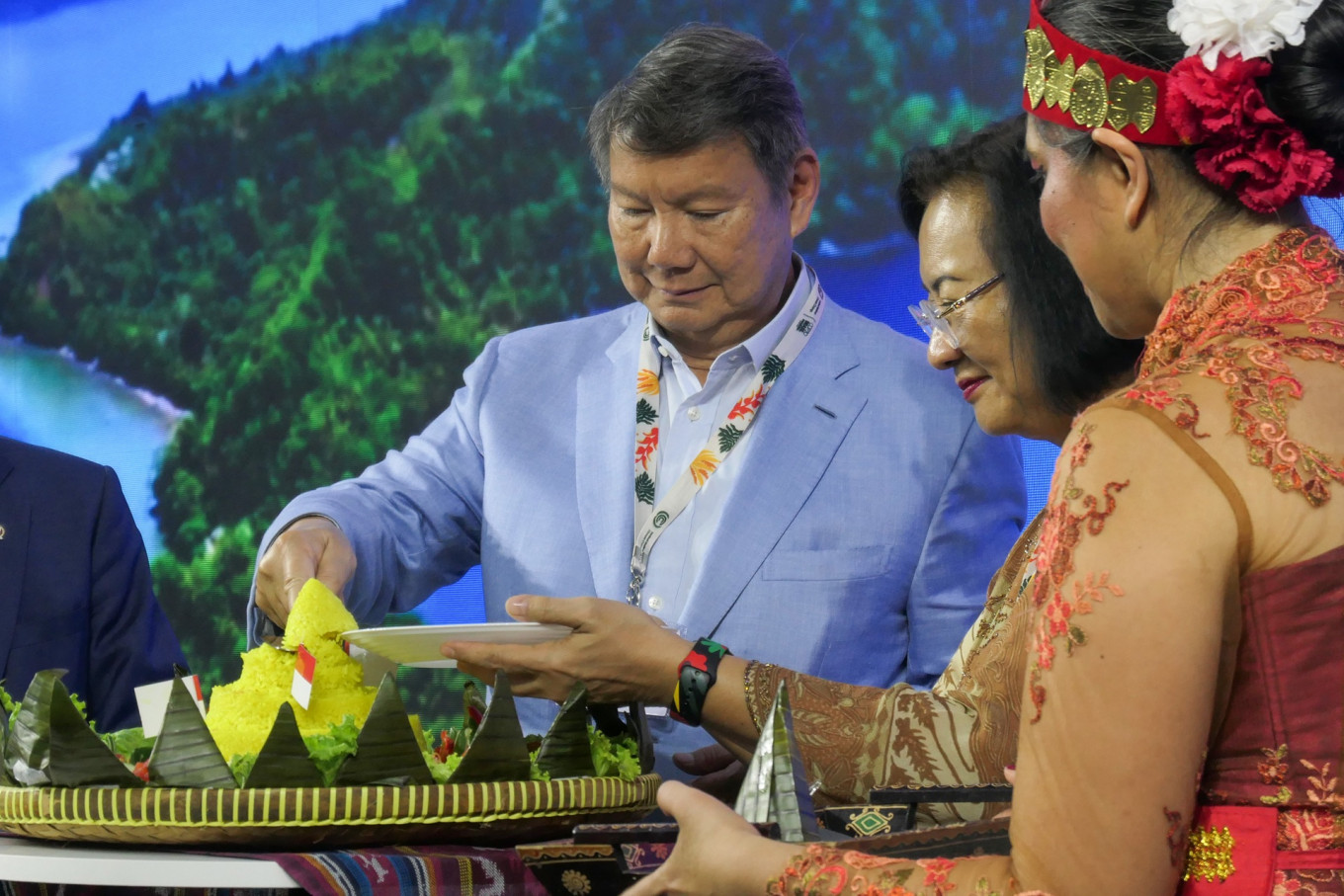 Special Presidential Envoy on Energy and Climate Change Hashim Djojohadikusumo (left) slices a tumpeng (rice cone) on Nov. 10, 2025, during the opening ceremony of the Indonesian Pavilion at the United Nations climate change conference (COP30) in Belém, Brazil. The Indonesian delegation for the conference showcased climate mitigation and adaptation efforts in the pavilion throughout the two-week summit in the Brazilian town. (Antara/Anita Permata Dewi)
P
resident Prabowo Subianto’s decision to appoint his younger brother, mining tycoon Hashim Djojohadikusumo, to a task force on national park financing has sparked concerns over potential conflict of interest and further fueled skepticism about the government’s conservation commitments.
Forestry Minister Raja Juli Antoni force announced the appointment on March 12 following a meeting with the President on the same day.
He said he would serve as deputy head of the new task force along with senior economist Mari Elka Pangestu to accompany Hashim in “seeking innovative and sustainable funding models that involve private sectors” to elevate the global standing of Indonesia’s national parks.
The government believes the move is necessary to develop dozens of national parks as sustainable ecotourism hubs, beyond their conservation roles.
“There will certainly be commercialization, but we must underscore that it won’t lead to overtourism,” Raja Juli said on March 12. “The main goal should be to safeguard the environment and forests while still incorporating commercial aspects.”
The formal establishment of the task force is still pending a new presidential decree.

Indonesia has 57 national parks spread across the archipelago, most of which are home to the remaining intact forest landscapes. Land use within the parks is strictly regulated under the 2024 Natural Resources and Ecosystem Conservation Law, with activities such as ecotourism and energy production only allowed in certain zones of the parks.