TheJakartaPost
Please Update your browser
Your browser is out of date, and may not be compatible with our website. A list of the most popular web browsers can be found below.
Just click on the icons to get to the download page.


Popular Reads
Top Results
No results found. Please check your search term and try again
Can't find what you're looking for?
View all search results
Popular Reads
Top Results
No results found. Please check your search term and try again
Can't find what you're looking for?
View all search resultsWatching climate patterns may help bolster dengue response
Observing patterns of atmospheric conditions may help health authorities in better preparing mitigation and prevention efforts against the mosquito-borne disease, a recent study suggests, with the insect expected to flourish more in a warming world.
Change text size
Gift Premium Articles
to Anyone
Share the best of The Jakarta Post with friends, family, or colleagues. As a subscriber, you can gift 3 to 5 articles each month that anyone can read—no subscription needed!
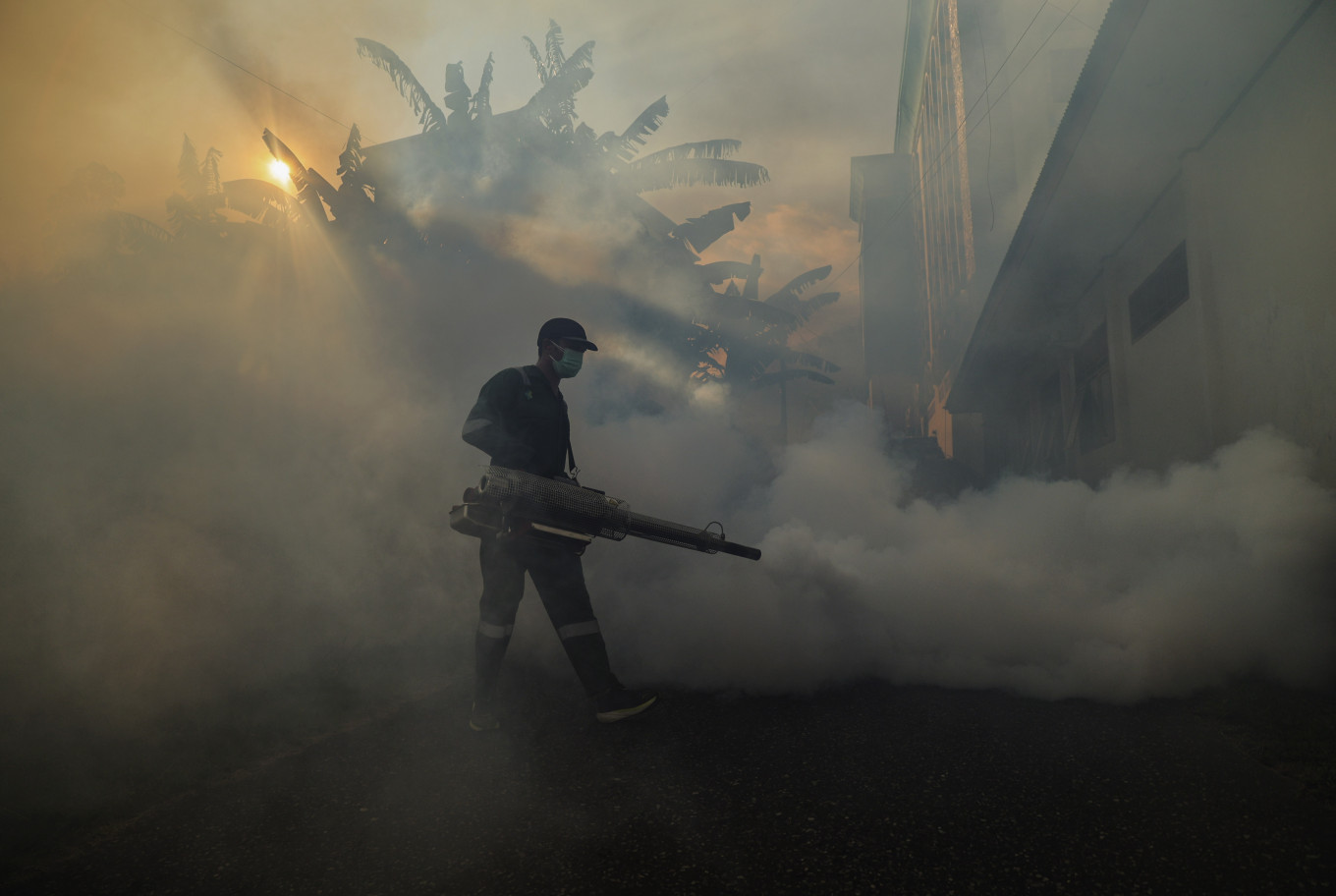 A Ternate Health Agency official sprays insecticide with a fogging machine at the city's haj dormitory in Ternate, North Maluku on April 22, 2026. Officials sprayed insecticide in bedrooms, parks and drains to prevent Aedes aegypti mosquitoes, the main vector of dengue, from flourishing. (Antara/Andri Saputra)
F
or decades, Indonesia has been struggling with dengue, with the country seeing new cases caused by the mosquito-borne disease each year, despite the national target of zero dengue deaths by 2030.
As of mid-April alone, 30,465 cases and 79 deaths had been confirmed in 401 of 514 regencies and cities across the country.
A recent study suggests a new addition to health authorities’ arsenal in fighting dengue, namely climate cues such as precipitation and El Niño events. Researchers found that looking at these clues might help authorities to better predict and map dengue transmission to devise an early warning system to better respond to the outbreaks that vary between regions.
The study, published on March 17 in the journal PLOS Neglected Tropical Diseases, illustrated the climate-based mapping of dengue outbreaks. The authors analyzed province-level dengue surveillance data between 2010 and 2024 and compared them with local and regional climate variables.
“Previous studies tend to lump Indonesia into a single entity when trying to forecast dengue,” said Bimandra Adiputra Djaafara, lead author of the study. “And it's probably not the best way to do that because now we see that the pattern and timing of dengue is different region to region.”
The results reveal consistent outbreak time patterns in western Indonesia, with provinces in Sumatra experiencing outbreaks up to four months earlier than those in Java and Bali. For example, North Sumatra sees the peak of the dengue outbreak in October, while Jakarta, West Java and Bali experience the peak in April.