The Jakarta Post
Please Update your browser
Your browser is out of date, and may not be compatible with our website. A list of the most popular web browsers can be found below.
Just click on the icons to get to the download page.


Popular Reads
Top Results
No results found. Please check your search term and try again
Can't find what you're looking for?
View all search results
Popular Reads
Top Results
No results found. Please check your search term and try again
Can't find what you're looking for?
View all search resultsBetween loss and hope: Indigenous women behind North Sumatra’s decades-long land conflict
Although Nurinda has finally been able to return, years of abandonment have devastated the farm. Nearly 90 percent of her coffee crops are gone, wiping out the harvest her family once depended on for income.
Change text size
Gift Premium Articles
to Anyone
Share the best of The Jakarta Post with friends, family, or colleagues. As a subscriber, you can gift 3 to 5 articles each month that anyone can read—no subscription needed!
 Set as preferred source
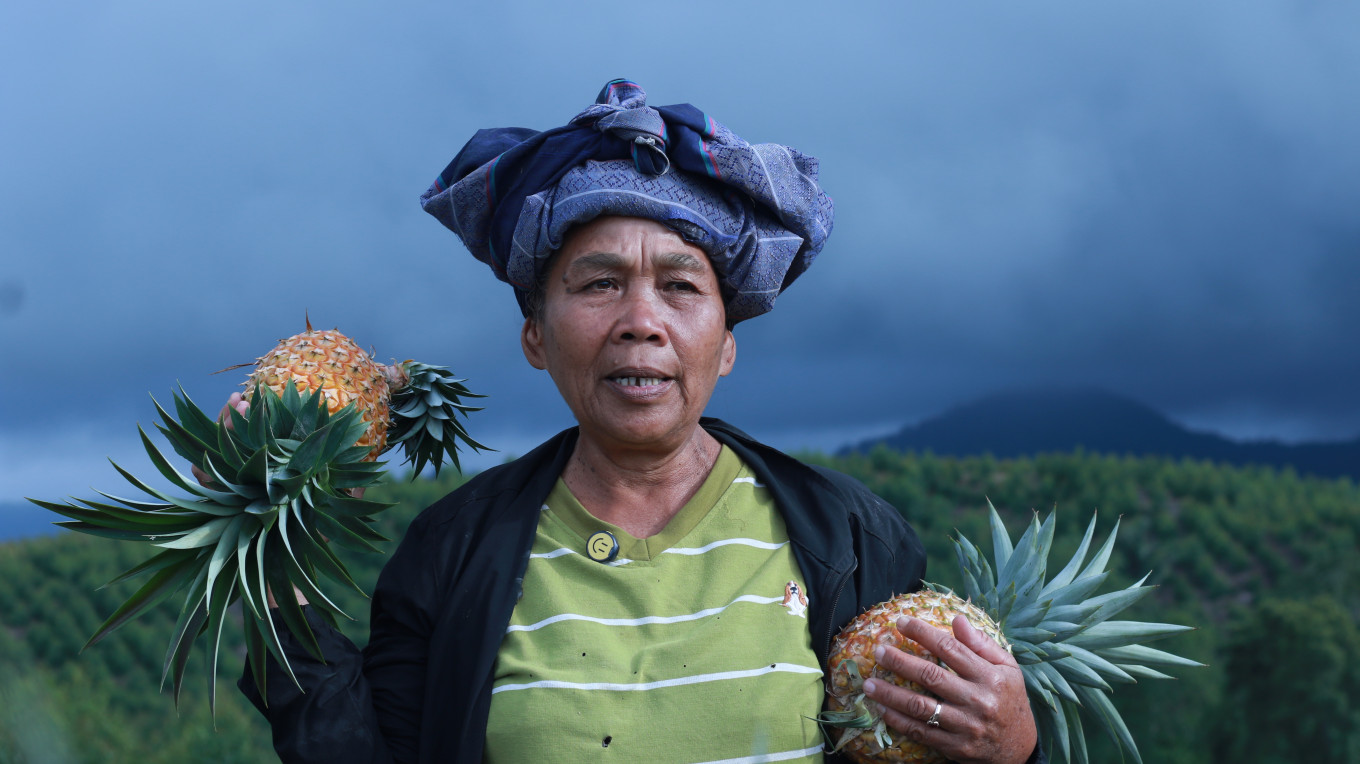 Berliana Damanik, an indigenous woman from Dolok Parmonangan village, harvests pineapples in a field near her home on Nov. 15, 2025, in Simalungun regency, North Sumatra.
She is among those affected by a prolonged agrarian conflict with pulp-and-paper company PT Toba Pulp Lestari. (JP/Nurni Sulaiman)
Berliana Damanik, an indigenous woman from Dolok Parmonangan village, harvests pineapples in a field near her home on Nov. 15, 2025, in Simalungun regency, North Sumatra.
She is among those affected by a prolonged agrarian conflict with pulp-and-paper company PT Toba Pulp Lestari. (JP/Nurni Sulaiman)
N
urinda Napitu stood silently, gazing across her overgrown coffee farmland in Sihaporas village, Simalungun regency, North Sumatra just three kilometers from the shores of Lake Toba.
What was once fertile farmland had been consumed by wild undergrowth. Thick bushes and creeping vines blanketed the abandoned plots, leaving behind only a scattering of neglected coffee trees, the last traces of a farm that once carried her family’s hopes for stability and a better future.
For decades, agrarian conflict between indigenous communities around Lake Toba and pulp-and-paper giant PT Toba Pulp Lestari (TPL) kept families like Nurinda’s from accessing their ancestral land.
Although Nurinda has finally been able to return, years of abandonment have devastated the farm. Nearly 90 percent of her coffee crops are gone, wiping out the harvest her family once depended on for income.
“I once believed my first child would go to college from the harvest of this coffee farm. But that dream was gone. Almost everything had been destroyed,” she said, her voice heavy with grief.
Nurinda is part of the Sihaporas Indigenous Community, whose members have inhabited roughly 1,500 hectares of ancestral land in the Sihaporas area since the 1800s, during the Dutch colonial era.

Her husband, Jonny Ambarita, is a direct descendant of Ompu Mamontang Laut Ambarita, the founder of Sihaporas village. As the 12th generation of his family to live on the customary territory, Jonny grew up in a community where life has long depended on the surrounding forests and farmland, cultivating crops, hunting wildlife and foraging from the land passed down through generations.