TheJakartaPost
Please Update your browser
Your browser is out of date, and may not be compatible with our website. A list of the most popular web browsers can be found below.
Just click on the icons to get to the download page.


Popular Reads
Top Results
No results found. Please check your search term and try again
Can't find what you're looking for?
View all search results
Popular Reads
Top Results
No results found. Please check your search term and try again
Can't find what you're looking for?
View all search resultsYunnan Observatories detects echo from moon reflector
Change text size
Gift Premium Articles
to Anyone
Share the best of The Jakarta Post with friends, family, or colleagues. As a subscriber, you can gift 3 to 5 articles each month that anyone can read—no subscription needed!
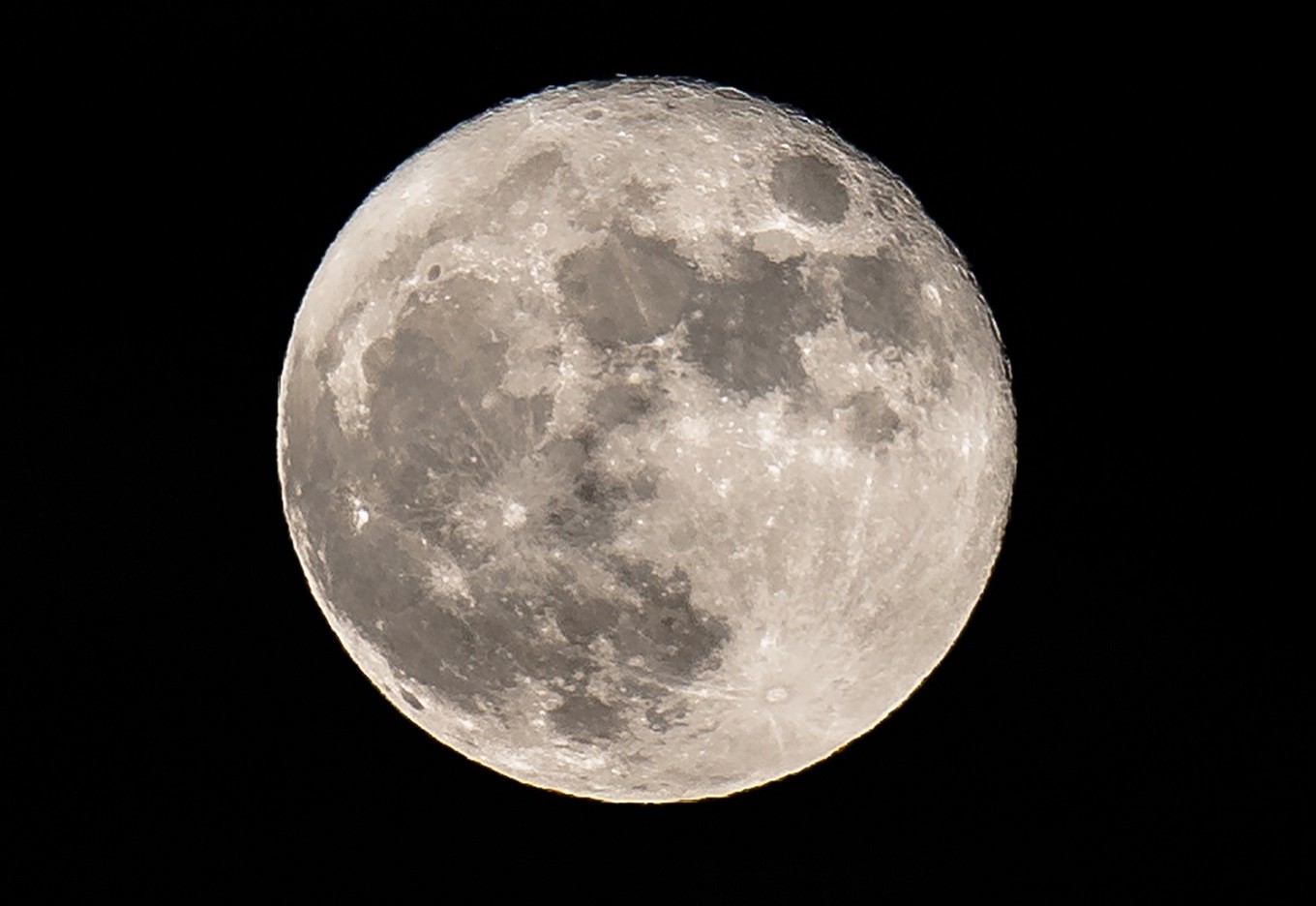 This file photo taken on December 14, 2016 shows a supermoon rising above central London.
(AFP/Daniel Leal-Olivas)
This file photo taken on December 14, 2016 shows a supermoon rising above central London.
(AFP/Daniel Leal-Olivas)
T
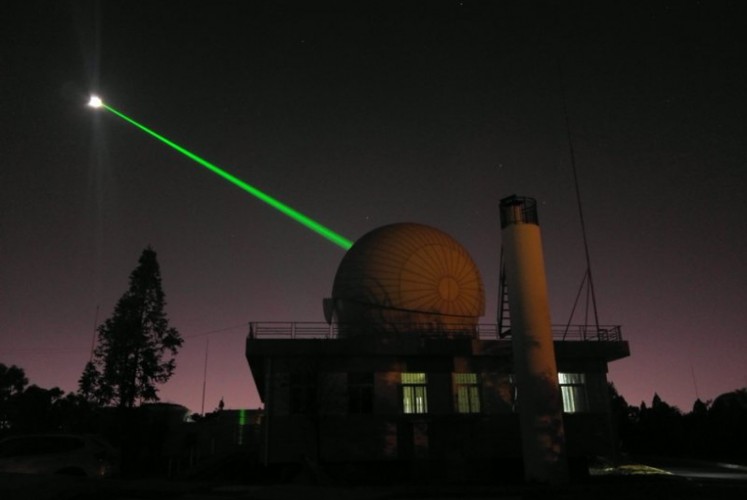
he Applied Astronomy Group of Yunnan Observatories, Chinese Academy of Sciences detected the laser echo signal from the lunar-surface reflector Apollo 15 for several times, which is the first successful LLR experiment nationwide in China.
On the night of Jan 22, using the 1.2-meter Telescope Laser Ranging System, the group detected the laser echo signal from the lunar-surface reflector.
LLR is to calculate the distance between the Earth and the Moon precisely, by measuring the time of the laser pulse traveling from ground station to the lunar reflector. It is a comprehensive technology covering a number of areas from laser, photoelectric detection, automatic control to space orbit, which is also currently the most accurate technique in Earth-Moon distance measurement.

Read also: A ‘super blue blood’ moon to appear on Jan. 31
The observational data has significant value for many areas such as astronomical geodynamics, Earth-Moon dynamics, lunar physics and the verification of gravitational theory. Previously, there were only three countries, including the US, France and Italy, which succeeded in LLR experiment. This time the lunar ranging carried out by Yunnan Observatories fills the gap in Chinese LLR area.
The 1.2m Telescope Laser Ranging System uses common optical path mode. The laser wavelength is 532nm with pulse-width 10ns and frequency 10Hz. Laser energy during the experiment is 3.3J. Average Earth-Moon distance is 384403.0km. From 21:25 to 22:31, as shown by the experimental data, the distance between the observatory and the lunar reflector Apollo 15 is 385823.433km~387119.600km, with ranging accuracy within 1 meter.
This article appeared on the China Daily newspaper website, which is a member of Asia News Network and a media partner of The Jakarta Post