The Jakarta Post
Please Update your browser
Your browser is out of date, and may not be compatible with our website. A list of the most popular web browsers can be found below.
Just click on the icons to get to the download page.


Popular Reads
Top Results
No results found. Please check your search term and try again
Can't find what you're looking for?
View all search results
Popular Reads
Top Results
No results found. Please check your search term and try again
Can't find what you're looking for?
View all search resultsThe misguided plan to scrap public transport subsidy
In the case of the Commuter Line pricing system, the subsidy scheme is not only to serve the public good, but also to amplify the positive externalities of using public transportation, including less air pollution and less traffic congestion.
Change text size
Gift Premium Articles
to Anyone
Share the best of The Jakarta Post with friends, family, or colleagues. As a subscriber, you can gift 3 to 5 articles each month that anyone can read—no subscription needed!
 Set as preferred source
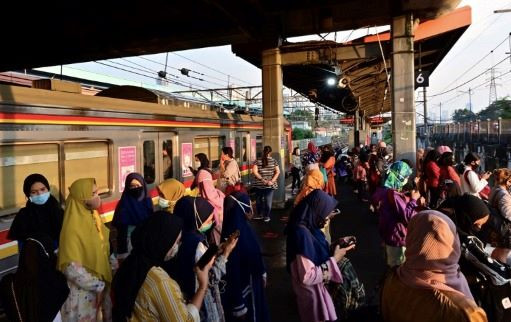 Rush hour: Commuters wait for their train at the Tanah Abang railway station in Jakarta on Aug. 18, 2020, during the implementation of a physical distancing policy to fight the COVID-19 pandemic.
(AFP/Adek Berry)
Rush hour: Commuters wait for their train at the Tanah Abang railway station in Jakarta on Aug. 18, 2020, during the implementation of a physical distancing policy to fight the COVID-19 pandemic.
(AFP/Adek Berry)
T
he Commuter Line’s progressive pricing scheme, which is based on distance in the Greater Jakarta (Jabodetabek) area, will change to a system that is based on passengers’ national identification numbers (NIK).
This plan, cited in the 2025 draft state budget statement, could become one of the clumsiest policies in recent years. This misguided policy supposedly stems from the assumption that existing public transportation subsidies are mistargeted.
With the new scheme, the allocation of the subsidy must be selective using NIK profiling. However, the paradigm used when discussing public transportation subsidies should include service orientation and public welfare.
The main goal is to encourage more people to use public transportation. In other words, this subsidy is indeed an incentive for the entire community. There should be no income-based segregation for beneficiaries of the subsidy. The phrase “mistargeted subsidy” should never be accepted.
Moreover, the trend to use the Commuter Line as a public transportation preference is becoming increasingly popular. The total number of Commuter Line passengers in the past four years has increased steadily from 131 million in 2021 to 242 million in 2022 and 331 million in 2023. By July 2024, the number of passengers reached 191 million, up 15.89 percent from the same period in 2023.
This trend means that the public has trusted the Commuter Line as a reliable form of public transportation. This positive trend shows momentum that should be continued, not crushed with a sledgehammer. In comparison, most of the similar public transportation systems in the world such as the tube in London, the subway in New York, the Singapore Mass Rapid Transit (MRT) system and the Metro Line in Japan do not set fares based on passenger profiles. Thus, establishing the use of the NIK to create different fares will only add significant troubles and complexity.

In theory, subsidies should be used as a form of government intervention to correct market failure and externalities. It is indeed true that subsidies should only be provided to those in need. However, in the case of the Commuter Line pricing system, the subsidy scheme is not only to serve the public good, but also to amplify the positive externalities of using public transportation, including less air pollution and less traffic congestion. Therefore, the government should always encourage the use of public transportation and improve the quality of the systems.