TheJakartaPost
Please Update your browser
Your browser is out of date, and may not be compatible with our website. A list of the most popular web browsers can be found below.
Just click on the icons to get to the download page.


Popular Reads
Top Results
No results found. Please check your search term and try again
Can't find what you're looking for?
View all search results
Popular Reads
Top Results
No results found. Please check your search term and try again
Can't find what you're looking for?
View all search resultsWhy global environmental coordination matters now
Planetary threats require planetary governance.
Change text size
Gift Premium Articles
to Anyone
Share the best of The Jakarta Post with friends, family, or colleagues. As a subscriber, you can gift 3 to 5 articles each month that anyone can read—no subscription needed!
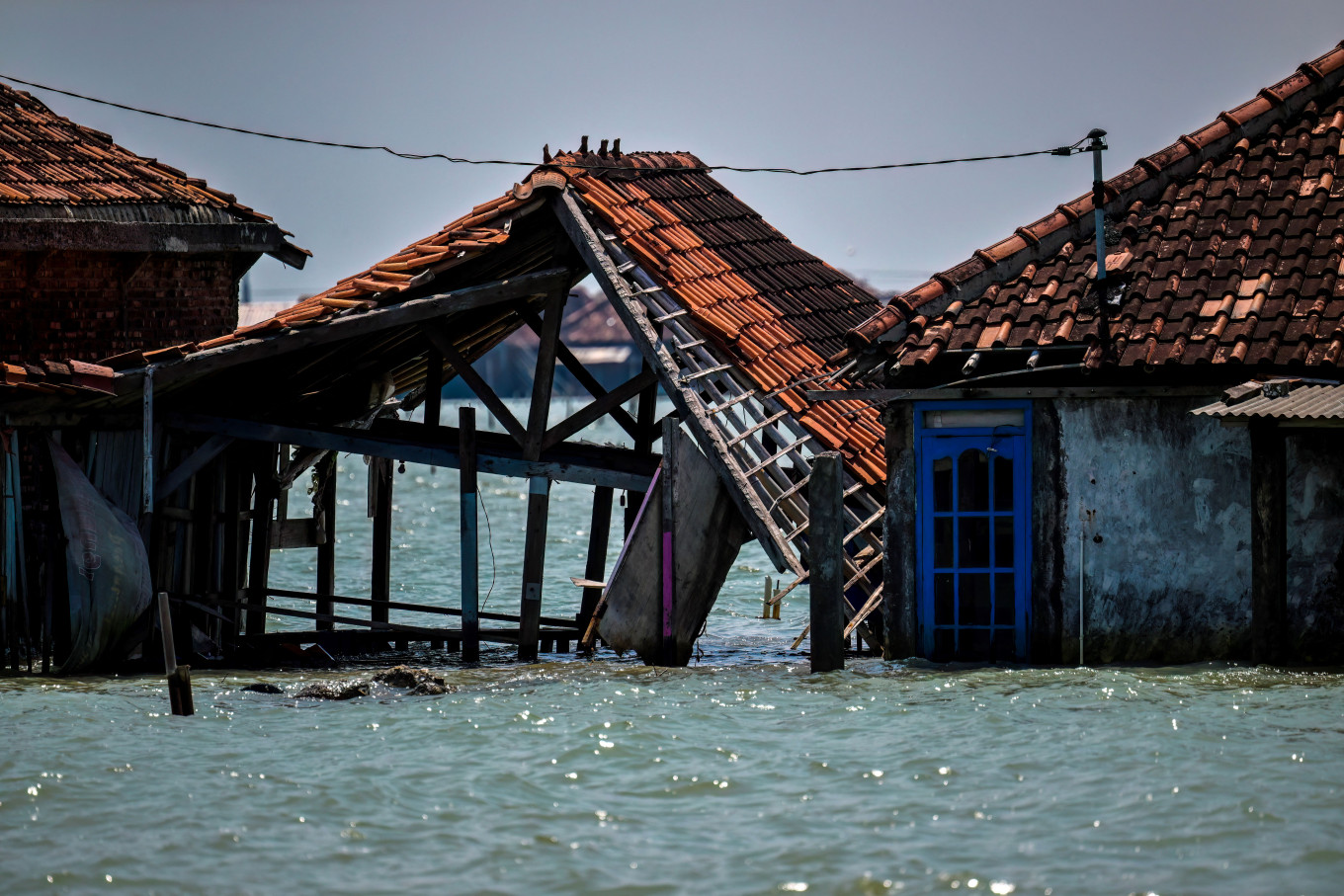 This photo taken on July 30, 2025, shows abandoned and partially submerged houses due to land loss from climate change at Bedono village in Demak, Central Java. (AFP/Bay Ismoyo)
A
s geopolitical challenges and tensions escalate globally, one thing is clear: fragmented politics will not fix a fractured planet. This is why the United Nations Environment Assembly (UNEA), the world’s highest decision-making body on the environment, is so critical to address our shared and emerging environmental threats.
The seventh session of the Assembly, taking place at the headquarters of the UN Environment Programme (UNEP) in Nairobi next week, will bring together ministers, intergovernmental organizations, multilateral environmental agreements, the broader UN system, civil society groups, scientists, activists and the private sector to shape global environmental policy.
Recent UNEP data show emissions continue to rise as the impacts of global environment and climate challenges are accelerating and growing ever more extreme. We see it in record heatwaves, disappearing ecosystems, and toxins in our air, water and soil. These are global threats that demand global solutions.
Even in turbulent times, environmental multilateralism continues to deliver. Since countries met at UNEA last year, this multilateralism has delivered important progress.
Governments agreed to establish the Intergovernmental Science-Policy Panel on Chemicals, Waste and Pollution, finally completing the “trifecta” of science bodies alongside the Intergovernmental Panel on Climate Change and the Intergovernmental Science-Policy Platform on Biodiversity and Ecosystem Services. The BBNJ Agreement on the sustainable use of marine biodiversity in areas beyond national jurisdiction came into force, a major win for the governance of our oceans.
Importantly, during such a challenging political climate, the Paris Agreement is showing that it is working. However, it is clear we need to move much faster with greater determination. But change is afoot: The global shift to low-emission and climate resilient development is irreversible. Renewable energy is outcompeting fossil fuels pricewise. Climate smart investments are driving tomorrow’s vibrant economies and societies.

While we must recognize that many were hoping COP30 would include explicit reference to phasing out fossil fuels in the decision text, this was not to be. However, the COP President committed to creating two roadmaps during his one-year tenure, one to halt and reverse deforestation and another to transition away from fossil fuels, a move that was backed by more than 80 countries during the talks.