The Jakarta Post
Please Update your browser
Your browser is out of date, and may not be compatible with our website. A list of the most popular web browsers can be found below.
Just click on the icons to get to the download page.


Popular Reads
Top Results
No results found. Please check your search term and try again
Can't find what you're looking for?
View all search results
Popular Reads
Top Results
No results found. Please check your search term and try again
Can't find what you're looking for?
View all search resultsWhat Cambodia-Thailand collapsed ceasefire means for Southeast Asia
Social media has become the primary stage for hyper-nationalist rhetoric.
Change text size
Gift Premium Articles
to Anyone
Share the best of The Jakarta Post with friends, family, or colleagues. As a subscriber, you can gift 3 to 5 articles each month that anyone can read—no subscription needed!
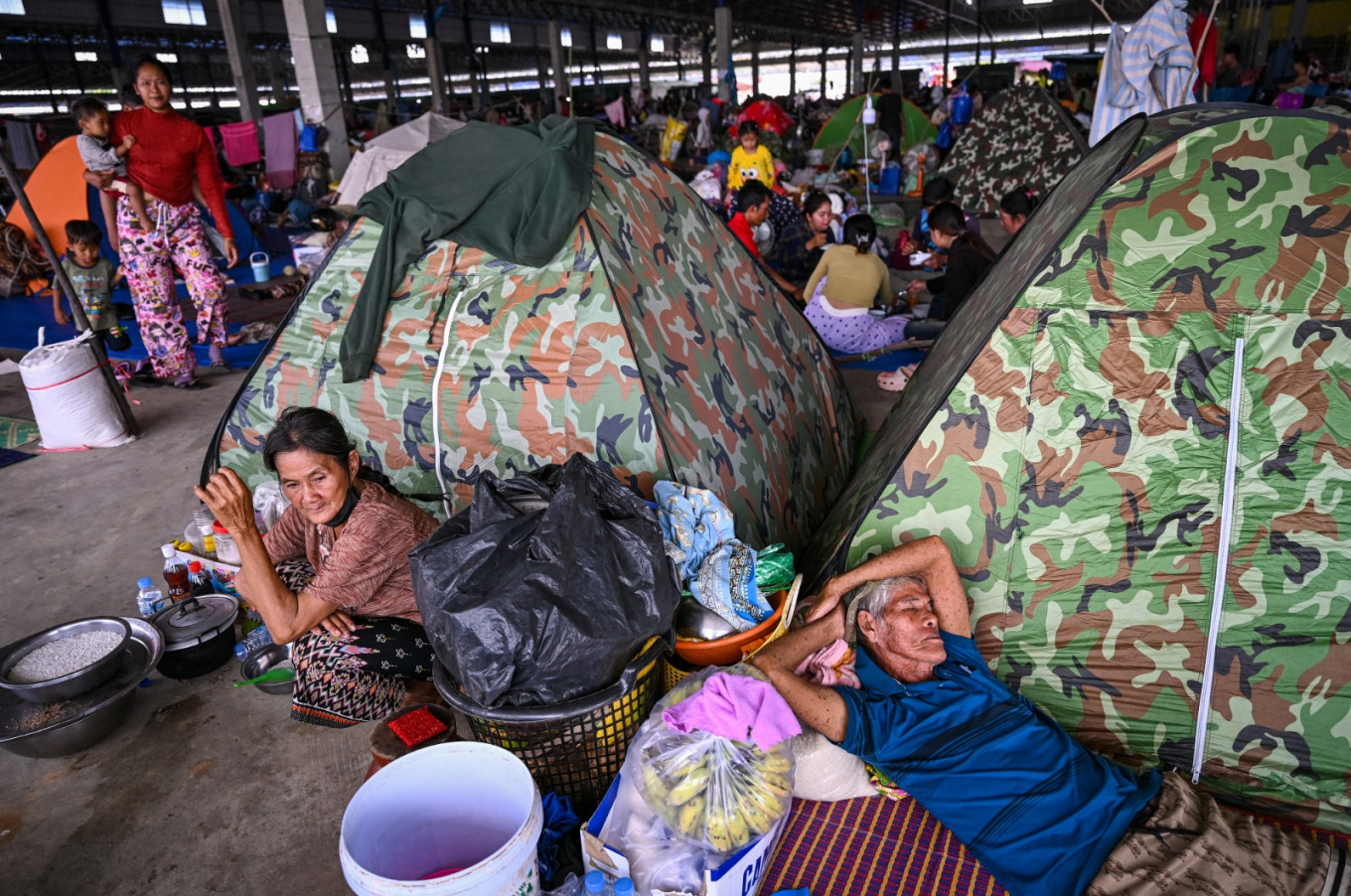 Uneasy rest: People displaced by renewed clashes along the border with Thailand take shelter on Dec. 14, 2025 at a temporary camp in Banteay Meanchey province, Cambodia. (AFP/Tang Chhin Sothy)
T
hai airstrikes pounded targets inside Cambodia on Dec. 8, less than two months after the two nations signed a ceasefire agreement witnessed by United States President Donald Trump in Kuala Lumpur. The strikes resulted in five deaths and triggered a humanitarian emergency, forcing residents along 800 kilometers of the border to seek refuge in underground bunkers and temples.
This collapse proves that the international agreement was hollow, the peace evaporated the moment Trump followed through on his threat to impose punitive tariffs, shattering the deal's fragile economic incentives.
This cycle, ceasefire followed by collapse and renewed violence, is a grim reality for those living in the borderlands. However, the December eruption demonstrates that the failure was not just tactical, but structural.
Both sides neglected the fundamental drivers of the conflict, which require more than coercive strategic decisions to resolve. This crisis illustrates Southeast Asia's dual challenge: the inadequacy of rapid, transactional diplomatic solutions and the urgent necessity for robust regional frameworks.
To understand the current collapse, one must analyze the historical wounds that predate the ceasefire. The two nations have contested their shared border since 1900, but the modern friction stems from colonial cartography.
In 1907, French geographers drew a border that severed the Preah Vihear temple from its natural access points. While the 1962 International Court of Justice ruling confirmed the 11th-century Khmer Buddhist structure belongs to Cambodia, the only practical route to the site, perched 500 meters above the Cambodian plain, lies through Thai territory.

This dispute transcends mere symbolism. The divergent histories of these nations have forged opposing concepts of sovereignty.