The Jakarta Post
Please Update your browser
Your browser is out of date, and may not be compatible with our website. A list of the most popular web browsers can be found below.
Just click on the icons to get to the download page.


Popular Reads
Top Results
No results found. Please check your search term and try again
Can't find what you're looking for?
View all search results
Popular Reads
Top Results
No results found. Please check your search term and try again
Can't find what you're looking for?
View all search resultsIntegrating conservation of local tree species into post-mining reclamation
Change text size
Gift Premium Articles
to Anyone
Share the best of The Jakarta Post with friends, family, or colleagues. As a subscriber, you can gift 3 to 5 articles each month that anyone can read—no subscription needed!
 Set as preferred source
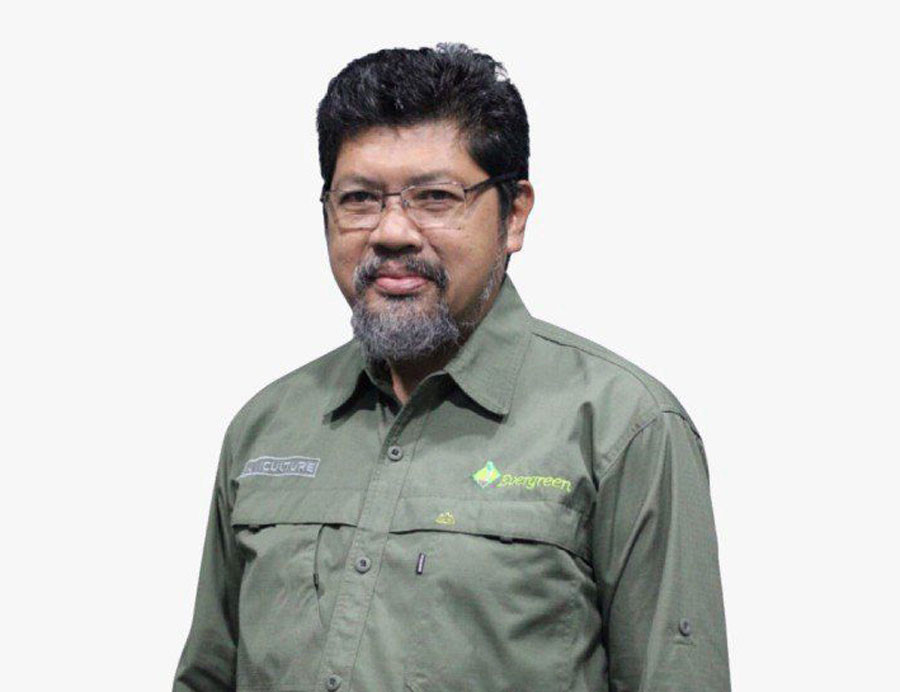 Dr. Irdika Mansur, Head of the Centre for Post-Mining Reclamation Studies, IPB University.
I
t is a common assumption that mining activities are destroying biodiversity, leaving degraded land and polluting water bodies. That is true for unregulated mining activities, which are mostly conducted by illegal mining businesses.
The legitimate mining industry follows a long process before it can actually enjoy revenue from its activities. This starts with exploration that may take years to make sure the resources are feasible to be mined, followed by conducting a feasibility study, environmental impact analyses and applying for various permits to be able to start mining activities.
At the same time, it is also a capital-intensive activity, so no mining company will intentionally break a law and create an unbearable environmental impact that will lead to the closing of its activities by the government. On the contrary, mining companies in Indonesia, including Harita Nickel on Obi Island, have made great strides in conserving local tree species in their post-mining sites.
The government, through the Energy and Mineral Resources Ministry and the Forestry Ministry, by law requires mining companies, especially but not limited to those operating in state forest areas, to plant long-life forest tree species in their reclamation areas, with at least 40 percent of such seedlings planted per hectare.
Under Forestry Minister Decree No. 60/2009 with a minimum number of 625 seedlings per ha, at least 250 seedlings should be of long-life forest tree species, such as iron trees, merbau or ipil trees (Intsia bijuga and Intsia palembanica), ebonies, various kinds of Dipterocarp species, such as Shorea spp., Dipterocarpus spp. and Dryobalanops spp.
Some of those are threatened species and need at least 30 years to grow before they can be harvested and have any commercial value. Iron trees and ebonies may take a longer time to reach commercial value, i.e., 50 to 100 years, a span of time that rules out exploitation by forestry companies.

The government has three strategic instruments to ensure mining companies fulfill their duty to plant local tree species.
Firstly, by holding the companies’ post-mining reclamation bonds. Mining companies must submit a post-mining reclamation plan to the Energy and Mineral Resources Ministry and place a post-mining reclamation bond in a state-owned bank. This bond can only be reclaimed after the company conducts post-mining reclamation that is evaluated by the ministry and fulfills the criteria according to regulations, including planting local tree species.
Secondly, the Forestry Ministry will insist the companies pay non-tax state revenue until they plant local tree species as regulated by the ministry. As a result, mining companies in Indonesia, especially those operating in state forests, have planted local tree species, and many of them have produced seeds for further propagation.
As the home of the third-biggest tropical rainforest, Indonesia has more than 4,000 species of trees. Thus, a mining company operating in an area should consult communities around the mining concession to learn what species of trees they are culturally used to and in which part of the forest area those trees grow. The company also needs to consult the local forestry agency administering logging to learn what tree species are commercially harvested.
Finally, and equally important, is to consult the local forestry agency administering conservation of forest and natural resources to learn what tree species are specifically needed by local wildlife. Information gathered from those parties can be used by the company to decide which species to prioritize for its post-mining reclamation program. The company could also look at its environmental impact analysis document; one part of the document should list the tree species found in its mining concession area.
However, seedlings of local tree species are not commonly available in the market due to limited demand for planting these species, as opposed to commercial well-known tree species such as teak, mahogany, albizia and various kinds of fruit tree seedlings that are readily available. Therefore, the company should collaborate with communities to collect wildlings of local tree species from the natural forest.
Some companies have collaborated with state forest conservation agencies to propagate and plant tree species from the natural reserve under the agency’s supervision. Otherwise, to get the target species, the company could put in a special order to seedling providers. Once seedlings of the targeted species have arrived at the company’s nursery, they can be further propagated through cutting. Some mining companies even have a tissue culture laboratory for the propagation of tree species that they are concerned about.
Besides participating in the conservation of local tree species in the post-mining restoration program, the mining industry in Indonesia, especially those firms granted permits since the 1980s or 1990s, has also contributed to the preservation of secondary and primary forests in concession areas.
Mining companies will not open a forest if there are no coal or mineral reserves underneath it, nor utilize the area for disposal or infrastructure. The undisturbed forest will remain intact and protected by the relevant company, and it will become a temporary sanctuary for the wildlife that move out from the disturbed forest area due to mining activities. Protection of the forest means that the biodiversity within the forest is thus conserved, and forests continue growing. After 30 to 40 years, logged-over areas, particularly those previously managed under timber concessions, will undergo natural ecological recovery.
The undisturbed forest could be, and several mining companies have practiced this, used as a source of seeds and wildlings of diverse local tree species. Workers from a company’s mining environmental management division can map the distribution of iconic tree species in the forest through vegetation analyses, and regularly observe target trees concerning flowering and fruit maturation, so that they can schedule when to harvest the fruit to get the seeds. Seeds can then be germinated to grow seedlings., while workers could also collect wildlings regularly.
Some mining companies, such as PT Trimegah Bangun Persada (TBP), a subsidiary of Harita Nickel on Obi Island, are also concerned with local tree species that produce non-timber forest products.
Agarwoods, styraxes, illipe nut trees (Shorea spp.), canary trees, cajuput trees (Melaleuca cajuputi), nutmegs, ylang-ylang (Cananga odorata) are among the species of non-timber producing trees (such as nut, resin, fruit and essential oil trees) that have been planted in the post-mining reclamation sites by mining companies in Indonesia. Therefore, restoration will not only grow timber-producing tree species that will be cut in the future, but also non-timber-producing tree species that will not be cut for timber.
TBP has propagated and planted canary trees, cajuput trees and nutmegs among other local tree species for post-mining restoration. These three species are native to the Maluku Islands, and their products are well known to the community. The canary tree produces nuts that are important for making various kinds of food products. Leaves of the cajuput tree are harvested and distilled to produce an essential oil, cajuput oil, that is very important for medical purposes including COVID-19 tratment, while the nutmeg has long been known internationally as the source of nutmeg seeds for spices and essential oils from the distillation of its young seeds.
In regard to timber-producing local trees, TBP has also planted the gofasa tree (Vitex cofassus) that is important for building traditional boats. Therefore, the company, in doing post-mining land restoration, not only considers ecological sustainability, but also restores and enhances the economic and social function of the post-mining land.
In conclusion, the government and mining companies collaborate in their efforts to conserve valuable local tree species within mining concession areas. Universities and research institutions play an equally critical role by supporting the government in formulating robust yet practicable regulations, while also assisting companies in translating these regulations into effective on-the-ground implementation.
As a result, post-mining restoration practices have been established and are now being implemented across various sites. Unfortunately, these positive outcomes often remain unseen by the broader public, as access to mining areas is restricted for safety and operational reasons.
Irdika Mansur is head of the Centre for Post-Mining Reclamation Studies, IPB University, Bogor, West Java.