TheJakartaPost
Please Update your browser
Your browser is out of date, and may not be compatible with our website. A list of the most popular web browsers can be found below.
Just click on the icons to get to the download page.


Popular Reads
Top Results
No results found. Please check your search term and try again
Can't find what you're looking for?
View all search results
Popular Reads
Top Results
No results found. Please check your search term and try again
Can't find what you're looking for?
View all search resultsThe early signs of platform power in our ride-hailing economy
As ride-hailing drivers report increasing scarcity and pay-to-participate barriers, the invisible hand of the algorithm is reshaping our digital economy. We must ask whether platform innovation is expanding opportunity or quietly redefining the terms of fairness for millions.
Change text size
Gift Premium Articles
to Anyone
Share the best of The Jakarta Post with friends, family, or colleagues. As a subscriber, you can gift 3 to 5 articles each month that anyone can read—no subscription needed!
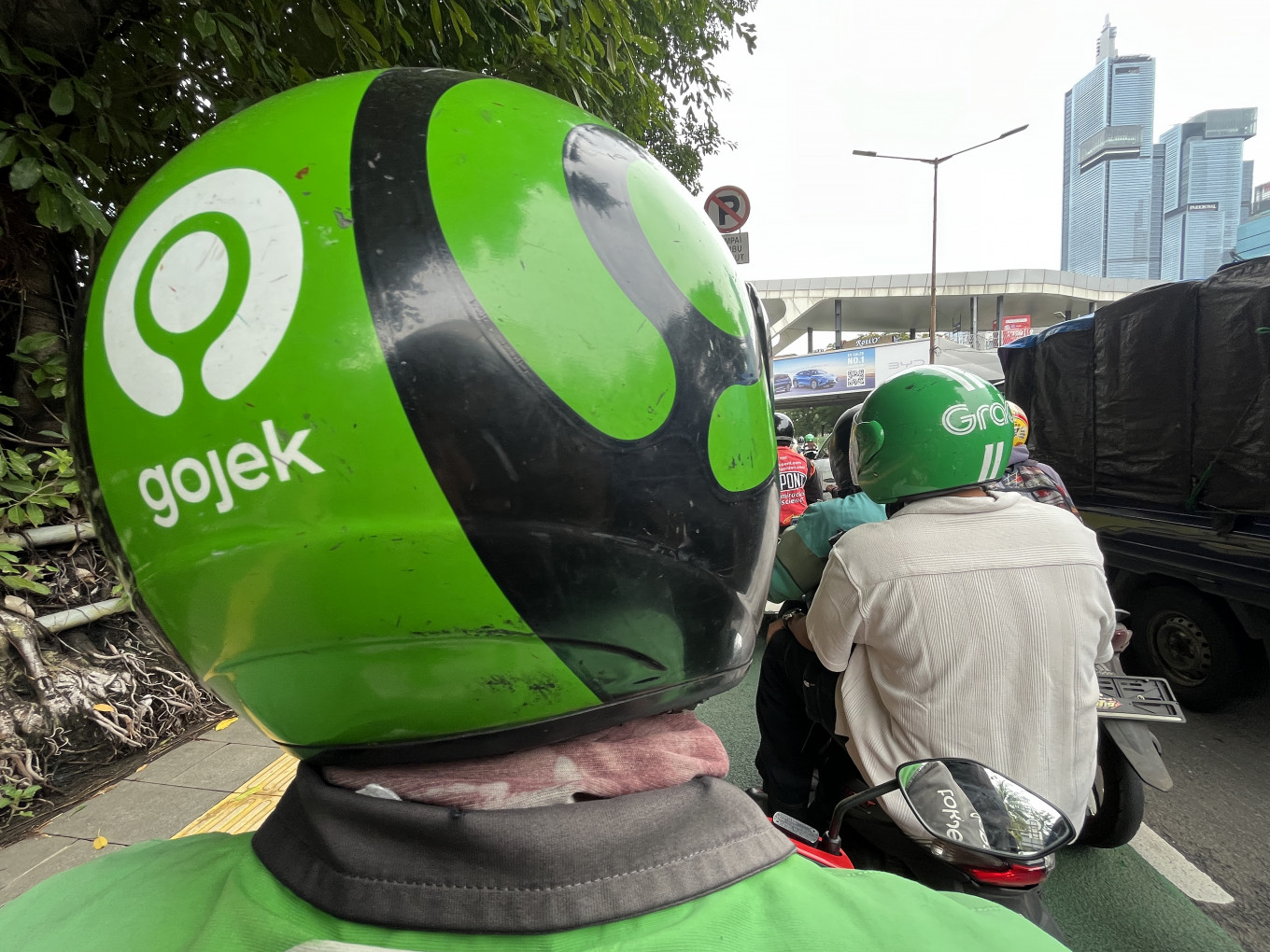 The logos of ride-hailing service providers Gojek and Grab are seen on helmets worn by an online motorcycle taxi driver and another passenger in Jakarta on Jan. 26, 2026. (JP/Iqro Rinaldi)
I
n a previous column, I argued that the debate surrounding a potential merger between GoTo and Grab should not be treated merely as an issue of corporate consolidation. The real concern lies in what happens when competition weakens within markets that already function as essential digital infrastructure.
Over the past few weeks, a different conversation has been unfolding across social media. Commuters in several major cities have reported a familiar frustration: ride-hailing drivers are suddenly becoming difficult to find during peak hours. At first glance, this may appear to be a seasonal phenomenon. Ramadan, traffic congestion and weather disruptions are often cited as explanations.
Yet the patterns described by drivers suggest something more structural. Many claim that platform incentives and algorithmic prioritization have begun to reshape how ride-hailing supply is allocated in the market. In particular, discussions have centered on a new type of arrangement: drivers subscribing to specific platform programs to secure more consistent orders.
The concept itself is not unusual in digital marketplaces; platforms routinely introduce membership tiers to manage supply and demand. However, the implications become more complicated when such mechanisms dictate how work opportunities are distributed among gig workers. According to driver accounts circulating online, those who enroll in these paid programs are prioritized by dispatch algorithms, while those who do not participate receive fewer or less efficient orders.
While the opaque nature of these algorithms makes such claims difficult to verify externally, the underlying economic logic is well understood. Platforms operate as two-sided markets, balancing supply (drivers) and demand (consumers). When competition is robust, companies must ensure both sides remain satisfied; drivers can switch platforms if incentives deteriorate, and consumers can easily compare prices.
When competition weakens, however, the balance of power shifts. Drivers have fewer alternatives, and consumers face fewer meaningful substitutes. Platforms gain the flexibility to experiment with more aggressive monetization strategies, including new fees, subscriptions and incentive restructuring.

In theory, these innovations can improve efficiency. In practice, they can also redistribute value within the ecosystem. If drivers must pay subscription-like fees to maintain access to consistent orders, the very nature of gig work changes.