The Jakarta Post
Please Update your browser
Your browser is out of date, and may not be compatible with our website. A list of the most popular web browsers can be found below.
Just click on the icons to get to the download page.


Popular Reads
Top Results
No results found. Please check your search term and try again
Can't find what you're looking for?
View all search results
Popular Reads
Top Results
No results found. Please check your search term and try again
Can't find what you're looking for?
View all search resultsThe arithmetic of ceasefire: What would it take to exit the abyss?
Indonesia is not a party to this conflict, but it cannot afford to be a bystander.
Change text size
Gift Premium Articles
to Anyone
Share the best of The Jakarta Post with friends, family, or colleagues. As a subscriber, you can gift 3 to 5 articles each month that anyone can read—no subscription needed!
 Set as preferred source
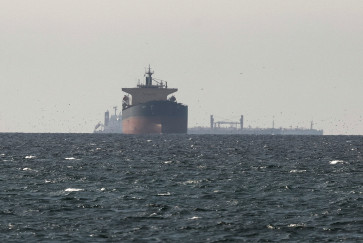
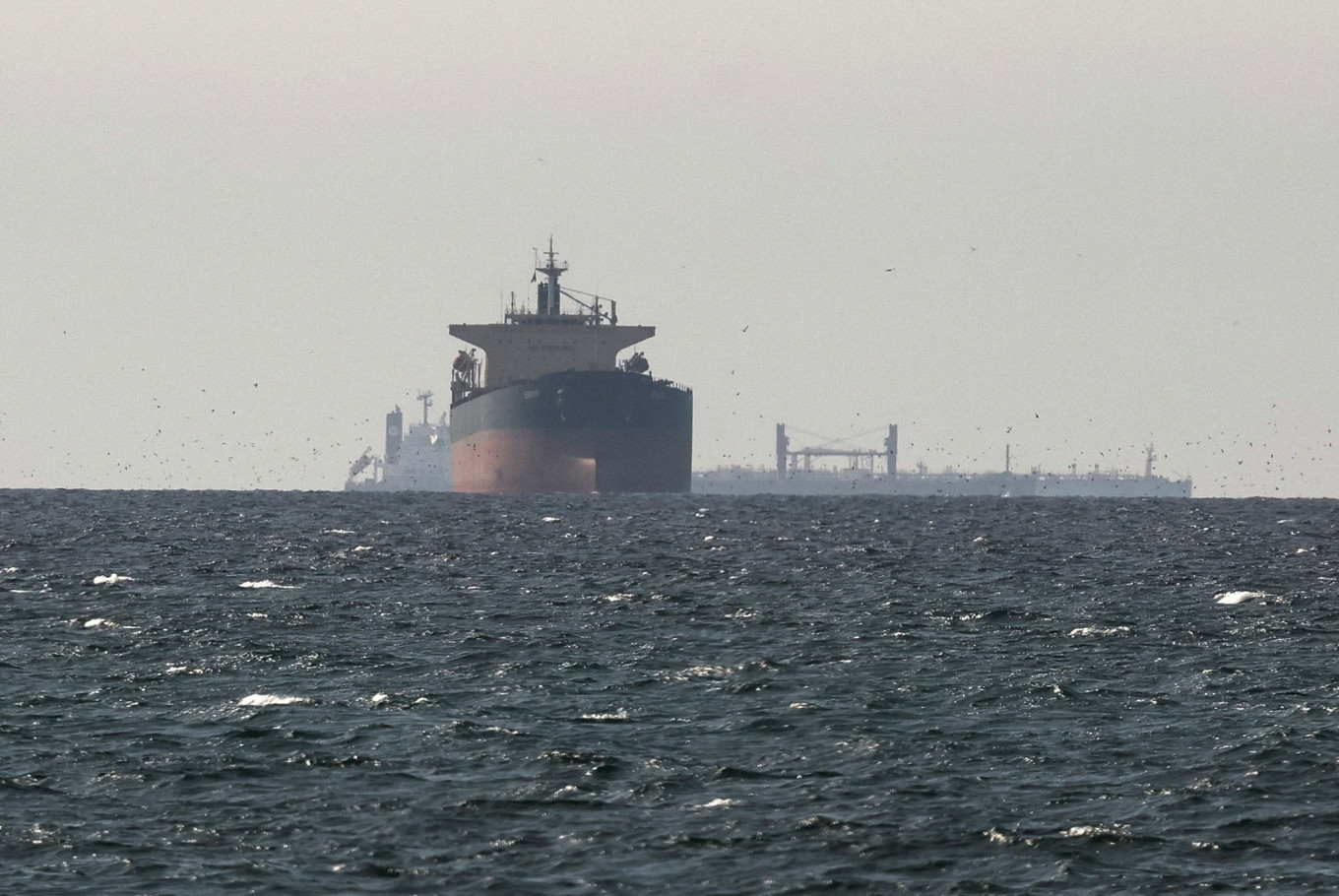 Tankers sail in the Persian Gulf on March 11, near the Strait of Hormuz as seen from northern Ras al-Khaimah, the United Arab Emirates, near the border with Oman’s Musandam governance, during the United States-Israel war on Iran. (Reuters/Stringer)
W
hen the United States and Israel launched their coordinated offensive against Iran on Feb. 28, killing Supreme Leader Ali Khamenei and his three most senior commanders within 48 hours, Washington and Tel Aviv expected swift collapse. Twenty-two days later, Iran has not collapsed.
The central paradox is stark: both sides are winning tactically and losing strategically. The US and Israel have inflicted catastrophic damage on Iran's nuclear facilities and command hierarchy. Iran, in turn, has demonstrated precision and resilience that surprised even its adversaries, striking Gulf energy infrastructure, penetrating Israel's air defenses at Dimona and Haifa, and imposing a Strait of Hormuz blockade that has driven oil above US$100 per barrel.
At 23:44 GMT on Saturday, US President Donald Trump posted an ultimatum of extraordinary bluntness: open the Strait of Hormuz fully within 48 hours, or the US will "hit and obliterate" Iran's power plants, starting with the largest. This was issued just 24 hours after Trump had said that the US was "getting very close to meeting our objectives" and considering "winding down." The reversal reflects domestic pressure and a miscalculation about Iran's willingness to comply under coercion.
Iran's response was immediate and symmetrical: the military announced it would strike all US and Israeli energy, information technology and desalination infrastructure across the region if its own facilities were hit. The danger is qualitative, not merely quantitative: Iran's grid serves 88 million people; Gulf desalination plants supply drinking water across Saudi Arabia, the United Arab Emirates, Kuwait and Qatar. Targeting them transforms a military confrontation into a civilizational emergency, one that international humanitarian law prohibits regardless of military rationale. In issuing the ultimatum, Trump may have been calling his own bluff.
Iran's most significant operational achievement has been penetrating Israel's multi-layered air defense around Dimona, home to the Shimon Peres Negev Nuclear Research Center. On Saturday, Iranian ballistic missiles struck Dimona and Arad, wounding nearly 200 people, with the Israeli Defense Forces (IDF) acknowledging it failed to intercept two missiles. Three days earlier, Iran struck Haifa's Bazan oil refinery, Israel's principal refining facility, following Iran's own targeting of Qatar's Ras Laffan LNG complex after the Israeli strike on Iran's South Pars gas field.
The pattern is coherent: each major strike on Iranian territory prompts a calibrated counter-strike against regional infrastructure, significant enough to impose economic costs, restrained enough to avoid catastrophic retaliation. This is strategic communication with ballistic missiles, not irrational escalation, and it carries an implicit signal that Iran is willing to negotiate the terms under which it stops.

The diplomatic landscape is a study in mutual incomprehension layered over potential convergence. Trump claims Iran "wants to make a deal" while declaring the terms are not good enough, without specifying what would be acceptable. Iran's Foreign Minister Abbas Araghchi told CBS: "We never asked for a ceasefire. We are ready to defend ourselves as long as it takes." Yet his stated objective, ending the war "completely and permanently", is not incompatible with Trump's declared goal of neutralizing Iran's nuclear capability. The gap is terminological as much as it is substantive.