TheJakartaPost
Please Update your browser
Your browser is out of date, and may not be compatible with our website. A list of the most popular web browsers can be found below.
Just click on the icons to get to the download page.


Popular Reads
Top Results
No results found. Please check your search term and try again
Can't find what you're looking for?
View all search results
Popular Reads
Top Results
No results found. Please check your search term and try again
Can't find what you're looking for?
View all search resultsThe future of democracy: Why Gen-Z protests demand a new blueprint
As Gen Z movements shake the foundations of traditional politics from Indonesia, Nepal to Europe, the old pillars of representative democracy are no longer enough to hold up the world. We must move beyond the ballot box toward a deliberative, bottom-up model that gives the new generation a real seat at the table.
Change text size
Gift Premium Articles
to Anyone
Share the best of The Jakarta Post with friends, family, or colleagues. As a subscriber, you can gift 3 to 5 articles each month that anyone can read—no subscription needed!
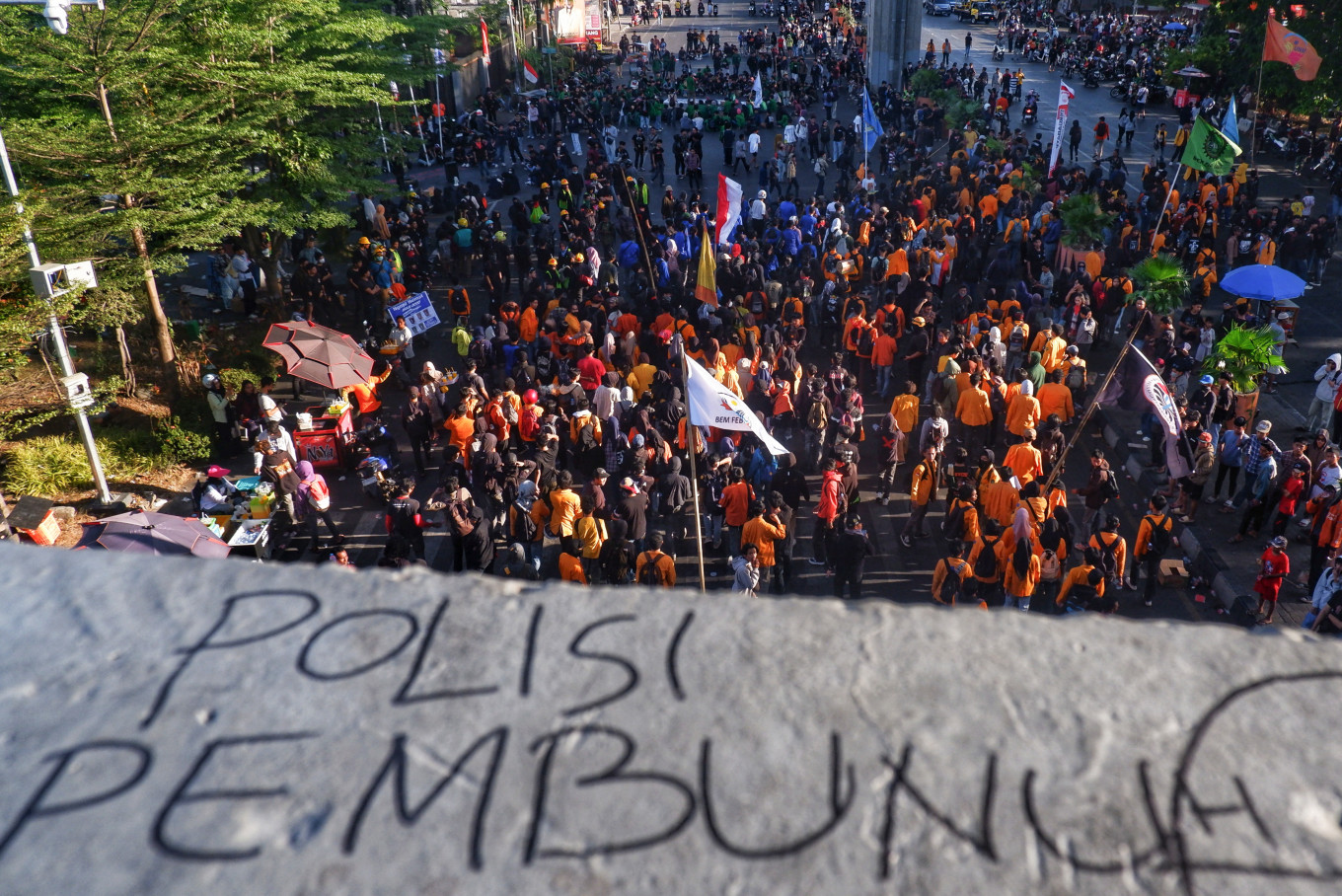 Graffiti that reads “police are killers“ is seen as community groups and university students stage a demonstration on Sept. 1, 2025, demanding an end to police brutality following recent protests, in Makassar, South Sulawesi. Indonesian authorities ramped up security after six people were killed in unrest over economic hardship that escalated into violent anger against the nation's police force. (AFP/Daeng Mansur)
W
hat will it take to fulfill the aspirations of today's youth? This is the central question that top political leaders and policymakers worldwide must ask themselves.
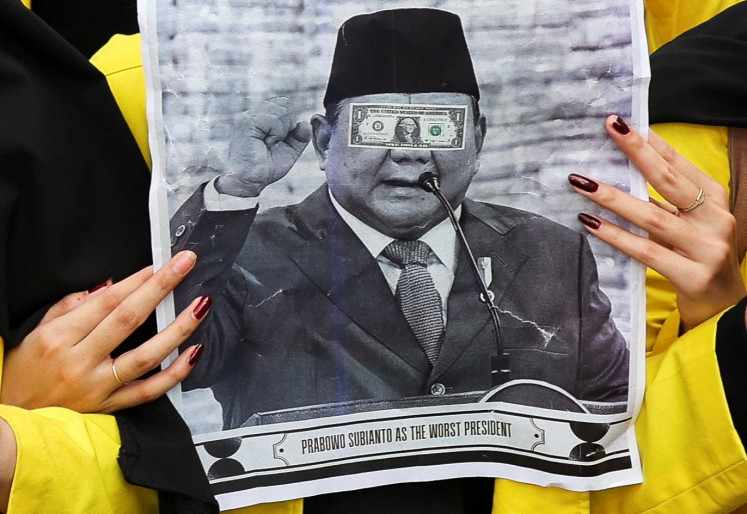
In 2025, there were several protests led by young people, what newspapers and pundits have generally referred to as "Gen Z movements." These events occurred across the globe in places that are, on the surface, very different from one another. Nepal, Indonesia and Madagascar were the hotspots of these events, capturing our collective attention for months.
However, we are witnessing a much more widespread phenomenon that reflects a general malaise among the new generations regarding how politics is conducted. Many democratic societies have been under tremendous stress, a reality that transcends national GDP ratios.
While last year’s major youth movements happened in emerging nations, it does not mean established democracies in industrialized nations are safe. After all, the rise of populism, especially the far right in Europe and the United States, is a reflection of discontent that cuts across regions and income levels.
What is the recipe to address these grievances? Job creation must be a priority. The issue of unemployment and precarious, low-paid work is a common thread linking Kathmandu to the major cities of Europe.
Now, consider the rise of unregulated and potentially dangerous technologies like Artificial Intelligence. How much worse will the status of employment be by 2030? Only now have governments started putting "brakes" on social media use among minors, but it is a case of too little, too late. AI’s development could truly spiral out of control. I am not even referring to sci-fi scenarios of automated robots in armies; I am focusing on the immediate impact of AI on jobs, and the outlook is frightening.

Furthermore, effectively implementing the Paris Agreement and the Kunming-Montreal Biodiversity Framework is essential. If you analyze the disappointing COP 30 climate summit in Brazil last November, you will realize that the governance of the Paris Agreement has become almost unmanageable—too complex, too slow and subject to a continuous loop of national political posturing.