TheJakartaPost
Please Update your browser
Your browser is out of date, and may not be compatible with our website. A list of the most popular web browsers can be found below.
Just click on the icons to get to the download page.


Popular Reads
Top Results
No results found. Please check your search term and try again
Can't find what you're looking for?
View all search results
Popular Reads
Top Results
No results found. Please check your search term and try again
Can't find what you're looking for?
View all search resultsPalm oil’s blind spot: Sees the trees, not the workers
Having successfully improved its environmental compliance under the international spotlight, the Indonesian palm oil industry must now do the same for its workforce.
Change text size
Gift Premium Articles
to Anyone
Share the best of The Jakarta Post with friends, family, or colleagues. As a subscriber, you can gift 3 to 5 articles each month that anyone can read—no subscription needed!
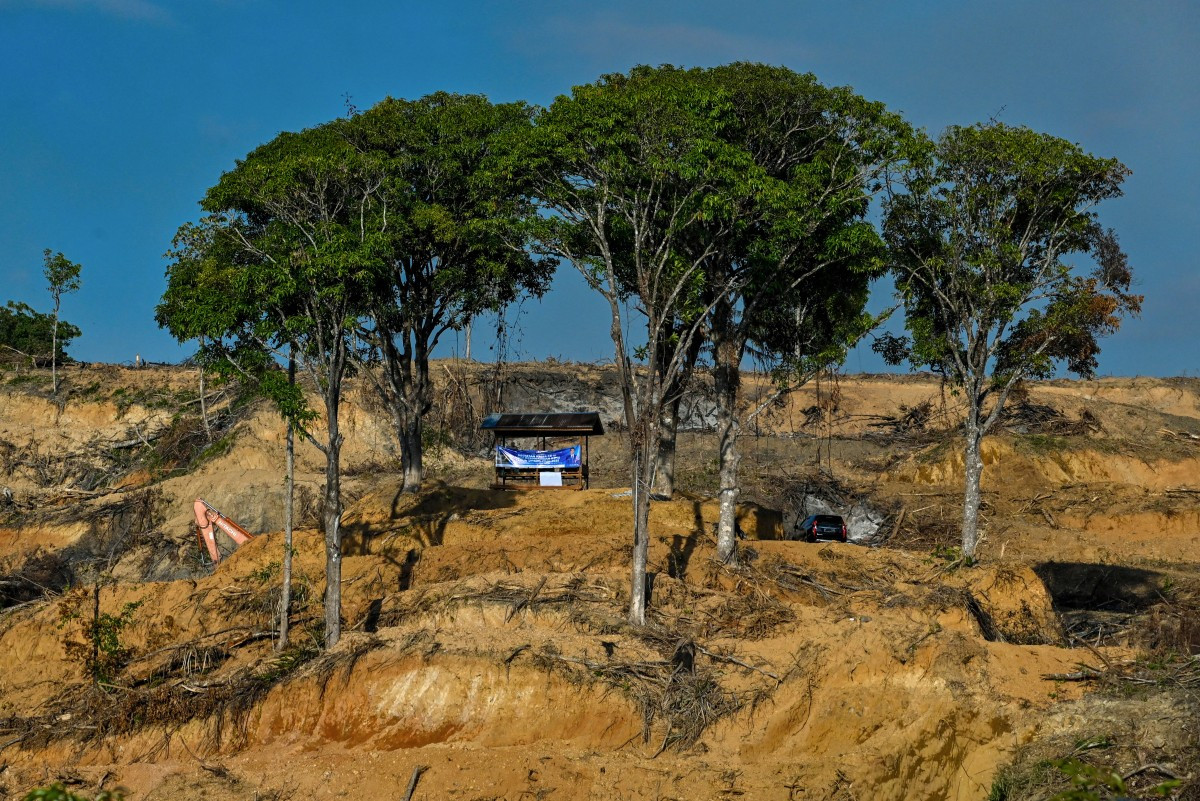 A hut stands amid a handful of trees on Jan. 18, after heavy equipment cleared a swath of land for an oil palm expansion project in Lamno, Aceh Jaya regency, Aceh. (AFP/Chaideer Mahyuddin)
T
he Indonesian palm oil sector is using satellites to begin aligning with the European Union’s deforestation regulations. While this development is important, it highlights a major gap: labor oversight has not followed suit.
Satellite systems can pinpoint plantation locations but fail to monitor human conditions. This leaves a critical blind spot where the treatment of workers remains untraceable. Forced labor and other risks are often overlooked, widening the accountability gap. With 4.2 million direct employees supporting up to 17 million livelihoods in related industries, even small lapses in oversight can impact the entire supply chain.
Studies indicate that palm oil employees often face excessive working hours, non-standardized contracts and poor working conditions. These factors lead to forced labor and occupational hazards. The core problem is not a lack of regulations, but the absence of a collective employee voice; those most familiar with production conditions are often unable to express their concerns. Consequently, labor protections continue to lag far behind environmental standards.
Current international circumstances have placed the palm oil industry in a critical position. Driven by the global energy crisis and climate change, palm oil has taken on a new role via biodiesel. The introduction of B35 biodiesel in Indonesia, requiring a 35 percent palm oil blend, aims to improve national energy security by reducing fuel imports.
However, as the demand for palm-based food and energy products rises, workers are left with more labor, more plantations and increasingly unstable work arrangements. Until this is corrected, the energy transition will only exacerbate labor and safety concerns.
Labor governance is no longer a secondary concern; it is emerging as a prerequisite for market access. International buyers and regulators are applying increasing pressure regarding both environmental sustainability and labor standards. The Indonesian palm oil industry must demonstrate a firm commitment to international safeguards—specifically the elimination of child labor, forced labor and discrimination, while ensuring safe and healthy working conditions and the right to freedom of association and collective bargaining.

The domestic industry is dominated by large companies and contractors (roughly 55–60 percent), with smallholders managing the remaining 40–45 percent of plantation areas. Many operate in remote regions with little to no government oversight. In these areas, forced labor and occupational hazards are more widespread because there is no industrial relations system to raise a red flag.