TheJakartaPost
Please Update your browser
Your browser is out of date, and may not be compatible with our website. A list of the most popular web browsers can be found below.
Just click on the icons to get to the download page.


Popular Reads
Top Results
No results found. Please check your search term and try again
Can't find what you're looking for?
View all search results
Popular Reads
Top Results
No results found. Please check your search term and try again
Can't find what you're looking for?
View all search resultsUnder one moon
Change text size
Gift Premium Articles
to Anyone
Share the best of The Jakarta Post with friends, family, or colleagues. As a subscriber, you can gift 3 to 5 articles each month that anyone can read—no subscription needed!
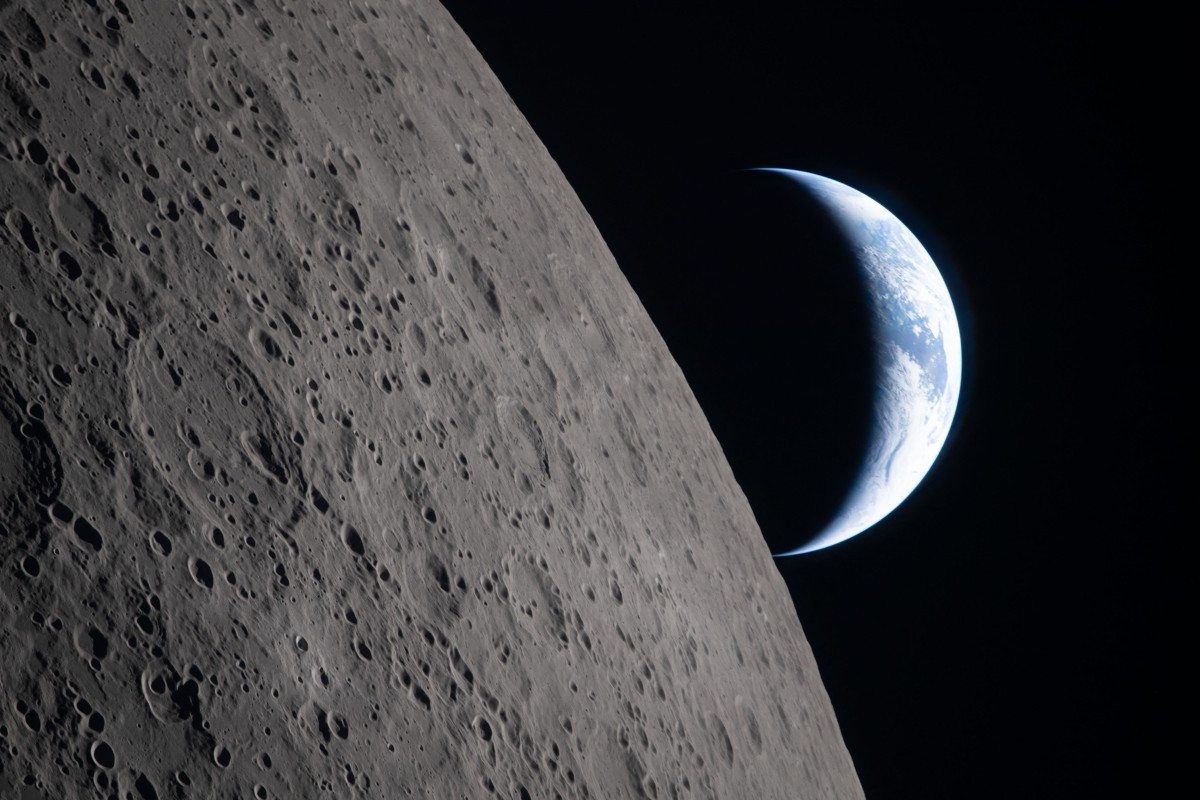 This handout picture released on April 7, 2026, by NASA shows crescent Earth setting along the Moon's limb, as seen from the Orion spacecraft on April 6, 2026. The edge of the visible surface of the Moon is called the “lunar limb“. The Artemis II astronauts wrapped up their lunar flyby as they continued their journey back to Earth, bringing with them rich celestial observations including little-known lunar craters, a solar eclipse and meteor strikes that scientists hope will open doors. (AFP/Handout/NASA)
“Look again at that dot. That’s here. That’s home. That’s us. On it everyone you love, everyone you know, everyone you ever heard, every human being who ever was, lived out their lives […] every hunter and forager, every hero and coward, every creator and destroyer of civilization, every corrupt politician, every ‘supreme leader’.”
This is how renowned astronomer Carl Sagan began the opening chapter of one of his best-selling books Pale Blue Dot, referring of course to Earth being captured on a camera attached to the spacecraft Voyager 1, which was about 6.4 billion kilometers away from the planet.
With the Artemis II crew traveling to the farthest point any human has ever reached beyond the orbit of the Earth, while also taking breathtaking photos of the planet rising behind the Moon, that quote from Carl Sagan again gains fresh urgency, especially now that for the first time in a long while, humanity stands on the precipice of a global catastrophe.
It is not lost on everyone who breathlessly keeps an eye on the Artemis II that on the day the spacecraft’s Orion module executed its perfect slingshot around dark side of the moon, the nation that launched the mission could also be on its way to destroy a civilization.
“A whole civilization will die tonight, never to be brought back again,” United States President Donald Trump posted on his Truth Social platform, referring to Iran, a nation of 90 million people and almost three millennia of culture.
A ceasefire was agreed shortly after Trump issued the threat, but the war in the Middle East has killed more than 3,500 people in Iran alone, destroyed crucial energy and transportation infrastructure in the region and could have cascading effects that result in a global economic crisis for years to come.

Humanity has been ingenious enough to accumulate skills and knowledge that eventually made it possible for us to go space and hope that someday it could build an interplanetary society.