TheJakartaPost
Please Update your browser
Your browser is out of date, and may not be compatible with our website. A list of the most popular web browsers can be found below.
Just click on the icons to get to the download page.


Popular Reads
Top Results
No results found. Please check your search term and try again
Can't find what you're looking for?
View all search results
Popular Reads
Top Results
No results found. Please check your search term and try again
Can't find what you're looking for?
View all search resultsCulling pests, cleaning rivers
As Jakarta ramps up its war on janitor fish, the real enemy isn't the invasive pests, but the decades of systemic pollution that allow them to thrive.
Change text size
Gift Premium Articles
to Anyone
Share the best of The Jakarta Post with friends, family, or colleagues. As a subscriber, you can gift 3 to 5 articles each month that anyone can read—no subscription needed!
 Set as preferred source
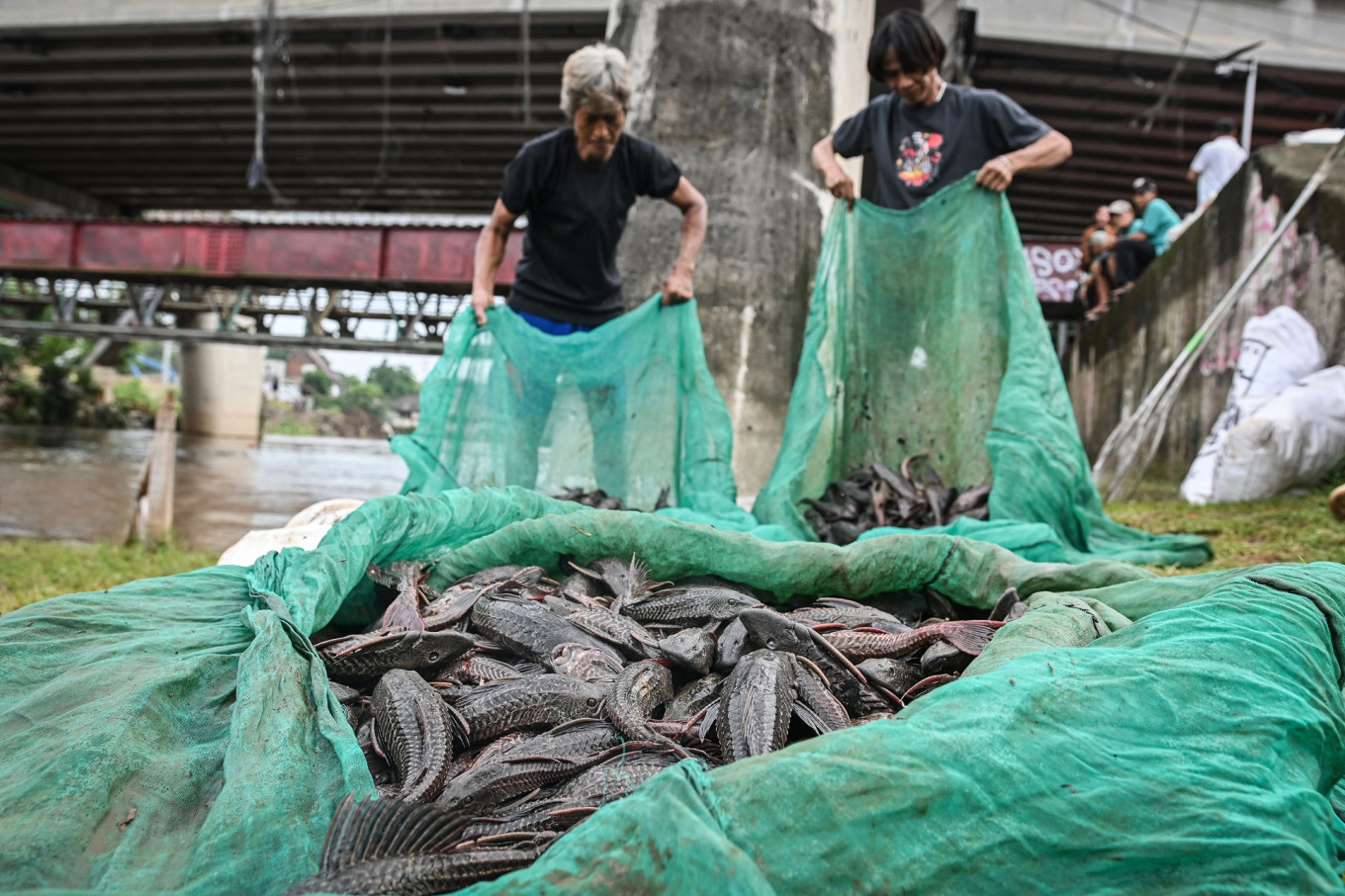 Two residents haul a net with a large catch of janitor fish (Pterygoplichthys) on April 17, 2026, during a Ciliwung River cleanup activity in Cililitan, East Jakarta, as part of the Jakarta administration’s war on the invasive catfish species thriving in the city’s heavily polluted waterways. (Antara/Sulthony Hasanuddin)
J
akarta’s rivers have become a battlefield as authorities intensify the war on janitor fish (Pterygoplichthys), or ikan sapu-sapu (broom fish). For weeks, public workers have been deployed in force to the city’s arterial waterways, including the Ciliwung, Sunter and Cipinang rivers, on a mission to cull thousands of these hardy, invasive fish.
The scale of the operation is staggering: To date, more than 10 tonnes of fish have been cleared from the sludgy waters. On a single day, special culling teams can net up to 70,000 fish, totaling around 7 tonnes.
These figures represent an achievement in a campaign that aims to restore the quality of Jakarta's natural waterways. As Governor Pramono Anung noted, these waters have long been choked by pollution, losing their original biodiversity to invasive species that thrive where others perish, like the janitor fish.
While the sheer volume of the netted pests is impressive, the eradication of janitor fish should not be viewed as the end goal. This campaign must instead serve as the launchpad for a much larger, more comprehensive effort to rehabilitate the city's rivers from headwaters to estuaries.
History explains the current crisis: Janitor fish escaped into freshwater bodies in the 1970s after they were imported for the aquarium trade, finding their own slice of paradise in Jakarta’s extremely polluted waters.
The Jakarta Maritime, Fisheries and Food Security Agency estimates the species’ population has reached a suffocating 90 percent in several rivers, while the National Research and Innovation Agency (BRIN) points to Pterygoplichthys as the primary culprit behind the disappearance of native fish species.

Yet culling janitor fish decades after the initial invasion may be too little, too late, especially if the strategy focuses solely on their removal. We are dealing with a biological powerhouse: A single female can produce up to 3,000 eggs per spawning cycle, half of which can reach adulthood owing to the species’ high survival rate.