TheJakartaPost
Please Update your browser
Your browser is out of date, and may not be compatible with our website. A list of the most popular web browsers can be found below.
Just click on the icons to get to the download page.


Popular Reads
Top Results
No results found. Please check your search term and try again
Can't find what you're looking for?
View all search results
Popular Reads
Top Results
No results found. Please check your search term and try again
Can't find what you're looking for?
View all search resultsWhy energy security needs a new playbook
Energy security is often defined as ensuring reliable and affordable access to supplies. That definition is no longer sufficient.
Change text size
Gift Premium Articles
to Anyone
Share the best of The Jakarta Post with friends, family, or colleagues. As a subscriber, you can gift 3 to 5 articles each month that anyone can read—no subscription needed!
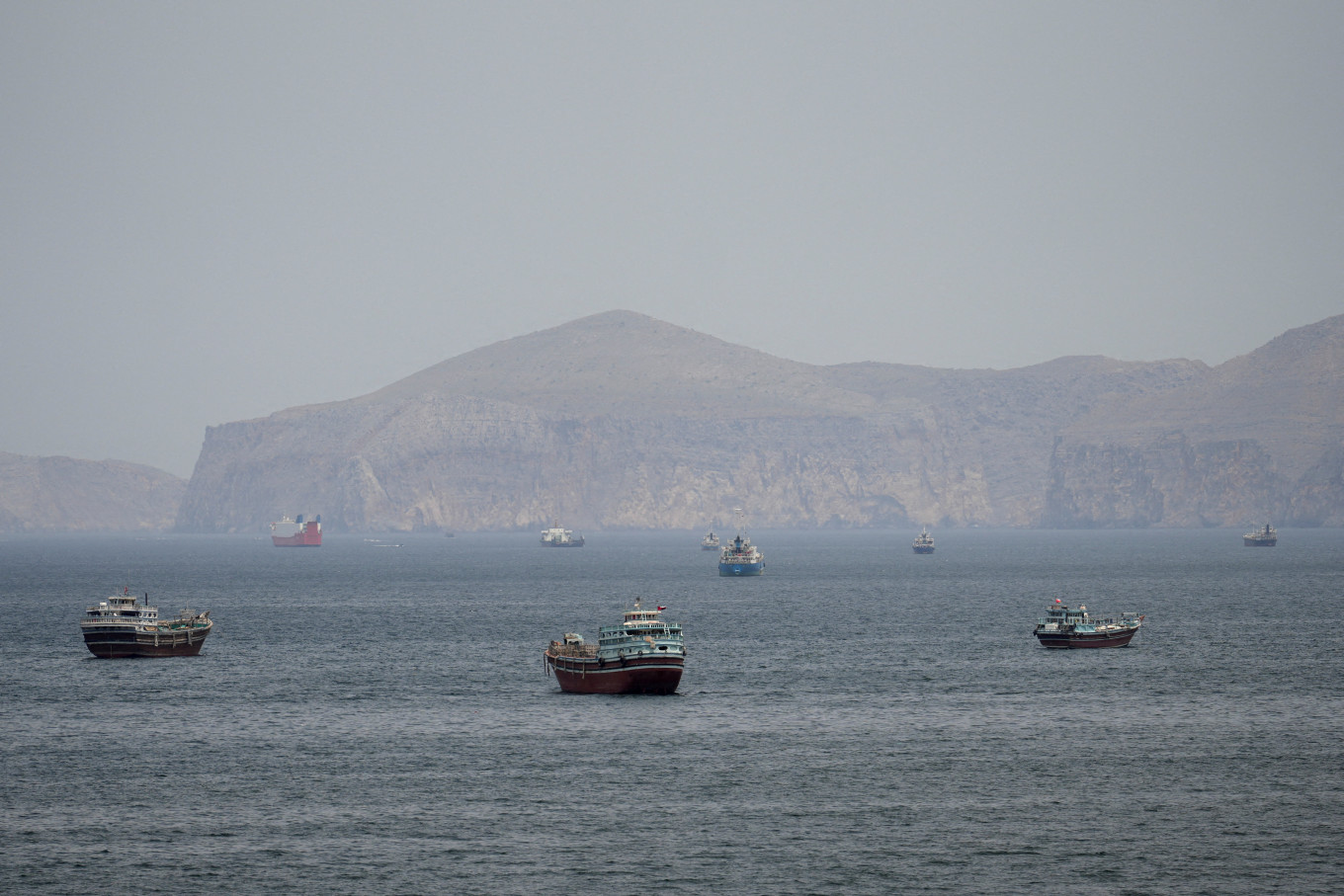 Ships and boats lie idle in the Strait of Hormuz, Musandam, Oman, on April 22, 2026. (Reuters/Stringer)
I
t is too soon to know when or how the United States-Israeli war against Iran will end, or what its geopolitical or economic consequences will be. But one thing is already certain: What is meant by energy security must be rethought.
Roughly 20 percent of the world’s traded oil and gas passes through the Strait of Hormuz. The recent crisis demonstrated how quickly that flow can be disrupted, placing immediate pressure on energy-importing countries and on the global economy.
The current crisis also highlights that oil and gas facilities cannot be assumed to be secure. On the contrary, they are highly vulnerable to war and terrorism.
Energy security is often defined as ensuring reliable and affordable access to supplies. That definition is no longer sufficient. What recent events have exposed is that energy security must now encompass the maintenance and resilience of the systems that produce, refine, transport and deliver energy.
In a world of contested transit routes, intricate infrastructure and sophisticated forms of disruption, energy security is no longer just about supply. It is about whether the system itself can function under stress.
Recent conflicts make this clear. The war with Iran, together with Russia’s ongoing war in Ukraine, has shown that energy infrastructure is no longer collateral damage; it is a primary target. Refineries, pipelines, export terminals and electricity grids are now central to wartime strategy designed to weaken the capabilities and will of adversaries.

The change reflects new technology and “military math.” Relatively inexpensive drones, often costing less than US$50,000, can disrupt assets worth billions. Cyber operations can destabilize grids without physical strikes. The asymmetry is striking: low-cost attacks can generate system-wide consequences with far-reaching economic and societal implications.