The Jakarta Post
Please Update your browser
Your browser is out of date, and may not be compatible with our website. A list of the most popular web browsers can be found below.
Just click on the icons to get to the download page.


Popular Reads
Top Results
No results found. Please check your search term and try again
Can't find what you're looking for?
View all search results
Popular Reads
Top Results
No results found. Please check your search term and try again
Can't find what you're looking for?
View all search resultsThe Americas’ oil bonanza will outlast the Iran conflict
Oil production in the Americas has become a viable alternative since the outbreak of the war. The shift is one of the most striking changes in the global energy landscape in decades.
Change text size
Gift Premium Articles
to Anyone
Share the best of The Jakarta Post with friends, family, or colleagues. As a subscriber, you can gift 3 to 5 articles each month that anyone can read—no subscription needed!
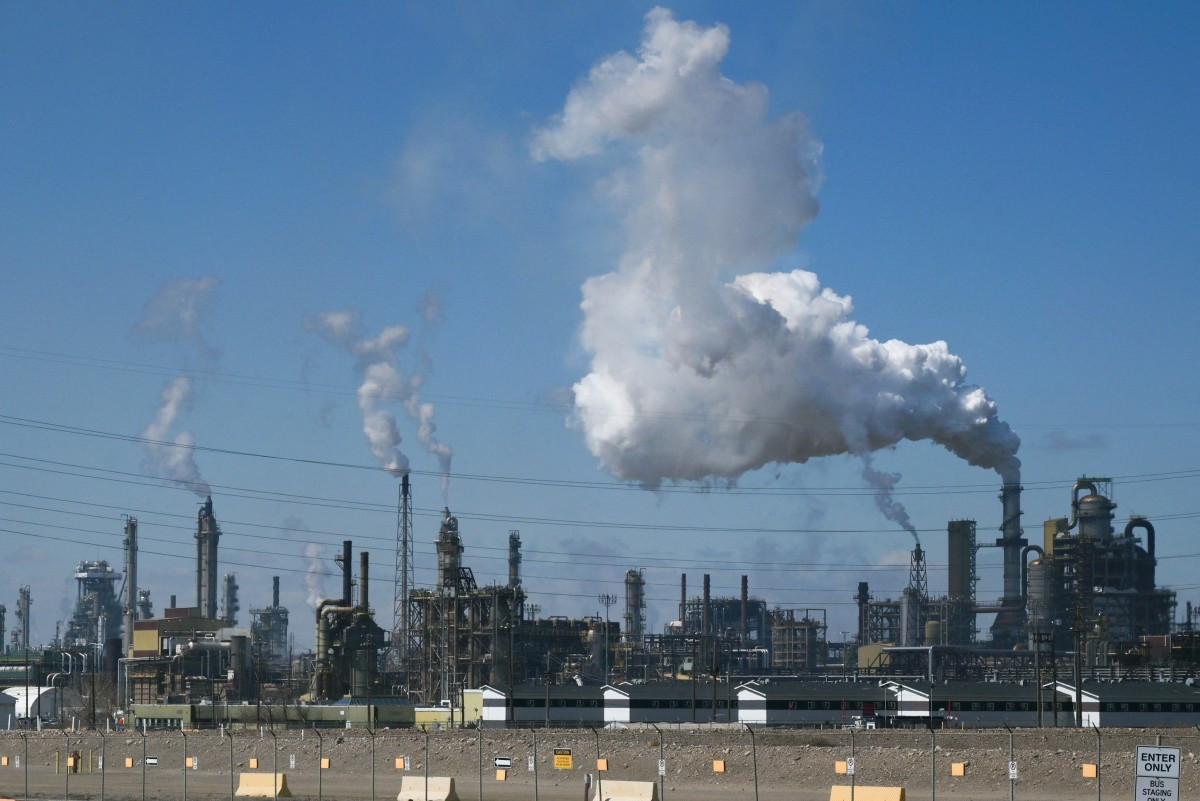 Smoke drifts from an oil refinery on May 5, 2026, from a Syncrude joint venture site in Alberta's Wood Buffalo, Canada. (AFP/Daphne Lemelin)
F
rom Canada to Argentina, oil producers across the Americas have enjoyed a windfall during the United States-Israeli war against Iran by capturing market share lost by Middle Eastern exporters. The renewed focus on energy security globally could transform this emergency response into a lasting structural change.
Oil production in the Americas has become a viable alternative since the outbreak of the war. The shift is one of the most striking changes in the global energy landscape in decades.
The Hormuz closure immediately triggered a scramble to replace lost Middle Eastern barrels, with the Americas emerging as the primary beneficiary.
Crude exports from the region have risen to a record-high average of 11.7 million barrels per day (bpd) so far in 2026, up from 10.3 million bpd in 2025, and nearly double the volume a decade ago, according to Kpler data.
The US leads the pack with exports averaging 4.4 million bpd this year, followed by Brazil at 2.5 million bpd.
Asia has absorbed much of the additional crude from the Americas. Imports into the continent from the Western Hemisphere have surged since the Iran war began and are on track to reach a record 5.4 million bpd in August, compared with an average of 4 million bpd in 2025.

This diversification was born of necessity, not design. But the shock has exposed the risks of overdependence on Middle Eastern supplies. Given Asia's wartime scars, the lesson may linger.
Even if Gulf exports eventually recover, Asian importers will likely want to avoid becoming too reliant again on any single region, especially one with vulnerable maritime chokepoints and a high risk of conflict.
Sourcing a larger share of crude from the Western Hemisphere is more expensive because Gulf crude retains a geographic advantage. But that cost may increasingly be seen as an insurance premium against future geopolitical disruption.
This shift in global energy trade patterns was made possible by the remarkable growth in oil and gas production across the Americas over the past decade.
The expansion was driven first and foremost by the US shale revolution, which transformed global oil markets and made the US the world's largest producer in 2018, surpassing Saudi Arabia and Russia. US production reached an all-time high of 21 million bpd in 2025, accounting for about a fifth of global output, according to the International Energy Agency.
Elsewhere, production growth has also been substantial.
Brazil is on track to raise output to a record 4.3 million bpd in 2026, up 480,000 bpd from last year, according to the IEA, driven by giant offshore fields such as Buzios and Bacalhau.
Meanwhile, Canada continues to expand oil-sands capacity. Guyana is rapidly becoming one of the world's fastest-growing producers, while Argentina is steadily increasing output from the Vaca Muerta shale basin, one of the largest unconventional resources outside North America.
Taken together, North American oil production is expected to average 30.5 million bpd in 2027, while Latin American output is projected to hit 9.3 million bpd. That would represent a 50 percent gain for the region over the past decade, according to IEA data.
The region, particularly North America, has spent years building production capacity, export terminals, pipelines and shipping infrastructure. In many respects, the Middle East crisis could not have come at a better time for its oil producers.
The Hormuz crisis has created a rare opportunity for these suppliers.
The Americas now account for roughly 30 percent of global seaborne crude exports, up from 23 percent last year, with Asian buyers driving much of that shift. Producers in the Americas will not entirely replace Middle Eastern suppliers in Asia, but could continue to erode the Gulf's hold on the market.
For decades, proximity made Middle Eastern oil the natural choice for Asia's importers.
A tanker sailing from Brazil to Japan can spend up to 60 days at sea, about triple the transit time from the Gulf. These longer voyages tie up fleets, raising freight demand and shipping costs.
Consequently, tanker rates have surged as more crude takes the long route to Asia. Rates for a very large crude carrier (VLCC) carrying 2 million barrels have hit a record high of around $640,000 per day, more than triple their pre-war levels, according to LSEG data.
Asian refiners are currently willing to accept significantly higher transport costs in exchange for greater energy security. In an increasingly volatile world, reliability may continue to matter as much as distance.
The Americas also offer something else that few producing regions can match: a wide diversity of crude grades.
Looking for light, sweet US shale crude or Canadian heavy, sour oil-sands barrels? They are available. Want medium, sweet grades from offshore Brazil or Guyana, or light, sweet Argentine shale oil? Those are increasingly abundant.
To be sure, the Americas cannot fully replace the Middle East, which boasts far larger reserves and far lower production costs.
Still, what began as a temporary response to the Iran war increasingly looks like a lasting realignment of global oil trade, one that could persist long after the missiles stop flying in the Gulf.
---
The writer is a Reuters columnist. The views expressed are personal.