

 Set as preferred source




Enjoy This Gifted Article!
You're reading this thanks to a The Jakarta Post subscriber.
Access is available for 30 days. For unlimited access, consider subscribing.
Please Update your browser
Your browser is out of date, and may not be compatible with our website. A list of the most popular web browsers can be found below.
Just click on the icons to get to the download page.

Can't find what you're looking for?
View all search resultsCan't find what you're looking for?
View all search resultsSoutheast Asia’s latest haze crisis was entirely foreseeable. As millions choke beneath toxic skies, halting the blazes today must come before the inevitable, unsparing reckoning tomorrow.
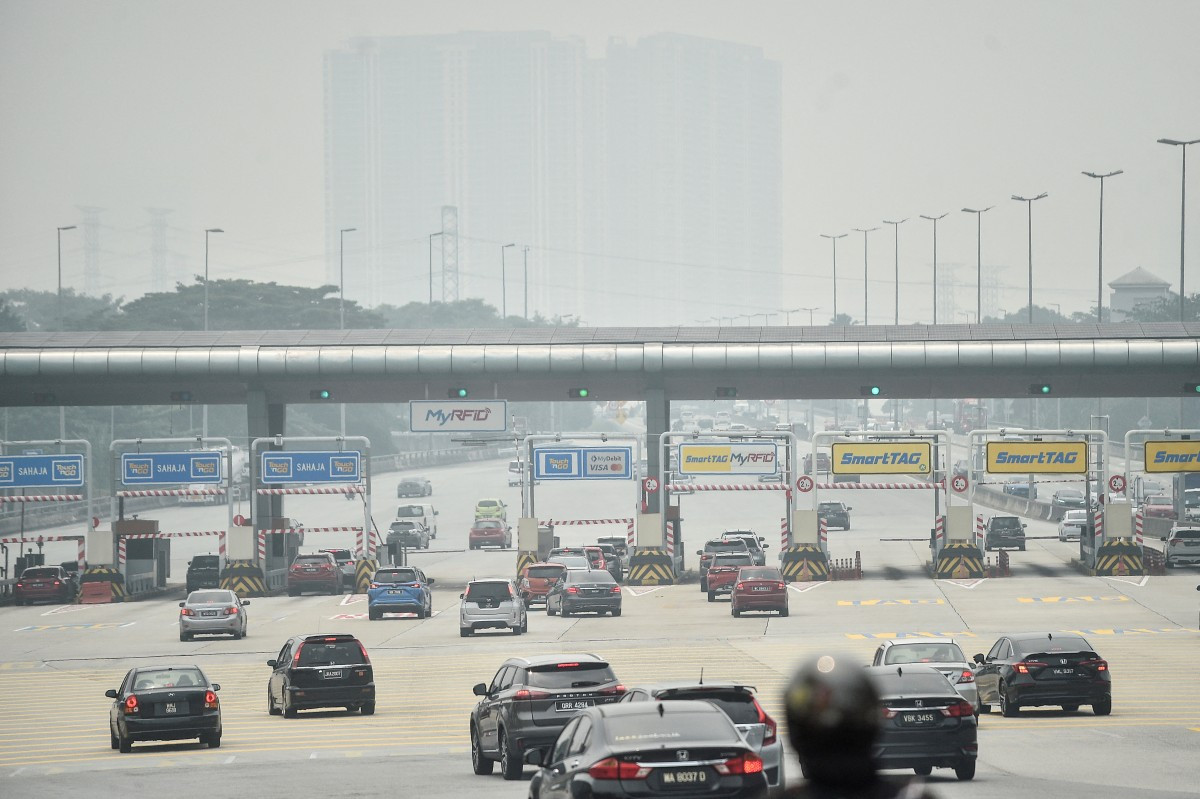 Cars head to a tollgate in Kuala Lumpur on Oct. 9, 2026, a residential building in the distance obscured by thick haze from wildfires in Kalimantan and Sumatra. (AFP/Arif Kartono)
he haze has returned with alarming severity. In parts of Central Kalimantan, the air pollutant standards index (ISPU) breached 4,000 this week, more than 13 times the hazardous threshold, while provinces across Sumatra recorded levels exceeding 2,200.
Downwind, Singapore and parts of Malaysia registered unhealthy air quality, while elevated readings in Metro Manila, Ho Chi Minh City and southern Thailand during September have confirmed that haze pollution is once again choking broad swaths of Southeast Asia.
This crisis was entirely foreseeable. With earlier, more concerted intervention, its scale could have been substantially mitigated.
In June, the Singapore Institute of International Affairs (SIIA) issued a “red” alert in its Haze Outlook 2026, signaling acute risk. Concurrently, the World Resources Institute’s Global Nature Watch platform provided continuous fire alerts and vegetative disturbance data via Visible Infrared Imaging Radiometer Suite (VIIRS) satellite tracking.
Compounded by long-standing warnings of severe El Nino-induced droughts, these indicators should have served as an unmistakable call to action for regional governments, plantation operators and forestry conglomerates alike.
While fire preparedness has received significant investment, implementation remains uneven and preemptive safeguards have failed to contain the outbreak. For now, frontline efforts must concentrate on aggressive fire suppression while closing off opportunities for new blazes to ignite.

Citizens across Indonesia, Malaysia, Singapore and Brunei have ample reason to be furious.
The geographic epicenters are already well-mapped across southern Sumatra and Kalimantan. Severe blazes are concentrated in Central and West Kalimantan, as well as recurring hot spots in South Sumatra such as Ogan Komering Ilir and Musi Banyuasin, names depressingly familiar from previous crises.
At the root of the crisis lies degraded peatland. Southeast Asia holds approximately 60 percent of the world’s tropical peatlands. In their natural, saturated state, these wetlands are largely fire-resistant. Drained for industrial agriculture, however, they turn into combustible tinderboxes.
The recurrence of these fires raises pointed questions about why preventive protections in known vulnerable landscapes remain inadequate.
To his credit, President Prabowo Subianto has assumed direct political ownership of the emergency. Beyond inspecting affected zones and demanding accelerated deployment of aircraft, drones and heavy equipment, he has acknowledged past administrative delays. More crucially, he has ordered investigations into whether fires were deliberately set for concession expansion, demanded transparency on company ownership and instructed law enforcement to act decisively.
These demands echo domestic frustration within Indonesia. Environmental watchdogs have repeatedly challenged the state's reluctance to leverage land use revocation powers against repeat offender concessionaires, highlighting a persistent disconnect between central directives in Jakarta and local enforcement.
Accountability is mandatory, but while fires rage out of control, political finger-pointing cannot substitute for field operations. Concession boundaries alone do not determine ignition points, and blazes routinely breach property lines. Establishing definitive legal culpability demands meticulous evidentiary work that must run parallel to, not obstruct, containment.
The immediate imperative is unambiguous: Suppress active fires and starve new ones of fuel.
Indonesia has mobilized significant ground and aerial resources, coordinating military units, police, commercial operators and local brigades alongside cloud seeding and water bombing operations. These frontline measures deserve credit, but the magnitude of the emergency requires deeper reinforcement.
Plantation and forestry firms possess extensive logistical capacity, machinery and geographic intelligence. Their obligations cannot end at their concession gates. Authorities have rightly urged companies to extend containment up to 5 kilometers beyond their borders; proactive corporate collaboration with surrounding villages is essential. Simultaneously, local communities, inevitably the first responders, must be furnished with the financial incentives and operational equipment required for early detection and rapid suppression.
Extinguishing existing hot spots is only half the battle. In prolonged dry conditions, fresh ignitions outpace suppression. Ground patrols must intensify, prohibitions on open burning must be enforced without compromise and canal blocks must be actively managed to keep water tables elevated across drained peat.
Regional neighbors have an obvious stake in extinguishing these fires, but framing the crisis purely as a unilateral demand on Jakarta is counterproductive. Indonesia’s institutional response capabilities are markedly stronger than during the catastrophic 2015 crisis. ASEAN partners must actively supply satellite telemetry, specialized technical equipment and cross-border corporate coordination where constructive. Public recriminations undermine multinational cooperation precisely when it is most critical.
Constructive engagement during the crisis, however, does not preclude an unsparing postmortem once the skies clear. Investigators must determine where the primary ignitions occurred, whether corporate fire prevention protocols were observed and whether local administrators acted in time.
The broader institutional lessons for ASEAN are stark. Despite successive targets, the missed 2020 deadline followed by the deferred 2030 Transboundary Haze-Free Roadmap, the bloc remains vulnerable.
The ASEAN Coordinating Centre for Transboundary Haze Pollution Control, newly inaugurated in Jakarta in April, was effectively missing in action when this predictable crisis struck. The gulf between ASEAN’s diplomatic blueprints and its operational readiness demands urgent remediation.
For Indonesia, the crisis highlights the friction between policy ambition and provincial enforcement. The government's broader climate and peatland restoration commitments, reinforced by President Prabowo’s recent interventions, stand compromised if central regulations fail to govern corporate and local conduct on the ground.
Enforcement must carry teeth. Indonesian police have detained nearly 200 individuals, while the Environment Ministry is currently scrutinizing 57 corporate concessions in West Kalimantan and South Sumatra. Because concession holders bear strict liability for fires occurring on their land, regulatory breaches must trigger uncompromising legal sanctions.
Singapore, for its part, should prepare to invoke its Transboundary Haze Pollution Act. If credible evidence traces transboundary smoke to entities with commercial footprints or assets in the city-state, the statute must not be left dormant.
Cooperation in the present and accountability in the aftermath are not mutually exclusive. Credible legal consequences are fundamental to structural deterrence.
This El Nino cycle serves as a live stress test of the systems built over the past decade: Where they function, reinforce them; where they fail, dismantle the bottlenecks. But for now, the priority is clear: extinguish the blazes, prevent new ones and cooperate across companies, communities and borders.
When the air clears, establish what went wrong and act on the lessons.
***
Nirarta Samadhi is country director of World Resources Institute (WRI) Indonesia. Simon Tay is CEO of the Singapore Institute of International Affairs (SIIA).
Share your experiences, suggestions, and any issues you've encountered on The Jakarta Post. We're here to listen.
Thank you for sharing your thoughts. We appreciate your feedback.
Quickly share this news with your network—keep everyone informed with just a single click!
Share the best of The Jakarta Post with friends, family, or colleagues. As a subscriber, you can gift 3 to 5 articles each month that anyone can read—no subscription needed!
Get the best experience—faster access, exclusive features, and a seamless way to stay updated.


