The Jakarta Post
Please Update your browser
Your browser is out of date, and may not be compatible with our website. A list of the most popular web browsers can be found below.
Just click on the icons to get to the download page.


Popular Reads
Top Results
No results found. Please check your search term and try again
Can't find what you're looking for?
View all search results
Popular Reads
Top Results
No results found. Please check your search term and try again
Can't find what you're looking for?
View all search resultsWomen in power, corruption and the limits of affirmative action
Affirmative action can open the corridors of power to women, but it was never meant to be an immunity card against the corrupting machinery of Indonesian politics.
Change text size
Gift Premium Articles
to Anyone
Share the best of The Jakarta Post with friends, family, or colleagues. As a subscriber, you can gift 3 to 5 articles each month that anyone can read—no subscription needed!
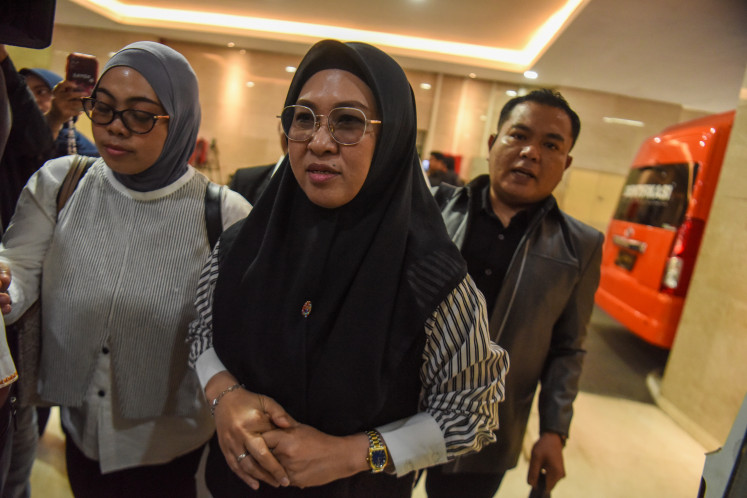
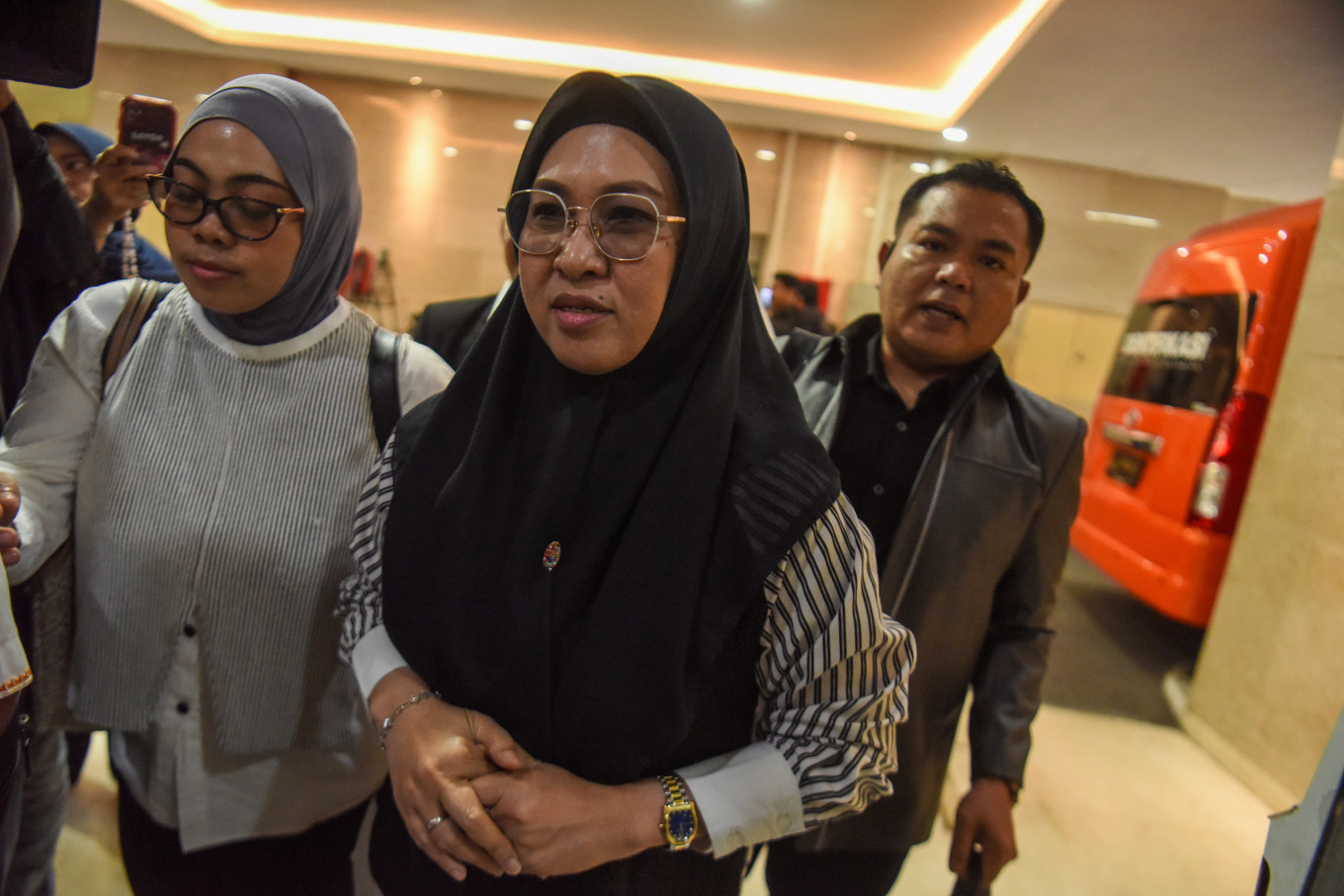 Gowa Regent Sitti Husniah Talenrang (center) walks to an interrogation room in the Criminal Investigation Department (Bareskrim) on Oct. 1, 2026, after arriving at the National Police headquarters in South Jakarta for questioning as a suspect in four cases involving corruption, extortion and money laundering. (Antara Foto/Indrianto Eko Suwarso)
T
he Indonesian public has once again been shaken by a corruption scandal implicating a regional head. Sitti Husniah Talenrang, the regent of Gowa, South Sulawesi, was recently named as a suspect in a graft and money laundering case connected to building permits and licensing. Investigators from the National Police’s corruption eradication corps allege extortion and unlawful gratuities during licensing procedures in 2025 and 2026.
While the investigation is ongoing (and formal charges do not constitute a final verdict of guilt), the case forces a critical reckoning beyond the courtroom: What does this scandal mean for women’s political representation and affirmative action in the country?
Husniah’s case must not serve as fodder to scrutinize women's capacity for leadership. The essential question is whether Indonesia can cultivate a political ecosystem where women enjoy equal access to power while every political leader, regardless of gender, faces identical standards of integrity and accountability. That balance is the true litmus test of gender equality in Indonesian politics.
While women’s inclusion in national political institutions has advanced, executive politics at the regional level remains heavily male-dominated. In the 2024 regional elections, only 331 of the 3,064 candidates for governor, regent and mayor were women, a modest 10.66 percent.
This imbalance matters because representation extends far beyond head counts. Those who hold power determine whose experiences, priorities and perspectives shape public policy. This structural deficit is precisely why affirmative action remains vital. Yet affirmative action is not a political get out of jail free card.
A female regent must answer to the same anticorruption statutes as her male counterpart. A female minister warrants identical scrutiny regarding conflicts of interest; a female party leader must satisfy identical transparency standards. Genuine equality demands both equal opportunity and equal accountability.

The danger is that female politicians are frequently trapped in a double bind. When excluded from office, their absence is blamed on a lack of experience or public support or executive competence. Yet when a woman in office is implicated in misconduct, her individual failings are weaponized to question all women's fitness to lead.