The Jakarta Post
Please Update your browser
Your browser is out of date, and may not be compatible with our website. A list of the most popular web browsers can be found below.
Just click on the icons to get to the download page.


Popular Reads
Top Results
No results found. Please check your search term and try again
Can't find what you're looking for?
View all search results
Popular Reads
Top Results
No results found. Please check your search term and try again
Can't find what you're looking for?
View all search resultsNet zero timing matters for the future of El Niño
Extreme El Niños are coming. Reaching net zero sooner means facing fewer of them.
Change text size
Gift Premium Articles
to Anyone
Share the best of The Jakarta Post with friends, family, or colleagues. As a subscriber, you can gift 3 to 5 articles each month that anyone can read—no subscription needed!
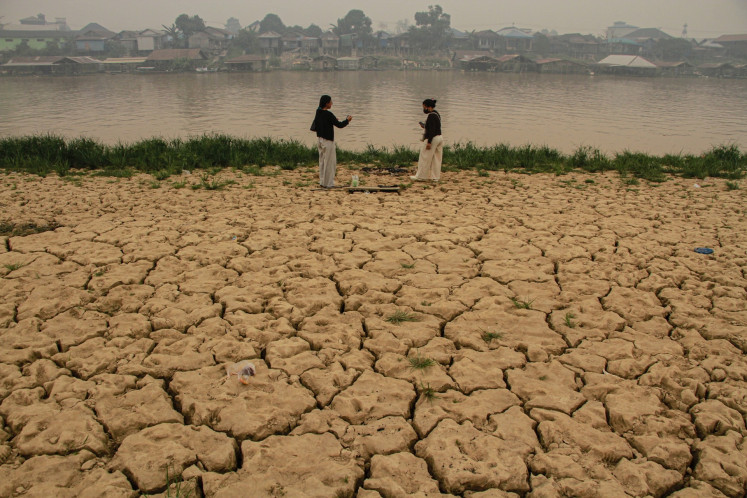
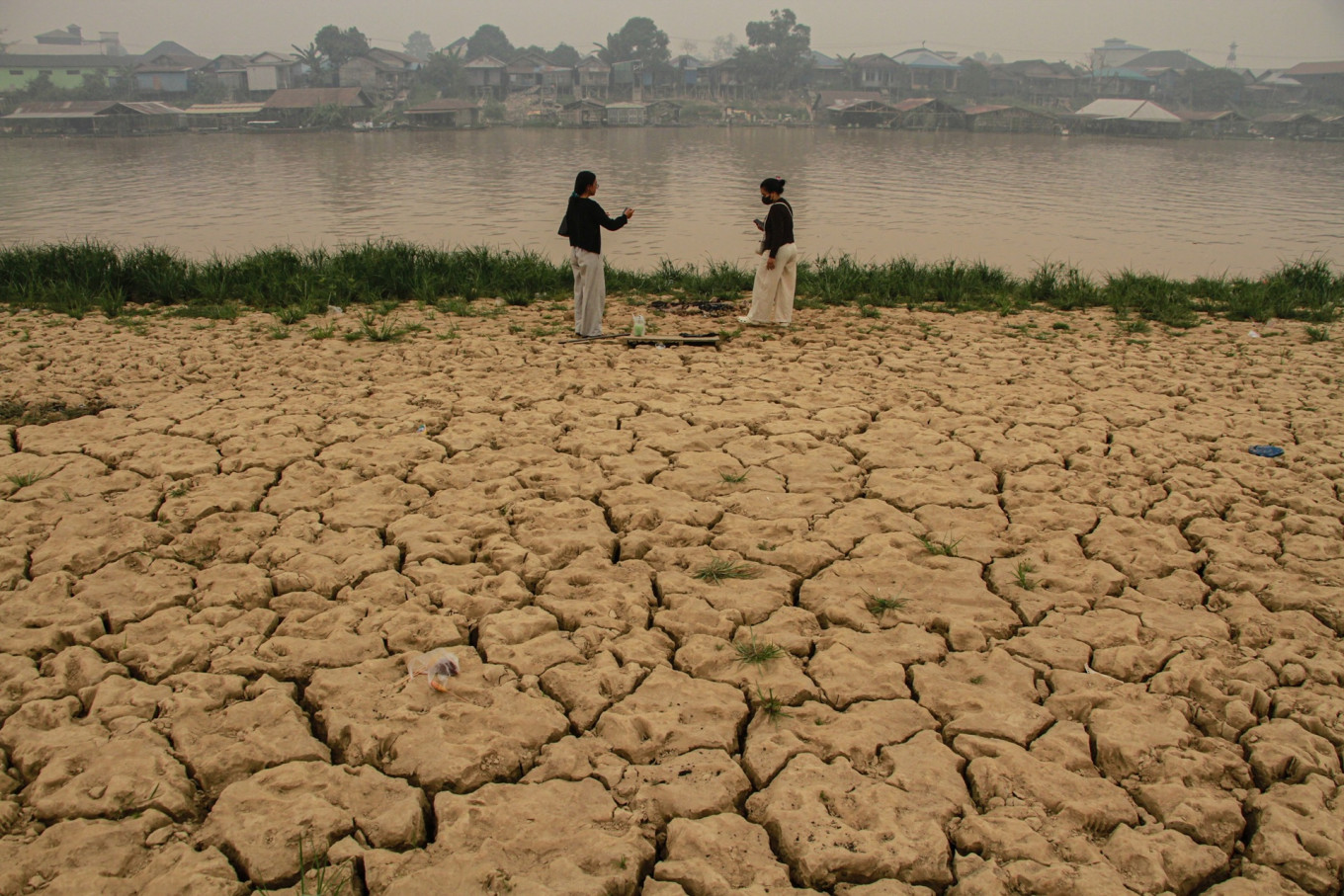 Two women stand on the banks of the Kahayan River whose water levels have dropped amid the dry season in Palangka Raya, Central Kalimantan, on Sept. 15, 2026. (Antara/Auliya Rahman)
T
he world is on the cusp of an historic El Niño, a climate pattern centered in the Pacific that could reshape weather across the planet.
El Niño is hardly a new phenomenon, but forecasts indicate the coming one could be the biggest ever recorded. Research suggests extreme El Niño years will become more common as the world rapidly warms, driven by humanity’s greenhouse gas emissions.
Our new research examines the reasons why El Niño is changing, and how this climate pattern may evolve if we reach our net zero goals. Our findings suggest extreme El Niños will become more common if we remain reliant on fossil fuels, but reaching net zero earlier should limit how often they occur.
El Niño has long influenced weather across the globe by driving variations in temperature and rainfall beyond the Pacific Ocean. Here are several exceptional examples.
In 1982, a strong El Niño dumped vast volumes of rain on South America, with some rivers in Peru filled with 1,000 times more water than usual. On Kiritimati Island (part of Kiribati in the central Pacific), heavy rainfall flooded seabird nests and caused entire colonies to vanish. Meanwhile, southeast Australia was crippled by drought, culminating in the Ash Wednesday fires that claimed 75 lives.
El Niño in 1998 carried enough rain to fill a new lake 3 meters deep in Peru’s Sechura Desert, one of the driest places on Earth. With it came record numbers of mosquitoes and widespread malaria. In Indonesia, months of severe drought allowed devastating forest fires to burn for weeks.

In 2016, a strong El Niño coupled with already warming oceans triggered the bleaching of more than two-thirds of the Great Barrier Reef.
The current El Niño forming in the tropical Pacific is expected to be among the strongest on record, with its effects lasting well into 2027. For Australia, this could heighten the risk of hot, dry conditions and a fierce bushfire season. Its presence is already being felt across the globe, slowing the shipping of goods through the Panama Canal and forcing fish to migrate to cooler waters.
Scientists have always understood El Niño to be a phenomenon that temporarily alters global weather, with conditions returning to “normal” when it dissipates. However, climate change is expected to change what “normal” looks like.
As the planet warms, extreme El Niño years are likely to become more common. Our research suggests the tropical Pacific could remain in an El Niño-like state for centuries, even if the world reaches net zero carbon emissions, and extreme El Niño years would occur more often.
We used climate models to test two possible climate futures: one in which carbon emissions continue to rise, and the other in which the world meets its net zero goals. To see if timing matters, we also examined what would happen if we curb emissions at different points during this century.
The Pacific Ocean covers about a third of the planet, stretching along the equator from Indonesia to South America.
Its western side is normally several degrees warmer than its eastern side. This temperature difference is linked with the trade winds that blow from east to west and pull cold water up from the deep eastern ocean. During an El Niño, this temperature gap shrinks, causing the easterly trade winds to slacken and rainfall to shift east, away from Australia.
Under continued warming, climate models show the eastern Pacific warming faster than the west, reducing this temperature difference. Scientists are yet to observe this happening, with the eastern Pacific even cooling in recent decades.
However, this warming trend is expected to emerge if the world keeps burning fossil fuels. Once it does, our findings suggest this west-to-east temperature difference will be reduced for centuries after emissions reach net zero, rather than recovering.
This is because the oceans are slower to respond to warming. Research suggests global temperatures would stop rising soon after the world meets its net zero target. By contrast, ocean temperatures would keep rising for centuries.
This means the world’s oceans, particularly the Southern Ocean surrounding Antarctica, will keep warming long after emissions stop. This would draw tropical rain belts closer to the equator, as their position depends on the temperature contrast between the northern and southern hemispheres. This would keep the trade winds weak and the eastern Pacific warm.
A smaller west-to-east temperature difference would mean the eastern Pacific sits closer to El Niño conditions. Heavy tropical rain needs warm water and, with the eastern Pacific projected to warm faster than the west, it would take less of a push for rainfall to shift east. This means a larger share of El Niño events would become extreme.
Our research suggests the longer we take to reach net zero, the more extreme El Niños we will likely face. Further delay could create a less hospitable climate with more risks and higher costs for generations to come.
---
Aditya Sengupta is PhD candidate at the School of Geography, Andrew King is ARC Future Fellow and associate professor in climate science, Josephine Brown is an associate professor, and Mandy Freund is a lecturer, all at the University of Melbourne. Nicola Maher is a research fellow at the Australian National University. This article is republished under a Creative Commons license.