The Jakarta Post
Please Update your browser
Your browser is out of date, and may not be compatible with our website. A list of the most popular web browsers can be found below.
Just click on the icons to get to the download page.


Popular Reads
Top Results
No results found. Please check your search term and try again
Can't find what you're looking for?
View all search results
Popular Reads
Top Results
No results found. Please check your search term and try again
Can't find what you're looking for?
View all search resultsAnalysis: Gibran’s exit and the unraveling of the Jokowi legacy
Change text size
Gift Premium Articles
to Anyone
Share the best of The Jakarta Post with friends, family, or colleagues. As a subscriber, you can gift 3 to 5 articles each month that anyone can read—no subscription needed!
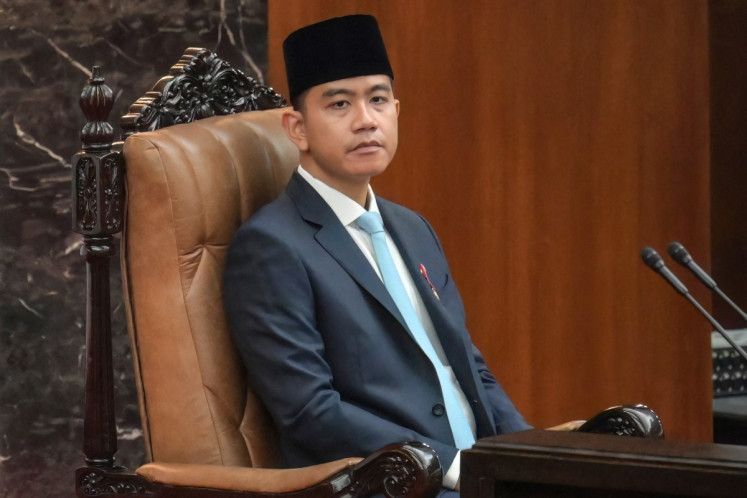
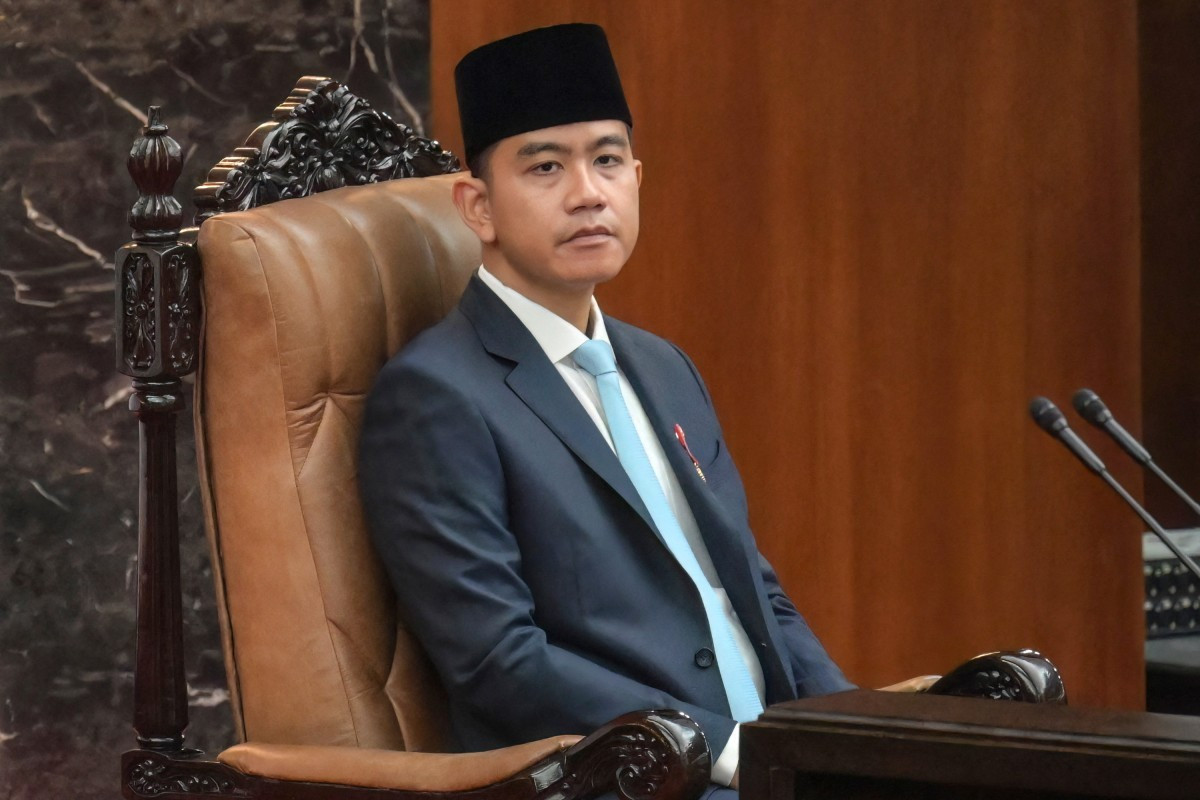 Vice President Gibran Rakabuming Raka looks on before President Prabowo Subianto's speech on the macroeconomic framework to lawmakers at the Senayan Legislative Complex in Central Jakarta, on May 20, 2026. (AFP/Bay Ismoyo)
G
ibran Rakabuming Raka’s resignation as vice president marks a turning point, not only for his own career but for the balance of power within Indonesia’s governing elite. With his resignation letter delivered to President Prabowo Subianto on Nov. 11, the drama over his future appears to have entered its final phase.
The resignation is not yet legally complete, but the remaining steps are largely constitutional formalities. The president must forward the letter to the People’s Consultative Assembly (MPR), which must endorse it and then begin selecting a new vice president. The more consequential question is no longer whether Gibran stays, but what his departure means for Indonesian politics.
The resignation does not necessarily end efforts in the House of Representatives to pursue the “right to express opinion” (HMP) process on his impeachment. Proponents have strong incentives to continue. Doing so would put Gibran’s removal beyond dispute, whether through resignation or formal constitutional judgement, and would let legislators establish a political and constitutional record of the events behind the crisis. For his opponents, resignation may not be enough; they may want a definitive MPR repudiation of his legitimacy.
Yet the significance extends well beyond one officeholder. Gibran’s vice presidency was never merely a constitutional post. He was the most visible and institutionalized link between Prabowo and Joko “Jokowi” Widodo, Indonesia’s seventh president, who served from 2014 to 2024, and Gibran’s father. Through Gibran, Jokowi kept direct influence inside the administration after leaving office, and his political network retained representation at the highest level, sustaining the appearance of a joint enterprise forged in the 2024 election.
That arrangement has now been fundamentally weakened. Gibran’s departure removes Jokowi’s most important institutional foothold in government. Prabowo holds the authority of office, control of the state apparatus and a large coalition in the legislature, while Jokowi becomes increasingly dependent on informal networks. The relationship has been evolving for some time, but the resignation accelerates the shift from a shared arrangement to a government unmistakably centered on Prabowo.
Many political actors have already recognized this. Three senior figures reportedly left the Indonesian Solidarity Party (PSI) while keeping their cabinet posts, further reducing Jokowi’s leverage. The PSI has often been viewed as his political vehicle, particularly since he left office, so their decision reads as a declaration that loyalty to the President now outranks loyalty to the party. In politics, loyalty tends to follow power, and the drift toward the presidential center reflects an emerging consensus that Indonesia’s political future revolves around Prabowo rather than Jokowi. Gibran’s resignation reinforces that perception by removing one of the principal symbols of Jokowi’s continuing influence.

Ironically, Gibran may have done the governing coalition a favor. Had he stayed and fought the allegations, Indonesia could have faced months of political warfare. An impeachment would almost certainly have been ugly, prolonged and divisive: coalition parties forced to take sides, ministers pressured to defend or abandon the Vice President, and hearings and constitutional arguments dominating the national agenda. Prabowo would have been trapped between defending his elected running mate and protecting his administration’s credibility, while the opposition gained a powerful platform.