TheJakartaPost

Please Update your browser

Your browser is out of date, and may not be compatible with our website. A list of the most popular web browsers can be found below.
Just click on the icons to get to the download page.


Jakarta Post

Indonesia’s foreign, defense policies amid space militarization

The number of tests of Anti-Satellite Weapon Systems (ASAT) between 2007 and 2020 suggests that space will become a battleground in the not-so-distant future.

Taufik Rachmat Nugraha and Ridha Aditya Nugraha (The Jakarta Post)
Bandung/Jakarta
Thu, October 28, 2021 Published on Oct. 27, 2021 Published on 2021-10-27T22:41:41+07:00

Change text size

Gift Premium Articles
to Anyone

Share the best of The Jakarta Post with friends, family, or colleagues. As a subscriber, you can gift 3 to 5 articles each month that anyone can read—no subscription needed!
M

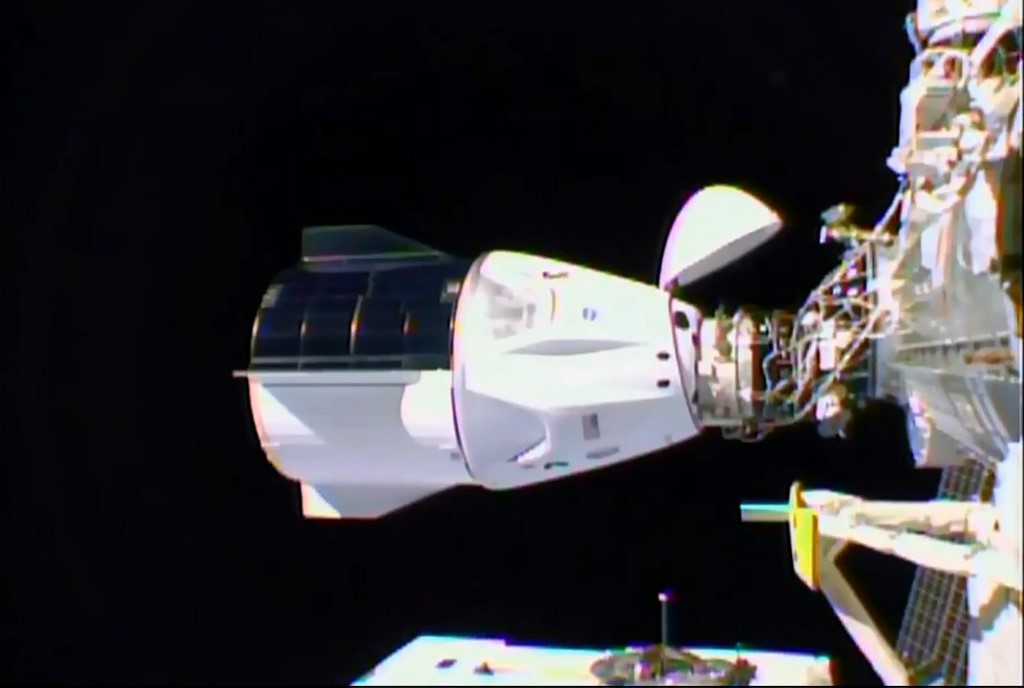
any countries are racing to become emerging space powers to be able to exercise influence over others because of their predominance in space politics and technology. As the notable space law specialist Stephen Gorove put it, “Whoever controls cosmic space rules not only the Earth, but the entire cosmos”.

Dating back to the Cold War era, the space race was originally dominated by just two major players, namely the Soviet Union and the United States, both of which aspired to be technological hegemons. These kinds of tensions have the potential to devolve into a new dimension of warfare.

To avoid space becoming the next battlefield, the world established a fundamental law, known as the Outer Space Treaty of 1967 (OST 1967). The convention established the fundamental dos and don’ts in outer space and further urged states to cooperate and use their freedom of access to outer space for peaceful purposes only, regardless of their technical or economic level.

The intention of OST 1967 was crystal clear. All states should use outer space for peaceful reasons only, such as activities that enhance human dignity and prosperity, even though the term ''peaceful'' remains a point of contention among both state actors and academics. No actions of aggression or hostility in outer space, including the testing of weapons of mass destruction and nuclear weapons, are included in the void space area.

On the other hand, outer space could increase military maneuverability in terrestrial combat. In the Gulf War (1991), during Operation Desert Shield, the US used satellite technology to expel Iraqi forces from Kuwait.

The current trajectory of space activity is a cause for concern. The number of tests of Anti-Satellite Weapon Systems (ASAT) between 2007 and 2020 suggests that space will become a battleground in the not-so-distant future.

Russia, the US, China, and India are leading ASAT technology operators. China conducted an ASAT test on their satellite Fengyun in 2007, and the US did a similar test the following year. India and Russia did the most recent experiments in 2018 and 2020, implying a chain reaction requiring other states to establish a robust defense system.

The "Gold Rush" era is unwinding before our own eyes. ARTEMIS, led by the US, and the International Lunar Research Station (ILRS) led by Russia and China have the potential to increase prosperity for all states, regardless of whether they are members of a state party or not, through the extraction and commercialization of lunar materials.

However, as human history demonstrates, natural resources, particularly minerals, have become a source of conflict and bloodshed. ARTEMIS and ILRS both have resulted in political strife between the West and East, as seen by their participation.

In 2017, the US announced its sixth military branch, called the Space Force, and firmly established it in 2019. The main task of the Space Force is to secure space assets and maintain peaceful order in outer space. The establishment of the Space Force has increased the vagueness of the space atmosphere.

Other space faring nations may soon follow suit by establishing comparable forces for similar reasons. There is no explicit limitation to this under OST 1967, although the objective is obvious. As a result, the outer space arena is currently in limbo.

Indonesia, as the largest archipelagic state, has a great interest in space applications. It makes sense that satellite technology is pivotal for Indonesia, particularly for telecommunications, disaster mitigation and national security. Indonesia has several satellites, some of which are owned by the state and others by private enterprises. 

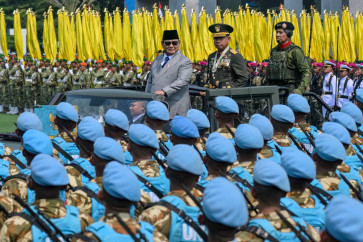
Under President Joko “Jokowi” Widodo, outer space cannot be separated from the program to unify Indonesia through Satelit Multifungsi Satelit Republik Indonesia (SATRIA-I), for which the 11-earth station has been prepared, and the satellite itself is projected to enter service in 2023. It could distribute and improve internet connection in remote areas. 

To reiterate, Indonesia's space assets are critical and must be safeguarded against all kinds of threats, including the militarization of outer space. The likelihood of a space war is increasing in light of recent events. It appears hard for the West and the East to cooperate amicably, a notion underlined by the NATO Communique 2021 in Brussels, which alluded to the “bad behavior” of the group’s rivals in outer space.

Indonesia’s Law No. 20/1982 on defense stipulates that the Indonesian Air Force is responsible for defending national airspace and outer space, or dirgantara. according to Article 30, dirgantara includes outer space and geostationary orbit (GSO). Law No. 34/2004 on the Indonesian Military (TNI), specifically Article 10, replaces the term dirgantara with “air defense”. The legal implication of the change is, of course, overarching. The adjustment is deemed in line with the goals of the OST 1967.

Whatever the outcome of the reasoning over replacing dirgantara with air defense, Indonesia is profoundly concerned about the security of its space assets. As Indonesia is not a space power, the development of a space military division is less essential. Still, the country should start to focus on safeguarding its space assets.

As AUKUS, a trilateral defense pact involving the US, the UK and Australia, comes into force, the time to rethink and redefine the Indonesian non-bloc, free and active foreign policy should also go beyond the atmosphere.

Indonesia should consistently refrain from space militarization and should instead lead the global movement toward the peaceful use of outer space. As the si vis pacem, para bellum adage is still alive, one of the potential issues to be addressed is Indonesia’s view on reconnaissance satellites. The latter is obviously tempting as the country needs to monitor submarines operating in the South China Sea, the Malacca Strait and other international waters. However, regional trust could be at stake.

The most plausible effort is for Indonesia to increase its voice in international forums, mainly through the United Nations Committee on the Peaceful Use of Outer Space (UNCOPUOS), to prevent space militarization from expanding too far. If a space war occurs, non-spacefaring nations will be the most defenseless – in this context the satellites, as they lack the technology.

We had better see more star treks and less star wars in space.

 ***

Taufik Rachmat Nugraha is a research fellow focusing on space law at the Indonesian Centre for the Law of the Sea (ICLOS) at the Padjadjaran University School of Law. Ridha Aditya Nugraha teaches air and space law studies for the International Business Law Program at Prasetiya Mulya University. The views expressed are their own.

Your Opinion Matters

Share your experiences, suggestions, and any issues you've encountered on The Jakarta Post. We're here to listen.

Enter at least 30 characters
0 / 30

Thank You

Thank you for sharing your thoughts. We appreciate your feedback.

Share options

Quickly share this news with your network—keep everyone informed with just a single click!

Change text size options

Customize your reading experience by adjusting the text size to small, medium, or large—find what’s most comfortable for you.

Gift Premium Articles
to Anyone

Share the best of The Jakarta Post with friends, family, or colleagues. As a subscriber, you can gift 3 to 5 articles each month that anyone can read—no subscription needed!

Continue in the app

Get the best experience—faster access, exclusive features, and a seamless way to stay updated.