TheJakartaPost
Please Update your browser
Your browser is out of date, and may not be compatible with our website. A list of the most popular web browsers can be found below.
Just click on the icons to get to the download page.


Popular Reads
Top Results
No results found. Please check your search term and try again
Can't find what you're looking for?
View all search results
Popular Reads
Top Results
No results found. Please check your search term and try again
Can't find what you're looking for?
View all search resultsAwakening Day: Indonesia in the mirror of Ukraine
Today, Indonesia ranks high in terms of prostitution and the hypocritical “morality” of politicians and statesmen, as well as political scandals which often go hand in hand with the plunder of state coffers and systemic corruption.
Change text size
Gift Premium Articles
to Anyone
Share the best of The Jakarta Post with friends, family, or colleagues. As a subscriber, you can gift 3 to 5 articles each month that anyone can read—no subscription needed!
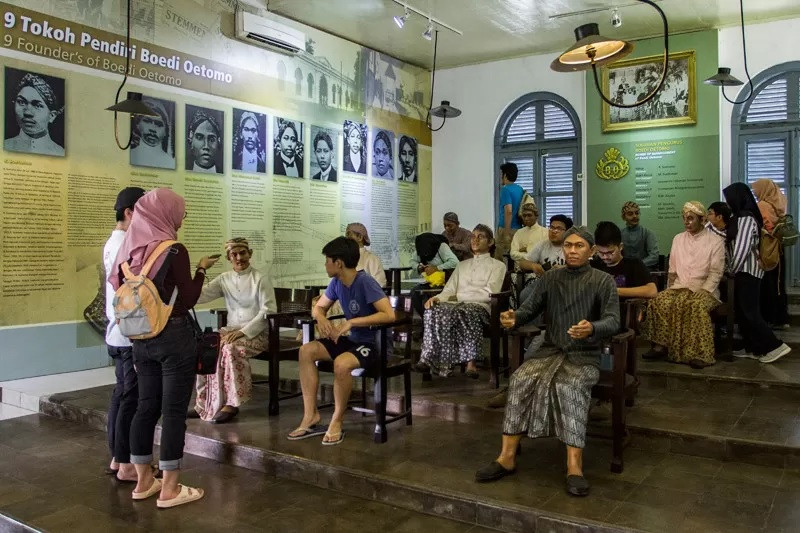
Today, we celebrate the National Awakening Day and remember those who helped us win our ultimate freedom from Dutch colonial rule.
During Indonesia's independence war (1945-49), international diplomacy was as important as military action. The United Nations Security Council played a prominent role here. Ukraine, in the person of its permanent ambassador to the UN, Dmitry Manuilsky (1883-1959; in office 1945-1952), made a significant contribution.
It was Manuilsky who first brought the "Indonesian Question" to the attention of the Council on Jan. 21, 1946, denouncing Dutch attempts to reestablish their colonial empire as a threat to world peace. This opened the door to discussions on Indonesia’s future.
In response, President Sukarno declared Feb. 4, 1946 a day of public thanks for Ukraine and a special parade was held in the then Republican capital, Yogyakarta, to celebrate Kyiv’s support. Following the second Dutch “Police Action” (Dec. 19, 1948)—what would now be termed a “Special Military Operation” pace Vladimir Putin—Ukraine, then a non-permanent member of the Security Council (1948-49), again played a leading role.
In quick succession, it introduced two Security Council resolutions on Dec. 24 and 28, 1948, the first demanding that the Dutch immediately halt their military aggression, and the second requiring them to free the Republican leaders whom they had arrested. These initiatives opened the way for other UN member states, most prominently the United States, to sponsor the key Jan. 28, 1949 Security Council Resolution which established the United Nations Commission for Indonesia (UNCI).
This, combined with heavy financial sanctions, including the threatened withdrawal of Marshall Plan Aid, forced the Netherlands to negotiate. Recognition of Indonesian independence (Nov. 2, 1949) and the transfer of power (Dec. 27, 1949) speedily followed.
In memory of those historic events, when Ukraine itself is now engaged in an epic existential struggle against its former hegemon, Russia, a struggle with many parallels to Indonesia’s own independence war against its erstwhile colonial power (one thinks of the Dutch attempt to strangle the Indonesian Republic by the establishment of pro-Dutch puppet states along the lines of Russia’s statelets in Donbas), I have taken a series of reflections on Ukraine’s historical experience by the contemporary Ukrainian poet, Andrij Bondar, and transposed them into an Indonesian context.
Entitled A Split Heart of Incompleteness, Bondar’s essay was first published in Volodymyr Yermolenko’s Ukraine in Histories and Stories: Essays by Ukrainian Intellectuals (Stuttgart: ibidem Press, 2019), pages 104-16.
Inspired by his writing, the following are the parallels which suggest themselves from Bondar’s writing (I have added a few new points and dropped others). Indonesians, like the Ukrainians, did not experience:
* The Renaissance of the 15th and 16th centuries, with its discovery of the “humanity” of human beings, with its free thinking and revival of the heritage of Antiquity;
•The Scientific Revolution of the 17th century which saw major breakthroughs in the development of modern medicine, courtesy of the likes of Ibn Sina/Avicenna (980-1037) and other polymaths of the Islamic “Golden Age” (8th-14th century). Instead, Indonesia experienced centralizing autocracies (Sultan Agung [r.1613-46] in Java; and Sultan Iskandar Muda [r.1607-36] in Aceh);
• The Enlightenment of the 18th century, which was not exported by the Dutch East India Company (VOC). Instead of enlightening ourselves, Indonesia fell at the beginning of the 19th century into a senseless colonial state, which was itself a conservative reaction to its pre-colonial anarchy;
• The Industrial Revolution of the 19th century, when the world of the “landowning peasant” and rural entrepreneurs, which had provided the backbone of Prince Diponegoro’s (1785-1855) freedom struggle during the Java War (1825-30), was torn apart and ultimately stamped out by the colonial state. In a situation akin to modern slavery during the four decades of the Cultivation System (Tanam Paksa, 1830-70), the Dutch extracted nearly US$11 trillion in present day money from Java.
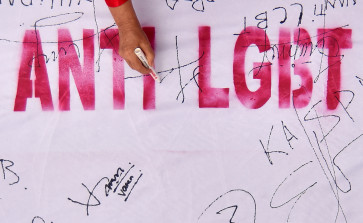
• The Sexual Revolution in the contemporary era (the world of pre-colonial Java described in the Serat Centhini [1814] with its celebration of LGBTIQ+ culture is totally different). Today, Indonesia ranks high in terms of prostitution and the hypocritical “morality” of politicians and statesmen, as well as political scandals which often go hand in hand with the plunder of state coffers and systemic corruption.
In this list of absent phenomena and things, similar to the well-known “Chinese classification [Celestial Emporium of Benevolent Knowledge, 1942]” of Jorge Luis Borges (1899-1986), we could also include the following things that we lack:
• An Indonesian language translation of Schopenhauer’s Die Welt als Wille und Vorstellung (The World as Will and Representation, 1818);
• Trust in institutions;
• Urban culture (apart from colonial era romance, old town halls and legends about foundation myths);
• The Protestant work ethic, and, therefore, the spirit of capitalism;
• Lasting historical memory;
• Culture of listening to music and reading novels;
• Environmental consciousness;
• A responsible political elite;
• A literature Nobel Prize winner: Pramoedya (1925-2006) was considered but torpedoed by the politics of Soeharto's New Order.
Any person who has experienced modern Indonesia can add a few lines to this non-systemic list. This means, volens nolens, that our country has ended up in the early part of the 21st century broken down, messed up and deformed.
Ultimately, one may find hundreds of reasons and factors explaining why we are what we are today. For the present writer, it is just as interesting to think about where the “we” of today begin. Where is that place on the maps of our psychology, geography and post-1965 traumatology, at which we begin?
But first we must enter a caveat. Defining what and who Indonesians are is difficult. Those who live in Jakarta are not the same as those who live in other cities in Java. And those living in Java are even more different again from those who inhabit Sumatra, Kalimantan, Sulawesi, Eastern Indonesia and West Papua.
The differences in cultures, languages, mindsets and aspirations are staggering, representing the uniqueness of an island nation which has hundreds of different ethnic groups spread out over a 5.000-kilometer-wide archipelago. Indonesia is an exercise in imagination born of the fertile vision of its founder president, Sukarno and united by what the late political scientist, Ben Anderson, called “an imagined bangsa [national community]” with its own encompassing Bhinneka Tunggal Ika (unity in diversity) national motto.
***
The writer is a historian. The article was inspired by Ukrainian poet, Andrij Bondar. This is the first part of a two-part article.